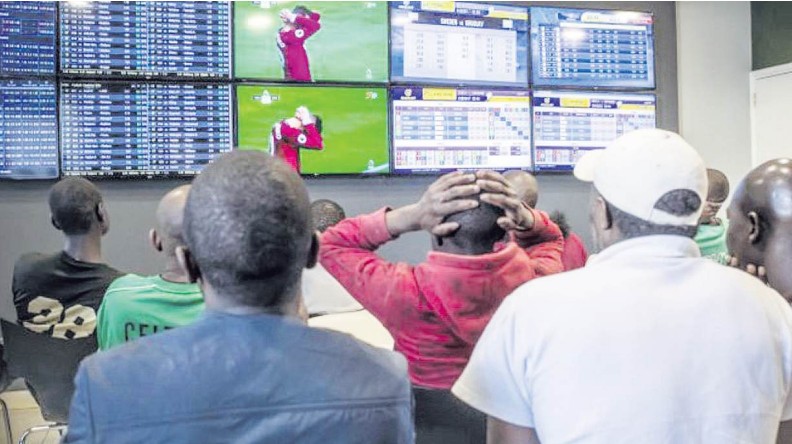
In June last year, tragedy struck a village in Nyamira when a high school teacher died by suicide after allegedly losing Sh50,000 on a bet.
It was reported he borrowed the money. His body was found hanging by a shawl from the roof of his house.
This devastating incident was replicated in Shinyalu constituency, where a small-scale trader named Njeri was reported to have died by suicide after losing Sh60,000 on the same betting platform in October.
Last week, an Eldoret man was reported to have lost Sh2.8 million meant for studies abroad on betting.
A social media post under an account named Dismas Mutai, believed to be the person in question, read in part: “…I have fallen into a trap…a trap that I never anticipated ever in my life. Depression is slowly taking me to the grave… [Betting platform] flew away with over Sh2.8 million people’s money.”
These are just but a few of the reported cases as the gambling craze continues to sweep the country, with millions of punters believing they can become millionaires overnight, maybe influenced by how the lives of jackpot winners were transformed.
The sums are staggering. Industry data shows Kenyans spent over Sh766 billion on gambling in 2024: that’s Sh2.1 billion daily and over Sh24,000 every second, defying a government crackdown and pushing for responsible gambling, amid high taxation.
The average punter in Kenya spends Sh1,825 per month on gambling.
According to a survey titled, “Betting in Africa 2024”, by global firm Geopoll, Kenya emerged as a standout, with 82.81 per cent of its respondents having placed bets.
South Africa followed closely with 73.94 per cent, Ghana with 73.03 per cent, Uganda with 71.43 per cent, Tanzania with 71.13 per cent, and Nigeria with 65.32 per cent.
“This rapid survey, targeting random users, revealed that 38 per cent of the respondents are currently employed. Close behind, 21.44 per cent reported being unemployed, while 20.15 per cent identified as business owners or self-employed individuals. Additionally, 19 per cent indicated they were students, with a small two per cent unable to work,” Geopoll says in its report.
Gambling did not start yesterday as it dates centuries back. During the time of Jesus, the Bible in the New Testament mentions Roman soldiers gambling for Jesus’ clothes after his crucifixion, specifically by casting lots for his tunic.
In the country, it has evolved from the Pata-Potea days, casinos and charity tickets sold on street corners to a massive industry, thanks to technological advancement.
The latest trend is the fast-growing betting shops that are now finding their way into estates, making it hard to drive a responsible gambling agenda in a country where unemployment remains high, mainly amongst the youth.
In the estates of Nairobi, Kisumu and Mombasa, neon-lit betting shops entice millions of Kenyans into the world of gambling. With just a few taps, one can place a bet in seconds, hoping for a life-changing win.
However, for many, these wagers have led not to prosperity but to financial ruin, depression, and even suicide.
In Tassia Embakasi, we met 25-year-old Thomas Ayieka, a gambler at one of the betting shops in the estate.
He says without a stable job, he is forced to try out luck at every opportunity.
“I am not married yet I am still looking for money and every time I get some, I take a part of it and try to ‘invest’,” Ayieka said.
Less than 40 metres away, in another betting shop, we met James Gitau, a 28-year-old boda boda rider. He said started betting in 2019 with small amounts.
At first, he won a few bets, fuelling the illusion that he could consistently make money. But, soon, he began losing more than he was winning.
He took loans from friends, family and even mobile lenders, convinced that a big win was just around the corner.
“For me betting with Sh50, which has the potential to multiply, is better than grabbing snacks here on the roadside,” he said.
Gambling addiction has not only hit men. Miriam Waithira, a resident of Uthiru in Kiambu, last week revealed she was forced to shut down her hotel after betting away her capital.
“[Betting firm] has placed me where I am now. It has made me poor. Since I first won Sh260,000, I have never won again. Every time I win, I end up losing it all back again,” Waithira she said.
While there have been jackpot winners in the country whose lives have been transformed, gambling has continued to ruin the lives of many especially the youth.
This, even as the Association of Gaming Operators of Kenya insists on responsible gambling has reiterated its commitment to push for responsible gaming in the country to protect customers, as it also pursues dialogue with the government on assistance to rid the industry of illegal gambling.
According to AGOK chairman Sasa Krneta, people must be responsible when it comes to betting.
“We entertain, but we also create jobs, pay taxes and build communities...and we speak as one voice for the gaming industry in Kenya when we say we are here to push for fair tax and regulations, fight illegal gambling and promote responsible gaming,” Krneta said.
AGOK’s executive member Judith Kiragu, added: “Our industry has been part of the Kenyan economic fabric from 1966 and has been a socially responsible stakeholder since then. We reaffirm our commitment to continue in a similar stride into the future.”
However, homes have continued to break due to financial misappropriation on gambling addictions, individuals have gone into depression, cases of school dropouts after losing fees to gambling are rife, and finally suicide.
“My son sold a cow with an estimated value of Sh40,000 and gambled it all away. After losing, he crossed over to Tanzania and we have never seen him again,” Susan Gati, a resident of Isibania, Migori county, told the Star.
An article published by the National Library of Medicine in January 2022, titled “Gambling-related suicide in East African Community countries”, indicates there were about 18 suicides reported between 2017 and 2022.
Kenya had the highest number accounting for 10 out of the 18 cases, Uganda with seven while Tanzania had one case.
The survey showed most victims were university students and low-income Kenyans like boda boda riders. More cases have been reported in the country.
Mental health experts warn that the speed of new betting formats exacerbates the problem.
They argue that this rapid form of gambling exploits human psychology, triggering compulsive behavior.
Many bettors believe they can recoup losses by placing more bets, creating a never-ending cycle of addiction.
The quicker the outcome, the higher the likelihood of making impulsive, emotionally driven wagers.
Gathoni Mbugua, a clinical psychologist at AAR hospital, says that gambling addiction is considered a behavioral disorder.
“The rise of technology has made it incredibly easy to access online betting apps and sports wagering platforms. This convenience, combined with aggressive advertising and marketing, has helped glamorise gambling, portraying it as exciting, trendy and a fast route to wealth,” she says.
She adds that at the same time, rising economic pressures and high unemployment have pushed many to see gambling as a potential escape from financial hardship.
Despite the increase in taxation as the betting industry remains a low-hanging fruit for sin tax by the government, the number of companies venturing into the space remains significant as they seek to tap the multi-billion industry which according to Statista.com, revenue in the country’s gambling market is projected to reach $831.80 million (Sh49.2 billion) in 2025.
There are more than 200 firms currently licensed to operate in the market, more than double the 100 firms in 2021.
The betting industry attracts an excise tax of 15 per cent on stakes, a withholding tax 20 per cent on net winnings and a betting and gaming tax of 50 per cent which is on gross gaming revenue for operators.
This is an addition to corporate income tax on operations and other statutory deductions such as Pay as You Earn on employees with the industry employing over 10,000 individuals directly and 500,000 indirectly.
Last month, the Kenya Revenue Authority said it collected Sh12.47 billion in taxes from betting firms in the eight months to February 2025.
With the Betting Control and Licensing Board opening the new licensing period for the next financial year on May 1, chairperson Jane Makau said the regulator is keen on ensuring industry players comply with set regulations.
She said the Gambling Control Bill 2023, currently in the mediation committee of both the Senate and the National Assembly, represents a critical step forward in modernising the legal framework, enhancing regulatory oversight, and ensuring that the industry operates within a sound, robust, and future-ready regulatory environment.
“We are optimistic that it will be processed through in the shortest time possible,” she said.
AGOK says irresponsible gambling must be tackled by social responsibility initiatives that promote awareness of the harms associated with gambling.