Governors now want the Senate to dismiss or overhaul the ‘flawed and discriminative’ proposed revenue-sharing formula by the Commission on Revenue Allocation.
This, even as the county bosses came under criticism from the lawmakers for lacking seriousness with the debate on the revenue formula.
Senators are mulling retaining the current formula to guide the sharing of resources among 47 devolved units for another five years.
Appearing before the Senate Finance and Budget Committee that is currently considering the proposed formula, the county chiefs called for its complete revision.
The governors said some of the parameters captured in the proposed formula are vague, not scientific, too academic and impractical and asked the Senate to make several changes to it.
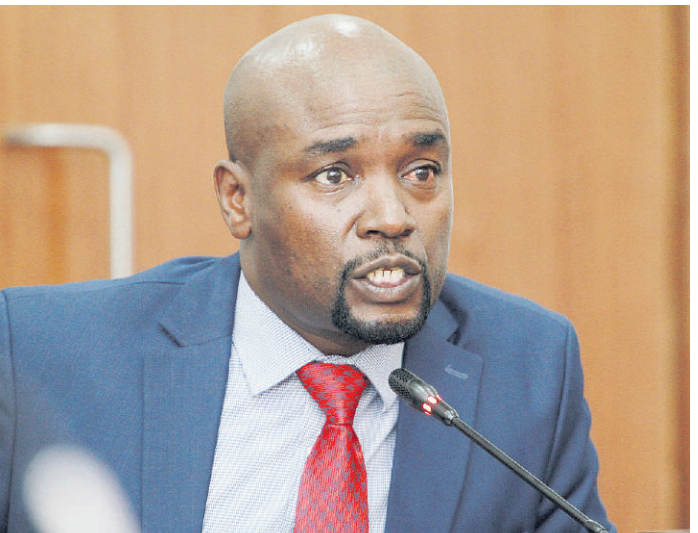
“What we are saying is that the proposed revenue sharing formula is flawed and discriminatory and should be overhauled,” Kakamega Governor Fernandes Barasa said. Barasa, who is the Council of Governors’ Finance Committee chairman, added, “We cannot have a formula that is going to disadvantage other counties.”
Some 31 counties will lose billions of shillings if Parliament approves CRA’s proposal.
“The Council of Governors emphasises the importance of a fair, transparent and efficient fourth basis for revenue sharing,” Barasa said.
He was accompanied by governors Kimani Wamatangi (Kiambu), Abdulswamad Nassir (Mombasa) and Issa Timamy (Lamu) and Nakuru Deputy Governor David Kones.
The formula will determine how counties share revenue from 2025-26. CRA has assigned ‘population’ the biggest weight, at 42 per cent, as opposed to 18 per cent in the current formula.
Population was weighted at 45 per cent in the second-generation formula, while it was weighted at 45 per cent in the first framework.
Geographical size has a weight of nine per cent from the current eight. Equal share has been given a weight of 22 per cent from the current 20, while poverty index has been retained at 14 per cent.
“To facilitate service delivery, the recommendation provides for an equal minimum allocation across all counties, using population and geographical size of a county as the key transfer parameters,” CRA chairperson Mary Chebukati said in a report to the Senate.
CRA has introduced the ‘income distance index’ and assigned it a weight of 13 per cent. “To address economic disparities and promote development, the framework uses income distance and poverty parameters as measures of inequality among county governments.
However, the senators took issue with the new parameter of the income distance, saying it was not only subjected to public participation but was also arbitrary and unreasonable.
“The parameter on income distance should be elaborated and subjected to a wider stakeholder engagement or dropped for a more widely acceptable parameter,” Barasa said.
The governors said the parameter may disincentivise economic activity since counties with lower economic output are getting significantly higher allocations.
In the long run, it will compound income and productivity inequalities. On the poverty index, the governors said the parameter only seeks to reward poverty, adding the framework had a sunset clause.
“We should not be seen to be rewarding poverty… that the poorer you are the more money you get,” Nassir said.
However, the senators criticised the governors’ submission for lacking depth. “If we were to go with your written submission, it is the shallowest you have ever presented in a very critical issue such as this,” committee chairman Ali Roba said.
The Mandera senator added, “This only says one thing to me: a lot of thought has not gone into this presentation before coming before this committee. The only minor remedy that came out was your verbal submission.”
“In future, this is a very critical issue that is going to affect you very seriously. You need to sit in it. You don’t criticise without making counter-proposals, otherwise, it just becomes an academic exercise,” he stated.
Cornered, the county bosses sought for a week to rework their submission. The panel gave until Wednesday next week to submit a watertight proposal, citing time constraints.
Kakamega Senator Boni Khalwale, sought the opinion of the governors on the proposal to retain the current formula.
“In South Africa, they retain a formula for 10 years. What will be your opinion if we recommend the retention of the current formula?” Khalwale asked.