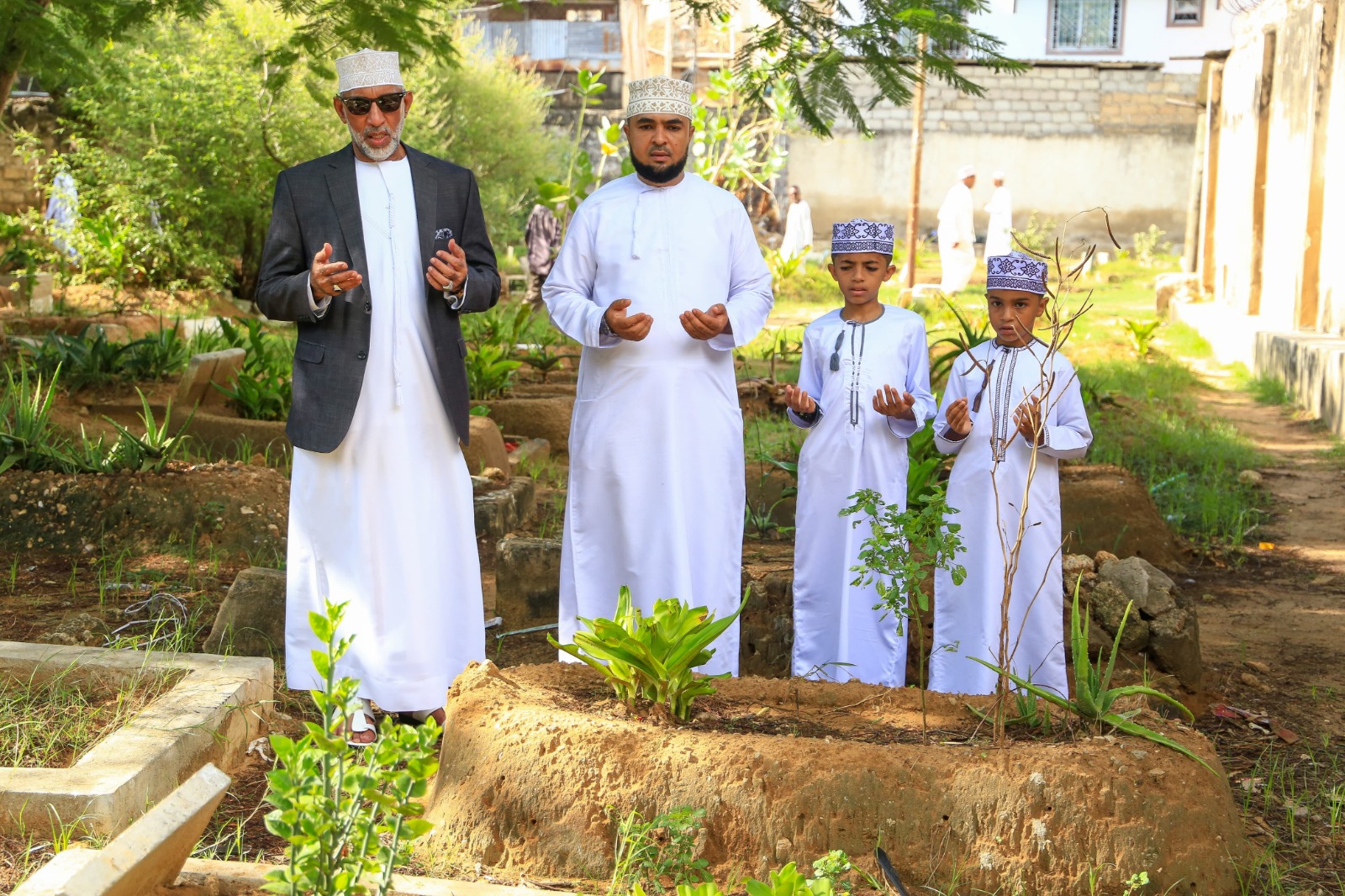
On Sunday and Monday, the dead in Mombasa, especially those who died in the Muslim faith, were a happy lot in the different cemeteries.
At least that is what Muslims believe. It is believed, in Islam, the dead are able to see and hear the living but cannot talk, and so when they see their relatives praying in the cemeteries, they are happy.
Traditionally, after the Eid prayers, Muslims visit the graves of their loved ones to offer prayers on their behalf.
“It is believed when you pray for the those who went before Allah, their burdens become lighter,” Rishad Amana, a religious man, said on Monday.
He had visited Kikowani cemetery to pray for his grandmother, Kursum Mohamed Bhai, and two uncles, Sheikh Mohamed Amana and Abubakar Amana.
“The Quran says the special prayer you make to thank God for giving you the 29 days of fasting on the holy month of Ramadhan is the same that you should make for the dead, because they did not see the holy month of Ramadhan.
“You remember them in prayer. You ask Allah to make the grave easier for them to handle,” Amana said.
Most Muslims believe there is punishment in the grave, especially if one committed evil deeds during their time alive or on earth.
Praying on their behalf lightens the burden of the grave, some believe.
“That prayer makes them at peace in the grave,” Amana said.
However, some Muslims believe everybody has their own deeds and will be judged by Allah according to their own deeds, and no amount of interventional prayers on their behalf will help them.
Allah, according to this group of Muslims, loves prayers that are individual in nature, more than those made in groups.
“That’s why we say everybody will be judged on their the deeds they did and there will be no oppression. In Allah there is no oppression,” a Muslim leader, who sort anonymity, said.
Amana said the holy month of Ramadhan is not only about fasting but also doing what Allah commands.
“You are lucky if Allah accepts your prayers just for one day, let alone the 29 or 30,” Amana said.
The Kenya Maritime Authority board member said zakatul-fitr is what Muslims give as zakah to the less fortunate. The zakah helps one’s prayers to reach Allah in heaven.
“There are fitrs that do not reach heaven even when you fast for 30 days. It hangs in the air until you give that fitr (zakah),” he said.
Zakatul-fitr, Amana said, is usually a minimum of 2.5kg of rice that one also takes home.
“For instance, if I usually use Fatma rice, which is one of the best quality rice, I must give at least 2.5kg of the same rice as zakatul-fitr and not any other lower quality rice. Without that, your Eid prayers will not go anywhere,” Amana said.
However, this is only if you can afford it. He said that it is usually to make those less fortunate feel the same way the fortunate feel.
“At the cemetery, when you pray for the dead, they are at peace. You can pray for any dead person, but and they will get some of the blessings, but the one you specifically went for will get the majority of the blessings,” Amana said.
Eid is also a time to visit relatives and share time with them.
But most valuable time is the time spent with the sick in hospitals, Amana said.