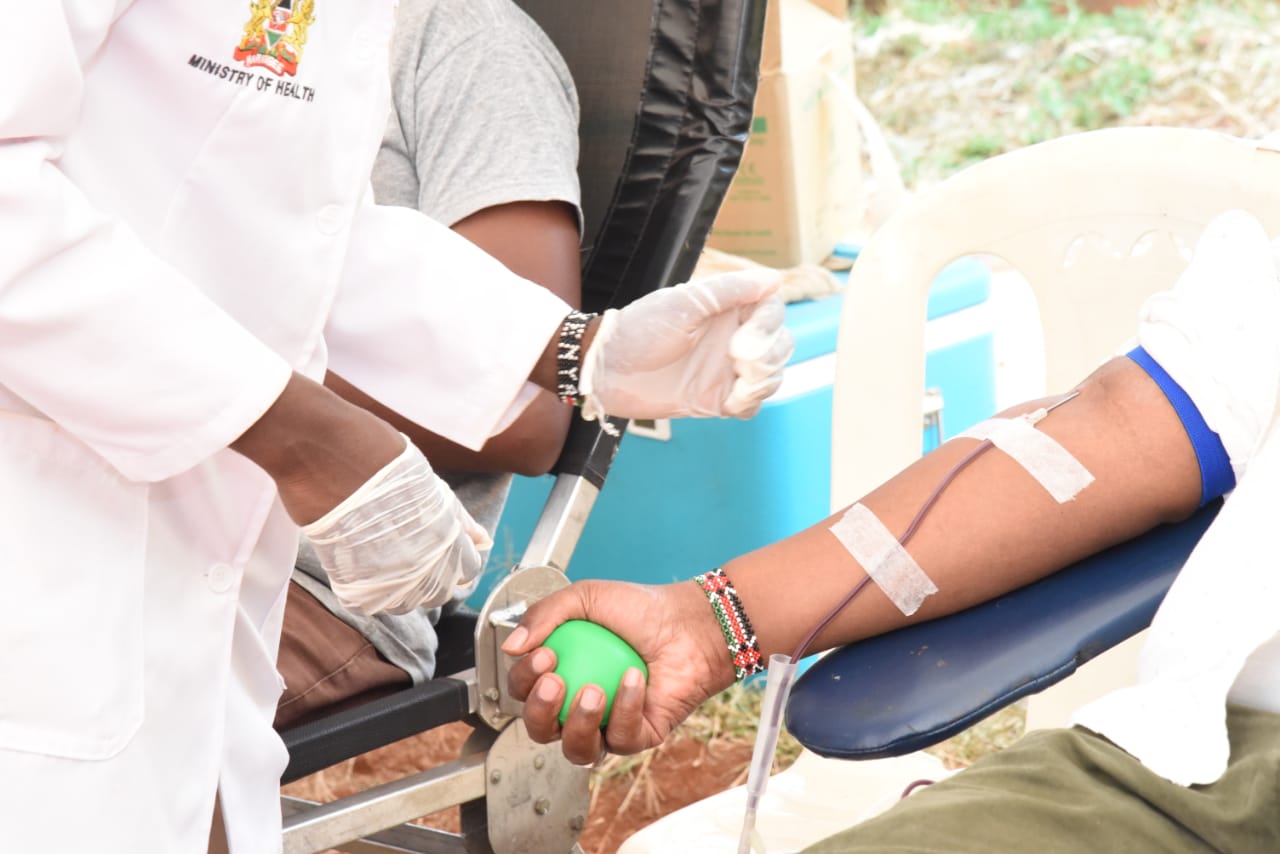
The World Bank’s support to Kenya’s blood transfusion services ended yesterday, leaving the programme without any funding and in danger of collapse.
Nearly all of Kenya’s blood transfusion activities were supported by the World Bank’s Sh2.7 billion funding.
The funding vacuum was announced by the Ministry of Health, which warned blood transfusion services will collapse if the government does not allocate funds to keep it running.
Already, Kenya’s blood banks are nearly empty most of the time. Critically ill patients are forced to beg for donations from relatives and friends when they need transfusions.
“The blood programme, currently supported by a World Bank project that is set to conclude in March 2025, now confronts a funding void with no alternative support in place,” the ministry said in a report.
The “Impact of the United States Government Stop Work Order” explores the impact of the funding freeze on Kenya’s health system.
“Mobilisation of more than Sh2.7 billion is needed to avert a collapse of this critical service,” the ministry said.
US President Donald Trump on January 20 ordered what he said would be a 90-day review of which foreign assistance programmes deserved to continue. The aid was cut off almost overnight.
In late February, the administration said it is ending more than 90 per cent of foreign aid contracts and $60 billion in overall US global assistance.
Kenya had collected 450 blood units daily before COVID-19, but collections have dropped to 120 to 140 units per day. The World Bank supports blood collection and collection commodities, infectious disease testing, components preparation and digitalisation.
The US ended its annual Sh2 billion support of Kenya’s blood services in 2020, after which Kenya applied to the World Bank for financing.
The US, however, continued to support Damu KE, the blood donation management system that oversees the availability and distribution of blood supplies, ensuring blood banks operate effectively. The US last month withdrew its support for this system.
“The abrupt withdrawal of funding for the system’s maintenance and management now poses significant risks, particularly for services that heavily rely on data and reporting for critical and continuous informed decision-making,” the ministry said.
Kenya requires 500,000 units to one million blood units annually but collects only 150,000 to 200,000 units per year.
In the Supplementary Appropriation Act 2025, no money was directly budgeted for the Kenya Tissue and Transplant Authority, the body that manages blood transfusion services.