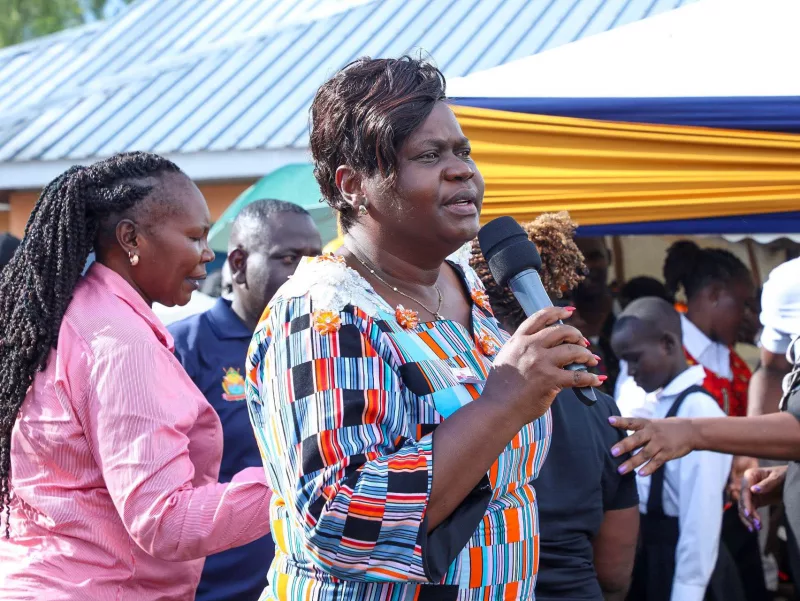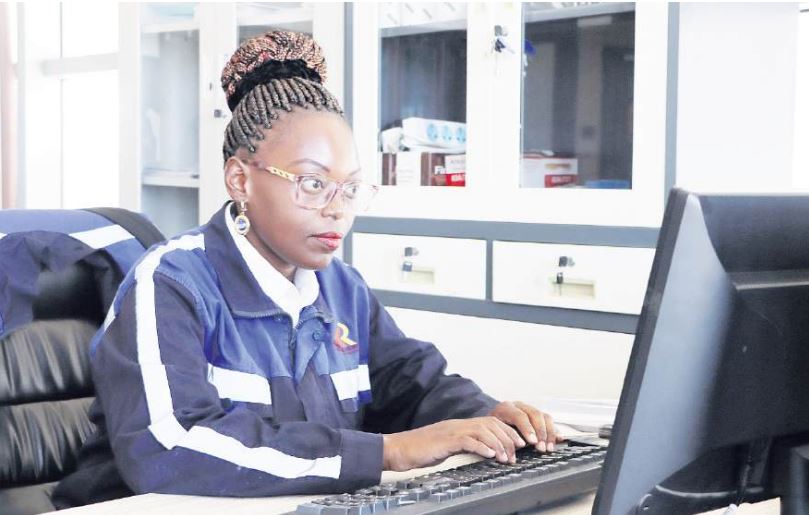
Lydia Kihumba, who works in a workshop in Mtito Andei at Afristar’s Track Department, finds her job fascinating.
But that does not hide her observation of the gender imbalance in the rail transport sector.
To correct this imbalance, she advises women to take up careers in the sector by seeking relevant information about the industry that may come in handy when there are job openings.
But Kihumba’s concerns could soon be a thing of the past, thanks to a report launched in January 2025.
The report, titled “Addressing Barriers to Women’s Participation in Transport”, was prepared jointly by the World Bank Group, the Asian Development Bank, the German Agency for International Cooperation, the European Investment Bank, and the International Transport Forum (ITF).
The analysis and recommendations in this report have informed the creation of the Women in Transport Network, which brings together transport stakeholders dedicated to empowering women across all facets and levels of the transport sector.
It will serve as a forum for networking, recruitment, information exchange, training, and mentorship opportunities for women.
“The launch of the Women in Transport Network is a significant step towards creating a more inclusive transport sector,” said Nicolas Peltier, World Bank Global Director for Transport, during the launch.
“By providing a platform for institutions to connect around gender equality, we can empower women, facilitate access to better job opportunities, and enhance the overall efficiency and inclusivity of the transport sector.”
Indeed, the launch of the Women in Transport network comes as a big relief to Kihumba and other women working in the male-dominated transport sector.
“Rail has been traditionally viewed as a male-orientated environment. However, this viewpoint has drastically changed over the years. In recent times more and more women are joining the rail industry and I would advise my fellow women not to shy away and apply for vacant posts when advertised”, she observes.
If given a leadership position, she has a few changes she would like to implement.
“If I take up a leadership position as a woman, I will enhance the solidarity of employees, adopt appropriate incentive policies for employees, and increase their enthusiasm for work. More importantly, I will take care of female employees, make them work with more dignity, and maximize their value,” Kihumba pledges.
Her key responsibilities include strictly implementing the rules, systems, methods and standards formulated by the company.
This comprises daily management of the attendance records, performance evaluation, contract renewals, leave management, stationery disbursement, facilitating the signing of company documents, and ensuring all employees comply with employment laws.
She essentially acts as a bridge between the company and the employees and aids in translation from Chinese to English and vice versa.
She has been in this role for two years. But this did not come easily. She underwent a comprehensive induction training programme, upon joining her current role, which focused on the company’s core values and the employee's code of conduct.
“The most rewarding part of my job is seeing all my efforts and hard work bringing positive results to my personal and professional development, and greatly contributing to the growth of my team and the company at large”, she attests.
“Receiving recognition for job well done is such a great boost in confidence and belief that I can do what I am required to do in a timely and efficient manner”.
Despite the sector being male-dominated, Kihumba has never felt intimidated by her male colleagues because of her strong principles in life.
“To stay focused in such scenarios you must learn how to advocate for yourself, do not hesitate to speak up about your achievements and contributions. Be proactive in seeking promotions, raises, or new opportunities,” she says.
She also advises female employees to find and identify colleagues who support diversity and inclusion, as building strong relationships with like-minded individuals can create a more supportive work environment.
But her work has not been without a fair share of challenges.
“The most challenging aspects of my job are; handling conflicts among the employees’ grievances, maintaining a positive workplace culture which is very demanding, being treated different by male colleagues who don’t believe in taking orders from a female counterpart, gender imbalance within the workshop with few female colleagues with whom one can confide in, and lack of inclusivity in various company events due to distance,” she states.
To enhance efficiency, Kihumba would like to see suggestion boxes introduced for employees to share their views, comments, suggestions, and complaints which will greatly assist in making improvements in the field.
She would also like to have improved passenger experience; for
instance, there should be convenient ticketing, real –time train information and comfortable on-board
amenities, including high-speed WiFi connectivity.