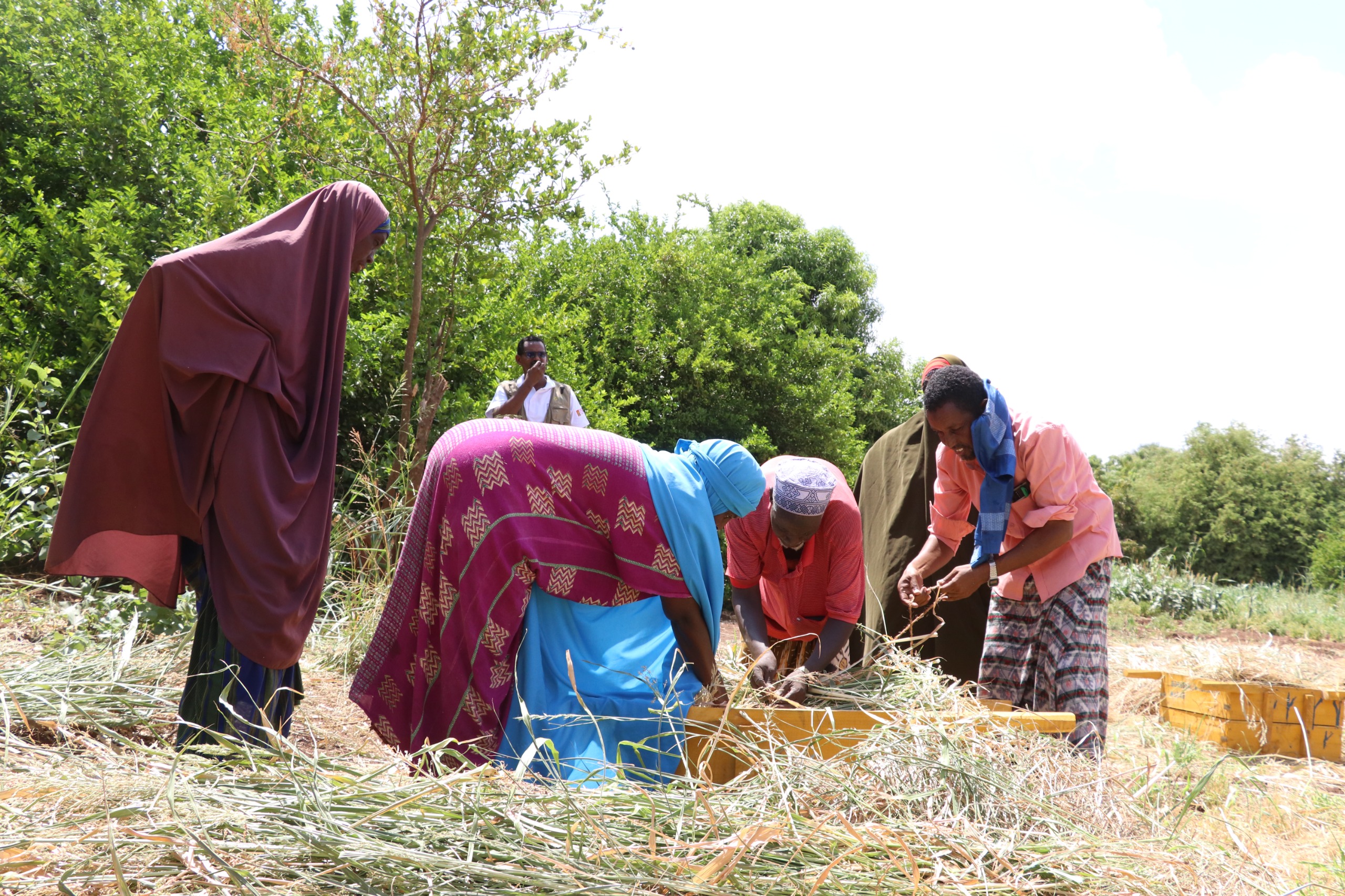
 Group of farmers, including Women in Fiqow, Mandera East, prepare a bale of fodder through Boresha-Nabad provided hay balers.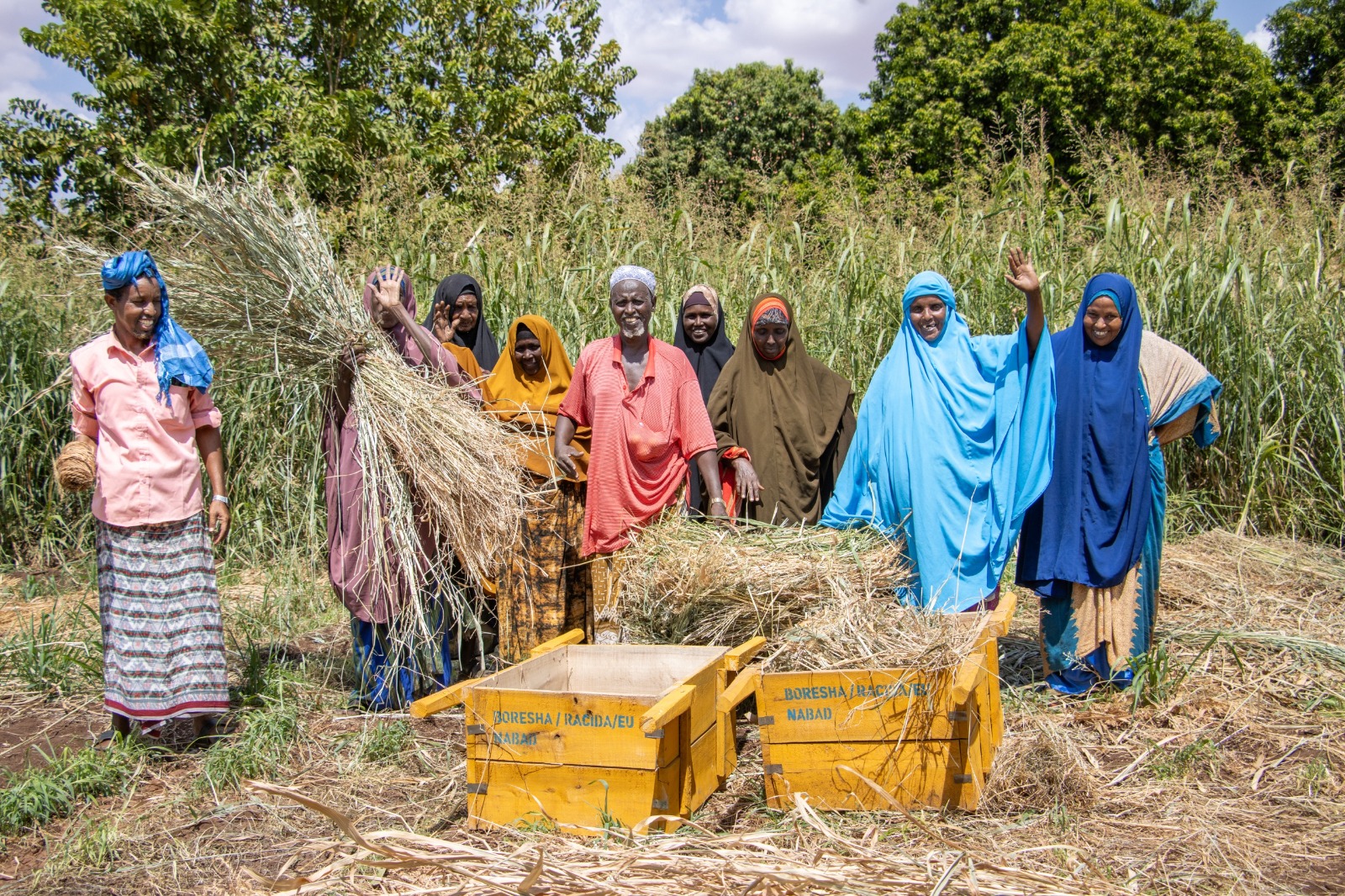
With livestock at the core of Mandera’s economy, 120 farmers along the riverine, through the support of RACIDA, are using fodder as a game-changer for drought recovery and local food security.
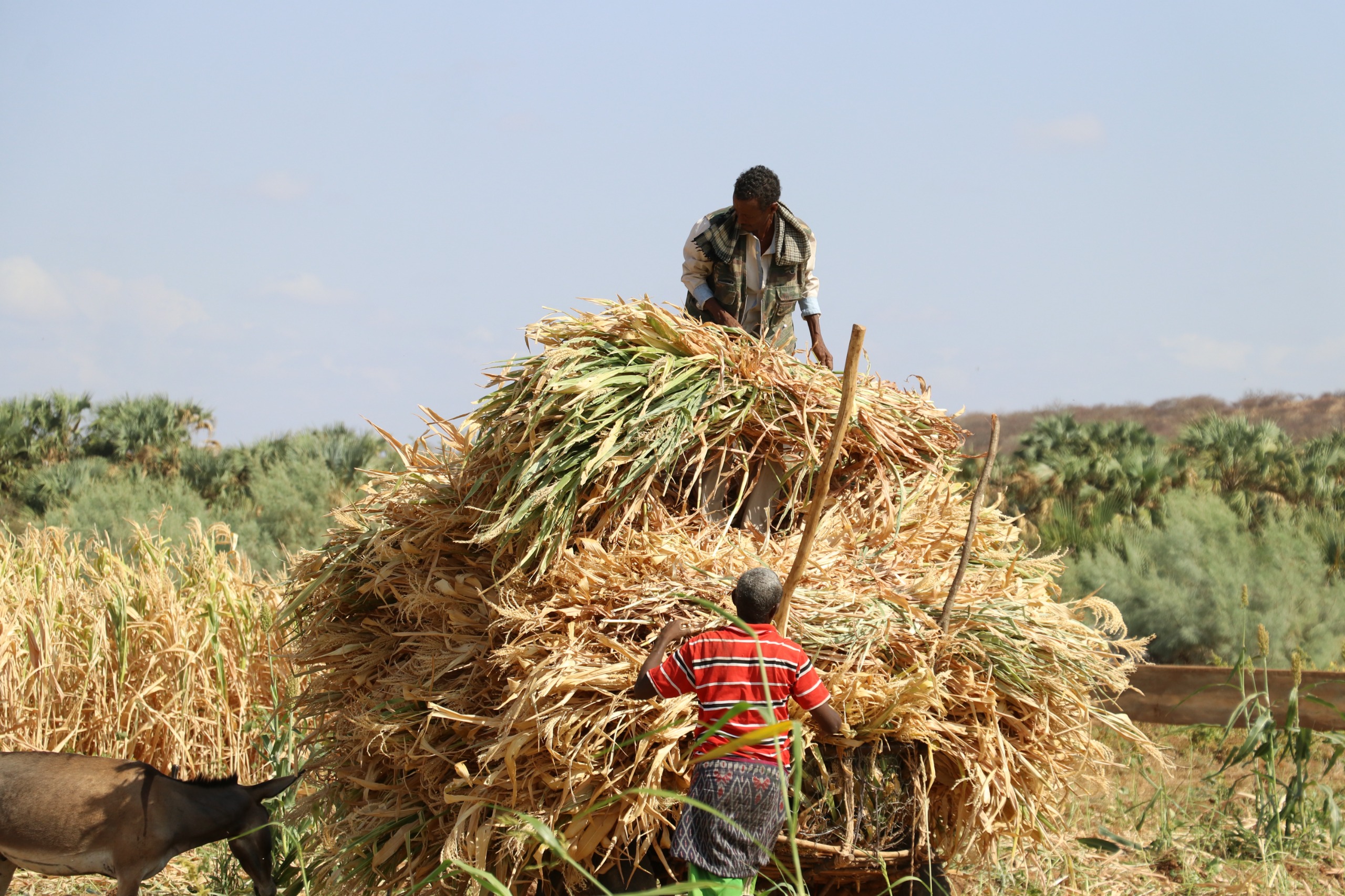 Farmers in Maygag,Lafey subcounty load their fodder harvest
on a donkey cart to transport to the local fodder store.
Farmers in Maygag,Lafey subcounty load their fodder harvest
on a donkey cart to transport to the local fodder store.
Ali Kassim Hassan, farmer and beneficiary, from Fiqow disclosed that among their 11 female group members, four are widows raising their children alone, reiterating how the project is enabling vulnerable women to earn an income and ease the burden on their lives.
Mohamed Noor, another beneficiary, said that the ever-changing climate condition calls for pastoralists to think outside the box thanking those who are behind the project for holding their hands and supporting them at their hour of need.
Adan Mohamed Abdinoor said that before the project he used to pick lemons from farms to resell at the market just to feed his family, but things have changed since he was trained on climate-smart farming, and he now has skills to grow and manage fodder.
In an interview, Yussuf Mohamed, Chief of Party, BORESHA-NABAD said the initiative is part of their broader activities to support communities in the area in better adapting their livelihoods to climate change and environmental degradation by enhancing the adoption of adaptive climate-smart agro-pastoral techniques and climate-resilient income-generation activities, particularly among women and youth.
“As climate extremes become the new normal, our intervention envisages beyond producing fodder. We are establishing market linkages by connecting farmers to markets across the borderlands and leveraging this connection as a path to peacebuilding, an economic enabler,” he said.
He added: “This collaborative approach not only extends the impact of the project beyond its duration but also fosters enduring relationships between farmers, agro-vets, and seed suppliers. By connecting all stakeholders in the agricultural value chain, BORESHA-NABAD is not just transforming farms but also nurturing a thriving ecosystem of support and growth for all involved."
He said the plan is to scale the model across other drought-prone areas in the Mandera Triangle, linking fodder farmers to regional livestock markets and introducing mobile forage banks to strengthen availability during dry seasons.
Mohamed Noor, Deputy County Livestock Officer for Mandera, described the project as a bold step towards self-sufficiency and resilience.
“We’re seeing a shift from dependency to dignity where farmers are taking control of their future, one harvest at a time,” he said.
The project is part of the broader EU Peaceful and Resilient Borderlands program, which aims to foster peace and resilience in the borderland areas of Kenya, Somalia, and Ethiopia.