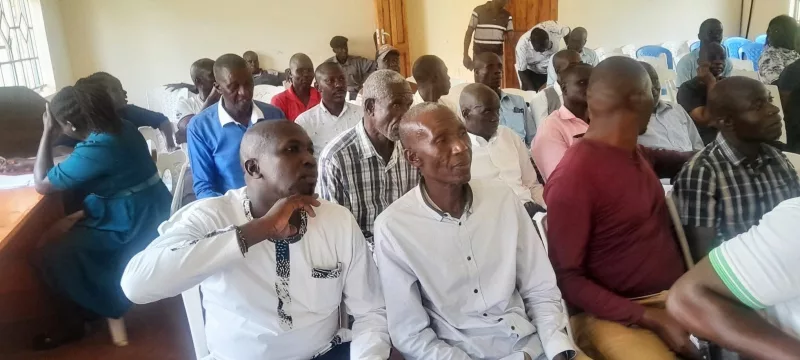
It's Thursday morning and the waiting area at the Jaramogi Oginga Odinga Teaching and Referral Hospital renal unit is already filling up.
Patients sit quietly, some scrolling through their phones, others staring into space, lost in thought.
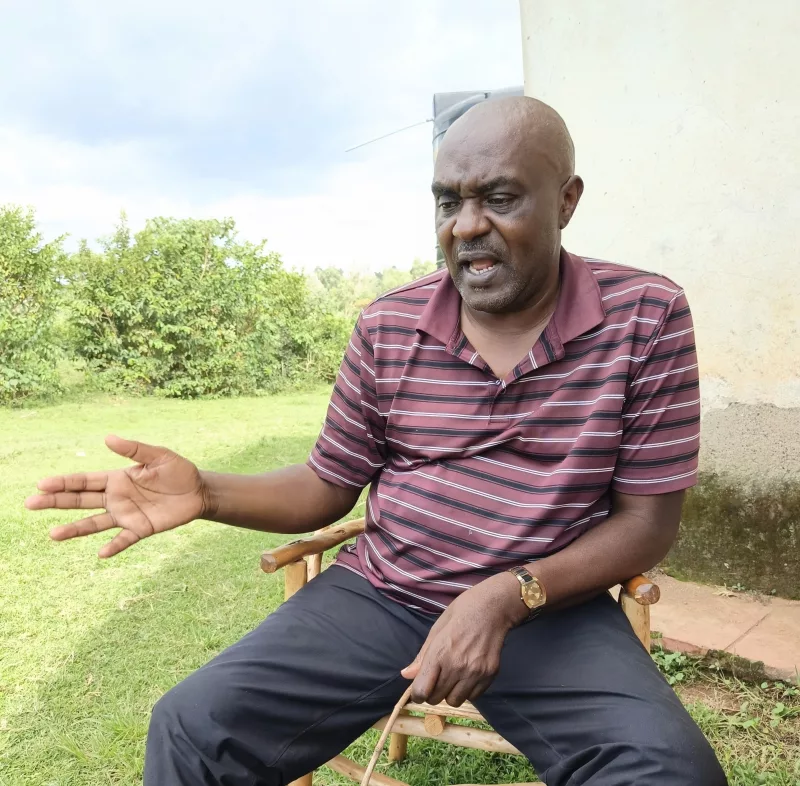
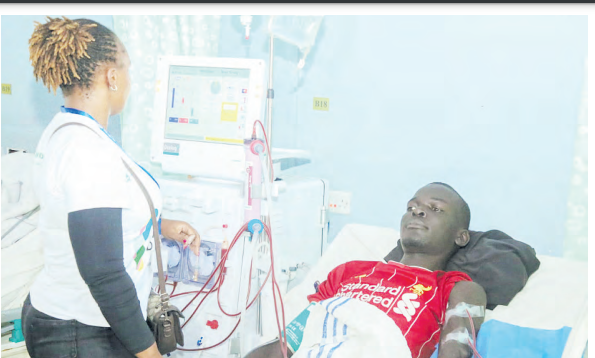
Among them is 30-year-old Victor Onyango, who has been coming here for dialysis since 2022. His face is calm, but his journey has been anything but easy. The rhythmic humming of machines doing the work of failing kidneys fills the air.
“When I first heard about kidney disease and screenings, I thought it didn’t apply to me, you know, when you think of going to the hospital just for a test, you feel like you are inviting diseases upon yourself,” he says.
Onyango’s journey began in 2022, when he was still in Form 4. His legs started swelling, his body felt heavy and felt dizzy often. Desperate for answers, he visited several hospitals, but none could provide a clear explanation, until he was referred to JOOTRH where doctors discovered the cause of his symptoms, a chronic kidney disease.
“I was shocked,” Onyango recalls. “I never thought it would be something so serious. I was told my kidneys had failed, and I had two options, dialysis or a transplant. I chose dialysis because I simply couldn’t afford a transplant due to the cost.”
But as Onyango soon realised, dialysis wasn’t a quick fix. It became his new reality, an exhausting, unrelenting routine that changed his life.
Twice a week, he would travel to the hospital, an effort that required not only money for transport but also the emotional toll of adapting to his new life.
His diet changed drastically, and the foods he once enjoyed were now off-limits. Even his energy levels became unpredictable.
Sometimes, his blood levels would drop, and he’d need blood donations from family and friends just to survive. “Dialysis is not easy,” Onyango admits.
The financial burden also never eased. While NHIF used to cover many costs, the shift to the Social Health Authority programme has left patients like him struggling.
Dialysis is still covered, but many essential drugs are not. “I spend around Sh600 a month just for my medication and that’s not even counting transport and other costs. It’s a constant struggle,” he says.
The strain is not just on families but also on the healthcare system.
JOOTRH chief executive officer Richard Lesiyampe, spoke about the challenges faced by dialysis patients, emphasising how draining the process can be, not just for the patients, but for their families and the country as a whole.
“Dialysis is a difficult, resource-heavy process,” he said, adding that patients need more than one session a week, and each session costs a significant amount if not covered.
In a year, one patient will spend close to Sh1.5 million just on dialysis. It’s a burden.”
The hospital has taken steps to improve care for these patients, increasing the number of dialysis machines and beds from seven to 17 in recent months to cater for the growing demand.
Yet, Lesiyampe believes more needs to be done, especially when it comes to kidney transplants.
“We want to ensure we can offer transplant services here, so patients don’t have to rely on dialysis forever. Dialysis can sustain life for 10 to 15 years, but a transplant can give them a new lease on life,” he says.
The need for kidney transplants is growing, with JOOTRH alone serving around 60 dialysis patients. However the number for dialysis patients across the county’s health facilities swells to over 350.
Lesiyampe called for more specialists in the region, highlighting the urgent need for kidney transplant programmes to save lives and reduce the reliance on dialysis.
Dr Florentius Ndinya, a consultant physician and nephrologist at JOOTRH, said early screening for kidney disease is important.
“Kidney disease often goes unnoticed until it reaches advanced stages,” he said, adding that the most important thing is early detection, which can prevent or delay the progression to end-stage kidney failure.
JOOTRH during World Kidney Day offered free screening services to the public, encouraging people to get tested even if they don’t feel sick.
Ndinya noted that many of the patients on dialysis are in their prime working years, between the ages of 30 and 50, which makes the issue all the more pressing.
“Chronic conditions like hypertension and diabetes are major risk factors for kidney disease. If we can identify these conditions early, we can prevent them from developing into full-blown kidney failure.”
Unfortunately, many people only visit the hospital when they are already feeling unwell, often when the disease has advanced too far to reverse.
The solution, according to Dr Ndinya, is routine screening, which can detect kidney disease before symptoms appear and help doctors intervene early.
While dialysis remains the primary treatment for many patients, JOOTRH is integrating newer technology, such as Hemodiafiltration, which removes more toxins from the body than dialysis.
Dr Nyinya noted that before the introduction of the new technology, they were using the conventional hemodialysis machine for management of chronic kidney disease.
The conventional hemodialysis machine also follows the same principle of online HDF of removing waste and managing acidity in the body, but the process was restricted to filtering out smaller particles of waste from the body.
“The conventional hemodialysis machine can remove toxins, but up to a certain level. The new technology, on the other hand, removes slightly more toxic waste, what we consider slightly larger molecular waste toxins.”
Dr Ndinya added that the online HDF machine is a game changer and will go along way in improving the quality of life for patients with chronic kidney disease.
He added, “If we can improve dialysis outcomes while working towards transplants, we can significantly extend patients’ lives.”
However, he noted that not every patient is a candidate for transplant. As Onyango prepares for his session, he has one message for the public, “Go for screening, it is very important.”