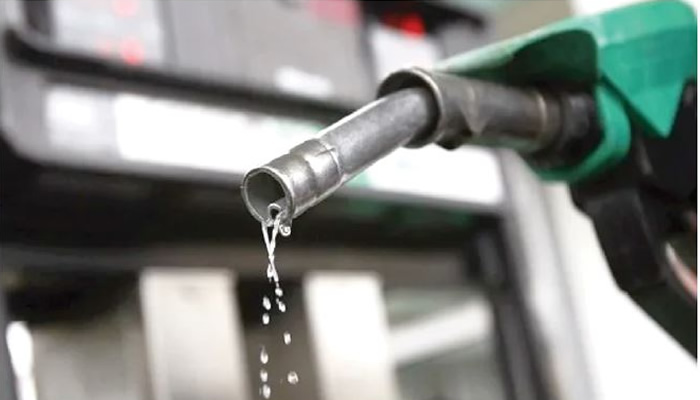
The Energy and Petroleum Regulatory Authority (Epra) has effected higher margins for Oil Marketing Companies, importers, dealers and transporters, in a move that has denied motorists and households cheaper fuel products.
While Epra has retained pump prices for the March-April cycle, it has increased Oil Marketing Companies (OMCs) margins to Sh15.24 per litre of petrol, Sh15.16 on diesel and Sh15.09 on a litre of kerosene.
This is up from Sh12.39 on petrol that OMCs have been making and Sh12.36 on diesel and kerosene, respectively.
Storage and distribution charges have also increased to Sh4.36, Sh4.06 and Sh4.02 for the three products, respectively. This is up from Sh4.03 per litre of petrol, Sh3.74 on diesel and Sh3.70 for kerosene.
Importers (wholesale) margins have also gone up to Sh5.52, Sh5.44 and Sh5.37 for petrol, diesel and kerosene, respectively.
This is up from Sh4.20 on petrol and Sh4.17 that wholesalers were making from a litre of diesel and kerosene.
Investors in the retail business of petroleum products have also received a boost after the regulator increased the retail investment and operating margins to Sh9.72 per lire for the three products, up from Sh8.19.
On Wednesday, Epra Director General Daniel Kiptoo said the move has been informed by a market study that pointed to the need to increase margins for businesses in the petroleum sector to match the prevailing operating environment, where costs have increased.
Kiptoo promised to ensure the impact on consumers remains minimal as it strikes a balance between the price adjustments and the falling global crude prices and a much stable shilling, which has seen the landed cost remain low.
Tankers moving petroleum products within a 40 kilometres radius of Nairobi have been allowed to charge Sh0.86 per litre, up from Sh0.54 per litre of the the tree products.
The increase in margins is being implemented in phases, with the final pricing expected to have a pump effect of Sh7.80 on a litre of petrol, Sh7.75 per litre of diesel while Sh7.67 on a litre of kerosene.
The tariff increase is informed by the Cost of Service Study in the Supply of Petroleum Products (COSSOP) undertaken by a consultant –Kurrent Technologies, commissioned 14 months ago.
It is part of a five-year cycle tariff review by Epra with the first COSSOP conducted in 2018, which was implemented in December of that year.
The five-year review is pegged on the need to factor in investment costs in the petroleum industry, which have since gone up. For instance, the last time investors in the tanker business had a review was in 2010.
“We are here to balance the interests of investors, consumers, and the government. In terms of implementation, we are looking for a mechanism where we implement the recommendation of this report in phases. We want to time it at a point where it will not impact the consumer negatively, and we want to apply it at a time when we are having the petroleum prices come down,” Kiptoo had said earlier.
He said the move will help cushion investors from the high cost of doing business, where some have since been pushed out of the market.
“The cost of investing in this sector has gone up and if you look for instance at an investment by the transporter... in 2010, the cost of diesel was Sh70. This person has been tied to the same delivery contract for all these years. So there is a justification. If we don’t do this, many of these businesses will shut down,” Kiptoo said.
He noted petrol station owners have also been hit by high operating costs, including staff costs and rent, among other bills, which, if not addressed, hundreds will be forced to close, meaning loss of business and jobs with further implications to the economy.
A litre of petrol will hence continue retailing at Sh176.58 in Nairobi, Diesel (Sh167.06), while a litre of kerosene will go for Sh151.39 until April 14, when Epra will review the prices.
Far northern of the countries have the highest prices above Sh160 per litre owing to logistical costs, with Mombasa enjoying the cheapest fuel prices owing to its proximity to the port where products land.
“In the period under review, the maximum allowed petroleum pump prices for super petrol, diesel and kerosene remain unchanged. The prices are inclusive of the 16 per cent VAT in line with the provisions of the Finance Act 2023, the Tax Laws (Amendment) Act 2024 and the revised rates for excise duty adjusted for inflation as per Legal Notice No. 194 of 2020,” Kiptoo said in the fuel pricing release on Friday.
The average landed cost of imported super petrol increased by 1.34 per cent from $628.80 (Sh81,398)per cubic metre in January 2025 to $637.22 (Sh82,488)per cubic metre in February 2025.
That of diesel increased by 1.41 per cent from $671.14 (Sh86,879)per cubic metre to $680.63 (Sh88,107)per cubic metre, while kerosene decreased by 1.36 per cent from $681.44 (Sh88,212) per cubic metre to $672.14 (Sh87,008) per cubic metre over the same period, Epra noted.