The new funding model for higher education is flawed and ineffective, an audit review has concluded, casting doubt the idea championed by President William Ruto would work.
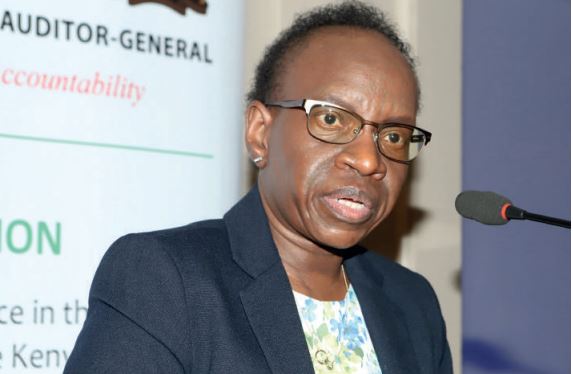
In a new report, Auditor General Nancy Gathungu says a review of documents and interviews with fund management revealed critical challenges in the model.
“The effectiveness of the new funding model for higher education in supporting students funding requirements could not be confirmed,” she said in the review of the Universities Fund accounts as of June 30, 2024.
It emerged the new funding model has neither a link to the Higher Education Loans Board and the Technical and Vocational Education and Training department, nor other government agencies dealing with higher education students’ support.
“There is no coordination between the other government agencies dealing with higher education students’ support,” Gathungu said.
Auditors further established the new model was not integrated with the Kenya Universities and Colleges Central Placement Services (KUCCPS) system.
This means there is no seamless tracking of students from placements in the universities to funding.
Gathungu said her analysis of students’ payments report revealed payouts to students who could not be traced to their learning institutions, as the entries had no registration numbers.
There were students whose registration numbers were duplicated. It also emerged 15 students got more than half a million yet had not been placed by the KUCCPS.
Scholarships were paid to students who had either deferred their studies, not reported, or were expelled during the year.
“As such, the effectiveness of control over scholarship management processes could not be confirmed,” the report reads.
After taking over the reins, Ruto adopted a funding model, which shifted towards a system where higher education loans and bursaries were to be awarded based on financial need.
A means testing instrument employed in the fund classifies students into five financial bands within which they are allocated the amounts to facilitate their learning and tuition fees.
The instrument was to ensure targeted support through scholarships, loans and household contributions. But the review established that data submitted by students seeking loans was inaccurate, leading to distorted scores in the means testing instrument.
Auditors said many students were not aware of the fund, with the limited public awareness leading to an information gap among the intended beneficiaries.
Gathungu has also raised inclusivity concerns as it emerged vulnerable groups such as students with disabilities or those from marginalised regions faced difficulties accessing the fund.
“There were also emerging concerns on unique challenges, such as those faced by Muslim students who require Sharia compliant financial products, further hinder inclusivity,” the auditor general said.
She is further concerned the fund may not sustain itself considering the low repayment rates for loans issued to students.
"Loan repayment burden due to high unemployment and underemployment rates make it challenging for graduates to repay their loans, increasing their default rates and threatening the sustainability of the fund,” Gathungu said.
The university funding model took off on a turbulent note, with stakeholders lamenting it did not guarantee equity, fairness in the distribution of student loans and scholarships.
Owing to the teething problems, students have had to wait for long to access loans, some of which remain outstanding as of Thursday, with a promise they’d be paid by on Friday.
Last December, a court declared the new funding model unconstitutional, citing it for being discriminatory, hence violating students’ right to education, and that it was not subjected to public participation.
In the ruling, Justice Chacha Mwita said the government’s responsibility in funding public universities and passing the responsibility to parents was a violation of the constitution.
The courts held the “legitimate expectation of the citizens was violated” in the rollout of the new varsity funding model – officially called Variable Scholarship and Loan Funding (VSLF) model.
In the case, the litigants, among them Kenya Human Rights Commission, Elimu Bora Working Group, Boaz Waruku and a students’ caucus, convinced the judges the new model locks out thousands of students.
They reasoned the model has to a large extent hampered learning in universities, hence amounted to a breach of the right to education.