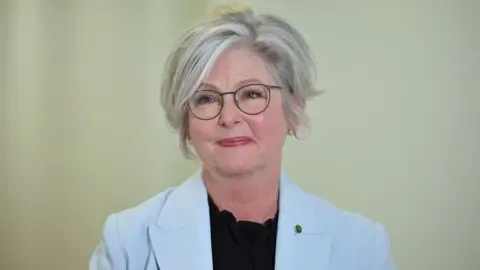
Breast cancer remains a scare for women and lately men, as statistics show it is the leading killer type of cancer in Kenya. Miriam Mutebi, a breast cancer surgeon and professor is among the oncology warriors leading the charge to stop the disease in its tracks.
The president of the African Organisation for Research and Training in Cancer says Kenya is rich in cancer policy, but not much strategic investment has gone into rolling them out to ensure significant gains.
Mutebi, Kenya’s first female breast cancer surgeon, told the Star that millions of Kenyan women are yet to be sensitised on breast cancer awareness.
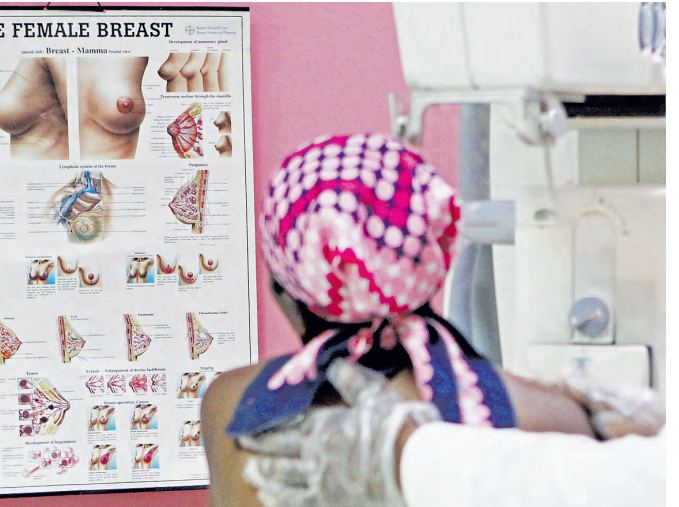
Physical self-examination as part of the strategy to detect the disease early and heighten chances of survival, is particularly low. She shared her insights.
From your position as a continental leader in oncology, how is Kenya doing in terms of policy and resource allocation to combat the scourge of cancer, particularly breast cancer?
Kenya is doing relatively well with efforts in improving breast cancer care compared with other African countries. It was recently ranked in the top three African countries by the World Health Organization, along with Algeria and Nigeria in terms of leadership, governance and financing for cancer.
There have been a lot of efforts here recently, including last year’s launch of the Women’s Integrated Cancer Services initiative which combines screening for breast and cervical cancers.
We’re on the right track, but we still have a way to go before we’re providing comprehensive, quality care for all women, from early detection and quick diagnosis, right through the full treatment journey and survivorship.
African women have the lowest survival rate of this disease. What do you think is the issue and what could be done differently?
Yes, too many African women are still only getting diagnosed in the later stages of breast cancer when it’s harder to treat. This is why the survival rates are so low.
In higher income countries, 90 per cent of women can expect to survive five years after being diagnosed; in Africa it’s just one in two women.
Our message is that breast cancer does not have to be a death sentence. It’s treatable, but you have to catch it early. We need better education programmes to teach women how to check their breasts and recognise symptoms.
And we need to make breast cancer early detection strategies much more widely available, especially for rural communities.
What does the pattern of the disease tell us?
Breast cancer is the most commonly diagnosed cancer in our country, accounting for about 7,200 new cases per year as of 2022.
In Africa, the incidence of breast and other cancers is increasing quickly. In Kenya, like in most African countries, our patients tend to be much younger – the average age of diagnosis is between 40-55 years.
With the intentional investment in health systems and the expansion of the workforce improvements, many patients are now getting diagnosed at earlier stages and completing their care in comparison to ten years ago.
The increase in grassroots advocacy through civil society organisations has led to increasing awareness, particularly in urban areas.
Do you think the SHA framework presents a credible intervention for dealing with the disease and other NCDs?
The Africa Breast Cancer Council, of which I’m a member, takes a pan-African approach. We look at how countries across the continent are tackling breast cancer and we draw out lessons from successful approaches to share.
It would be difficult to comment on a country-specific framework that has been recently initiated, but what we generally find is that countries with strong national health insurance schemes that reach broad swathes of the populations tend to be more successful in improving outcomes.
The key thing is to overcome the situation we see in many countries where we have many women putting off care or interrupting it because of financial hardship.
Given your vantage position, which African country is leading the way and whose practice can Kenya borrow?
As president of the African Organisation for Research and Training in Cancer (AORTIC) which is a continental body of health workers, researchers, cancer advocates and policy makers across the cancer care continuum, we have seen a collective increase in many countries on the need to do more to address the rising cancer burden.
What we find when we look at countries with improved outcomes for women is that they tend to have certain things in common.
One is high-level political support to improve breast cancer management as part of women’s health initiatives coming from the very top of government.
Another is having a strong national cancer-control plan. The more successful countries have also attracted a lot of investment into their health systems to enable them to bolster dedicated breast cancer care.
Egypt, for example, has managed to dramatically cut the number of women diagnosed in the later stages of breast cancer by boosting early detection and screening programmes to reach 34 million women in four years.
This happened under their Presidential Initiative on Women’s Health which has fostered international collaboration among scientists and policymakers and provides a potentially replicable model for how other countries can work towards better breast cancer care.
Also, Rwanda just recently announced it is now covering 98 per cent of the population for cancer treatments, through the development of a national community insurance fund.
They have managed to do this through innovative financing models, for instance using road traffic fines for speeding. It’s not a simple ‘cut and paste’ approach from country to country as systems differ and what works in one health system may not necessarily work in another.