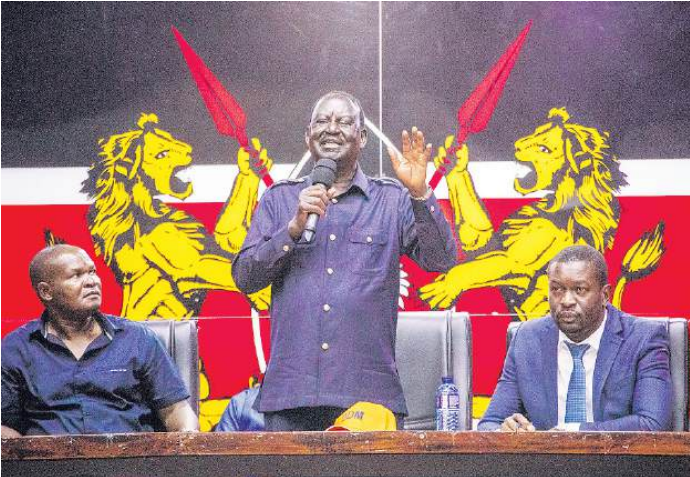
Former Prime Minister Raila Odinga famed for years of human rights champions now finds himself at crossroads even before the ink dries in his new political deal with President William Ruto.
The veteran opposition chief, who has built his legacy on fighting against oppressive governments and championing democracy, now finds himself in a tight corner.
Some of his ardent supporters are silently wondering about the new move to work with the government that, in their opinion, represents everything Raila has fought in his political career.
His anti-establishment politics has endeared him to the masses and as a result, he has earned a near fanatical following across the country.
Many believe aligning with the government risks eroding his moral authority and political standing. President Ruto’s two-year administration has been accused of amongst others, abductions of critics, human rights violations and suppression of dissenting opinions.
State-funded Kenya National Commission on Human Rights put the total number of abductions at 82 youth since June last year, with 29 yet to be traced by December 2024.
While the 80-year-old is no stranger to political reinvention, the baggage of the current association now makes the new alliance far trickier to sell.
By agreeing to support Ruto, Raila is now presented with two options. He will either close his ears to the ideals he has held for decades and enjoy the trappings of power, or engineer change within – which may create cracks in the government.
The fear in Raila’s camp is that the deal with Ruto might render the opposition chief just another veteran swallowed by the system.
Raila’s loyalists sounded the alarm before the deal was formalised, with some telling him not to betray what the party has stood for over the years.
Siaya governor James Orengo - who has also been in the trenches and battled on the streets during the regimes of almost all five Presidents – made a passionate appeal to Raila and ODM to ‘go slow’.
“I have been around for some time. I was there during Kenyatta, Moi, Kibaki and Uhuru. I will still be around. I would appeal to our people to go slow on any political deal until we thoroughly consult and agree on a better way forward,” the governor said.
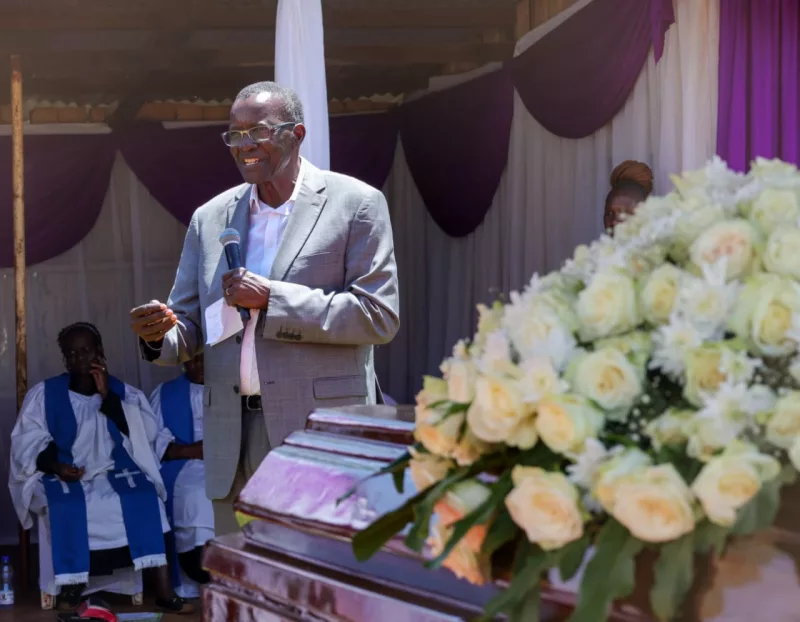
Orengo spoke on March 1, during the burial of the mother of journalist Justus Ochieng’ in Siaya. Firebrand ODM secretary general Edwin Sifuna has also been reluctant to endorse Raila’s move, citing the excesses of the Kenya Kwanza administration, which fly against what ODM believes in.
In one his of fiery speeches, the Nairobi senator highlighted the continued abuse of human rights - especially abductions - a matter he said ODM will never be party to.
“President Ruto has proved that he cannot take care of Kenyans,” Sifuna said during a morning talk show on Citizen TV.
However, the Nairobi Senator appeared to have finally embraced the Ruto-Raila deal. Sifuna, who was present at the offi cial signing of the power-sharing deal, said he attended the event in his capacity as ODM secretary general.
Former ODM director of political affairs, Wafula Buke, opined that the political settlement may come at a higher cost for Raila and his Orange party.
“Has it occurred to him that his intended marriage with Ruto will spell the end of ODM as a national party and confine it to a Luo Nyanza Party?” Buke posed.
“Has it occurred to him that his recent and ongoing actions could motivate victims, survivors and kin of people killed in his demonstrations to demand for reparations from him for using them in selfish pursuit of his own interests?”
In the deal, Ruto handed ODM a near-equal share of cabinet slots and top government positions. These will include Cabinet secretaries, principal secretaries, parastatals and ambassadorial jobs. Currently Deborah Barasa, Eric Muuga and Mutahi Kagwe head the Health, Water and Agriculture dockets respectively.
The recent sharing of committee leadership in Parliament is part of the coalition deal between the President and the ODM boss.
The Orange party has assumed leadership of at least seven committees in the new power arrangement that saw lawmakers allied to former Deputy President Rigathi Gachagua shown the door.
Some of the MPs who were proposed for committee leadership include Sam Atandi (Budget and Appropriation), Benard Shinali (Trade), Irene Mayaka (Regional), Ken Chonga (Labour) and James Nyikal (Health).
In the Senate, Siaya Senator Oburu Odinga is the new chair for the Energy committee while his Migori counterpart, Eddy Oketch, now chairs Transport.
Other ODM Senators chairing committees are Betty Montet (Education), Mohammed Faki (Lands) and Juma Boy (Trade). The deal is a culmination of Raila’s cross-country consultative meetings that has seen him visit ODM bases.