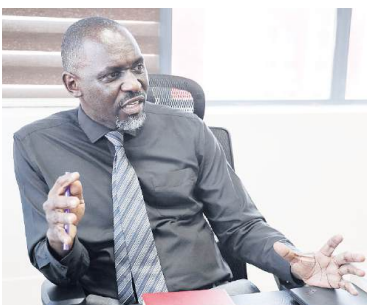
Vincent Chahale started his career at the State Law Office defending the government in civil matters and providing legal counsel, including in matters of police accountability.
Now, roles have changed. As the new Kenya country director of International Justice Mission-Kenya, he is documenting cases of human rights violations, especially abuse of power of the police.
The organisation made news for its unrelenting push for justice for human rights lawyer Willie Kimani, who was killed alongside Josephat Mwenda and his taxi driver Joseph Muiruri in 2016.
Kimani was then a staff member at the organisation.
From meticulous documentation of the case to shedding light on those involved in the killing that shocked the country, IJM’s fingerprints were in the 2023 verdict, which handed the main perpetrator, Fredrick Leliman, a death sentence. Other convicted officers received long jail terms.
The organisation is also at the forefront of combating sexual violence against women and children. Chahale was recently appointed to take over from Benson Shamala, who has since left the organisation,- to pursue other interests.
The Star met him at his Parklands office, where the soft-spoken lawyer said his passion for a fair criminal justice system has been a childhood obsession. He believes the law should protect even the most vulnerable.
“For me, issues of human rights and a working justice system that protect everyone, that is time-conscious and effective in observing the rule of law, have been a passion that started when I was young. It has been the theme of my working life,” he says.
Looking back, Chahale adds life has always prepared him for his current assignment. “I served for almost eight years as a state counsel in the then Attorney General’s chambers, where all state counsels were domiciled.
“I was in the civil litigation department and worked on numerous cases that had been brought against the police. That experience gives me adequate knowledge of the task at hand.”
While at it, Chahale developed an understanding of what bedevils policing in Kenya and how it can be dealt with.
Later, he worked in the defunct Ministry of Justice and Constitutional Affairs before joining the in augural team that established the Ombudsman’s office.
“These responsibilities sharpened my inclination to fight for the vulnerable in society,” he says, a mindset that perfectly fits into IJM’s perspective that all should be free from violence, including people living in poverty.
Chahale says it is regrettable that the socioeconomic status of people should influence how the law is applied to them.
“If three young men walk in the streets of Karen (in Nairobi) at night, and another set of three walk in the streets of Mathare at the same time, which [group is] more likely to be stopped by police, get arrested, forcibly disappeared or even be murdered in cold blood? The ones in Mathare, right? This means people’s socioeconomic realities determine their vulnerability,” he says.
Chahale adds that his work will
not only seek accountability for
unlawful actions by police but will
also forge collaborations since reforms can only come with meaningful partnerships.