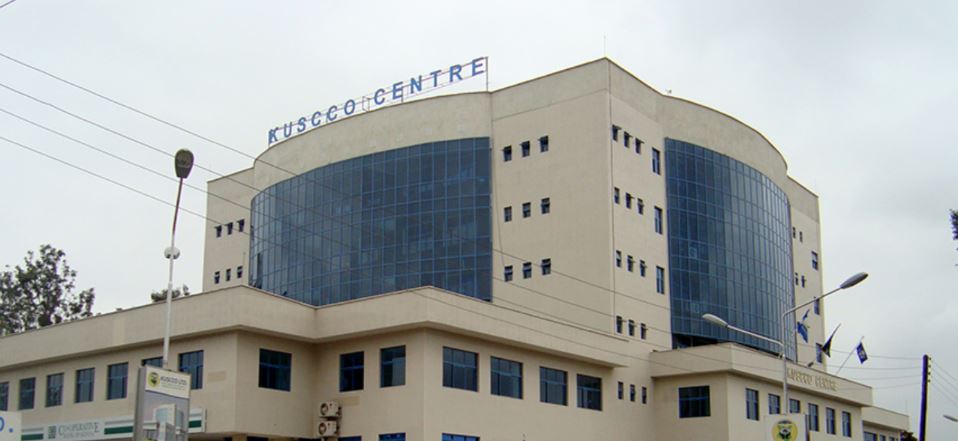
The explosive 208-page forensic audit of the Kenya Union of Savings and Credit Cooperatives by PricewaterhouseCoopers can give the best box office fraud thrillers a run for their money.
But unlike crime fairytales in top financial film masterpieces such as Wall Street, Boiler Room, A Good Year, Margin Call and Rogue Trader, the financial deceit at Kuscco is real and threatens to extinguish the trust that has held the cooperative movement together in Kenya for more than 60 years.
At the centre of the Sh12.5 billion financial scam are ‘three Georges’. Former managing director George Ototo, finance manager George Owino, and chairman George Magutu, who are accused of cooking the books to reflect fictitious profits and dividends.
This manipulation has thrown the deposits from 247 institutions, more two per cent of all regulated Sacco deposits, into turmoil.
The forgery of a dead official’s signature to legitimise Kuscco’s 2022 financial statement is perhaps the darkest humour, yet the straw that broke the camel’s back in one of the country’s biggest financial frauds was made more tantalising by phantom profits and ghostly accountability.
The audit report by PwC was handed to the Inspector General of Police Douglas Kanja for investigation and prosecution of those found culpable by Cabinet Secretary for Cooperatives and Micro, Small and Medium Enterprises Wycliffe Oparanya.
It shows that the trio of Georges misstated Sh9.3 billion, concealed Sh6.5 billion in internal loans, withdrew Sh1.6 billion in commissions, and Sh3.7 billion in hidden transactions, putting Sh24.83 billion in deposits from 247 Saccos at risk.
The report further reveals how the officials inflated the assets of the apex Sacco by Sh14 billion, pocketed Sh206 million in unexplained cash withdrawals labelled as “branch replenishments”.
According to the PwC report, the executives seized control of the institution’s financial reporting process, systematically inflating incomes while cutting reported costs to create an illusion of profitability.
The rot at the institution that was ironically created to advocate, train, and lobby for Saccos extends to procurement where the audit unmasked Sh1.2 billion paid in unquestionable contracts.
For instance, 14 out of 16 contractors for its housing project in Kitengela did not sign any agreement. The report further shows the organisation sold houses with no evidence of deposits, putting the giant union into huge losses.
One transaction revealed that only Sh5,000 was wired into the account. One example is four units sold to Dolphine Buoga through transaction processing system.
The report shows that for her fi rst purchase, there is a trace of Sh400,000 made to Kuscco Housing Fund one-half of the fund used to build the houses. This transaction was made on December 9, 2019.
“Deposits for her other TPS loans remain untraceable,” the PwC audit says.
This is notwithstanding the Sh400,000 is not a full deposit, as per the TPS agreement. Another is the case of Thomas Chira, who also got a house through TPS at a quoted price of Sh10.5 million.
“From the bank statements, we can only trace a transaction of Sh5,000 deposited to the KHF Coop account,” the report states.
There is also the case of Cyrus Kabira Njine, who was awarded a discount of Sh1 million in questionable ways. The report further lists TPS loans that have been marked as paid off with no evidence of complete payments. This involves a case of former Kuscco director Alfred Mwadime Mlolwa who was granted a TPS loan as a staff at a rate of Sh7.8 million.
“His loan statement (member number 15327) records a payment of Sh7.36 million, marked as lumpsum payment clearing the TPS loan. However, this amount is not traceable in the bank statements,” the audit report says.
PwC concludes that the true financial position of the organisation was hidden behind a sophisticated web of internal loans and transactions designed to confuse even seasoned financial experts.
Last week, the regulator, Sacco Societies Regulatory Authority (Sasra) termed losses at the institution as “too significant for full recovery, even with asset sales,” dealing a final blow to millions of Sacco members who now stare at disappearing life savings.
“They can recover something but not 100 per cent. I don’t think that will be possible because we are talking about billions here. The assets that are being talked about are Sh5 billion,’’ Sasra boss Peter Njuguna said on a live TV broadcast Tuesday last week.
The crisis exposes Kenya’s fragmented oversight, where Saccos thrive in a regulatory grey zone between Sasra, the Cooperatives ministry and the CBK.
As a result, Saccos and their depositors face major financial losses. Among the hardest hit are Mhasibu Sacco, which stands to lose more than Sh480 million; Kimisitu Sacco, which could lose more than Sh353 million; and the Law Society of Kenya Sacco, which expects to lose at least Sh19 million.
Unlike commercial banks, Saccos lack a lender of last resort, deposit insurance, or stringent governance rules — a gap exploited by Kuscco’s leadership.
Last week’s order by the regulator directing affected Saccos to absorb fi nancial losses arising from mismanagement at Kuscco did not satisfy the Nyati Sacco Society, which has since sued the regulator for shielding the embattled entity.
Nyati’s lawyer, Earnest Kimaita, appearing before High Court Judge John Chigiti in Nairobi, termed the directive as unfair and irregular.
“The applicant contends that the aforesaid guideline, which must be implemented immediately as per the respondent’s letter above mentioned, was issued ultra vires, is irregular, unfair and contrary to the objects and functions of the respondent about the applicant,” he said.
Perhaps most alarming is the revelation that Kuscco had been operating deposit-taking and insurance services without proper licensing, in direct violation of the Sacco Societies Act.
The regulatory vagueness is so glaring that the Cabinet Secretary for Cooperatives and MSMEs Wycliffe Oparanya admitted in the wake of the report that there was “no oversight” over Kuscco due to inadequacies in the existing legal framework.
The organisation’s status as an ‘apex body’ allowed it to fall through the cracks of regulatory scrutiny, evading oversight from Sasra, despite managing close to Sh25 billion in member deposits Industry expert Jerome Mudachi said the scandal has exposed significant gaps in Kenya’s cooperative laws, particularly the absence of robust mechanisms to monitor and regulate apex bodies such as Kuscco.
“The dual licensing authorities — Sasra and the Commissioner for Cooperatives — created confusion and enforcement gaps, enabling Kuscco to go rogue and operate with impunity,’’ Mudachi told the Star.
The fallout from the Kuscco crisis threatens to destabilise Kenya’s entire cooperative movement, which serves more than 6.4 million members and holds assets worth Sh890 billion.
The immediate impact has been a crisis of confi dence, with withdrawals from Saccos surging by Sh30.8 billion in 2023 as members have lost faith in the system’s integrity. As if Kuscco’s implosion weren’t enough, Kenya’s Sacco landscape has been hit with another devastating blow.
Last month, the Commissioner for Co-operatives David Obonyo declared Metropolitan National Sacco technically insolvent, with an estimated Sh7 billion required for the institution to regain financial stability.
A 2022 government-ordered investigation unveiled a catalogue of financial irregularities: Sh49 million in M-Pesa transactions by a single teller at the Nakuru branch; overstatement of the Sacco’s premier loan facility by Sh7 billion due to suspected phantom members, and false dividend payments issued from member savings rather than surplus reserves.
It also unearthed Sh490 million in non-performing loans irregularly issued to employees, Sh176.9 million unaccounted for across multiple branches, and Sh703 million in unexplained board expenditures from 2015 to 2022.
In 2023, members of Mwalimu Sacco suffered close to Sh11 billion sunk in the collapsed Spire Bank, an investment decision largely implemented by top officials of the giant teachers’ saving scheme.
When CS Oparanya recently issued guidelines prohibiting Saccos from borrowing to pay dividends, it highlighted a sector-wide vulnerability.
It came to the fore that Saccos
have been engaging in dangerous
financial acrobatics to keep members satisfied with their returns. This
has been the case since pre-independence, as early as 1931, when the
first Co-operative Ordinance prioritised administrative control over
financial oversight.