It is 3pm in Nairobi.
Faith, a receptionist at a city restaurant, is enjoying the refreshing controlled temperatures at Naivas Supermarket after enduring the unusual scorching sun and heatwave in Kenya’s capital for nearly two months.
“I walked from my job place in Upper Hill to the Central Business District. This tough economy is forcing me to keep fit," she jokingly tells the Star but does little to conceal the unsettling look in her eyes as she reads price tags of commodities on a shelf.
“Tutatoboa na hii uchumi kweli (Will we survive in this economy)?”
An equally disturbed man, standing next to Faith, says after picking two packets of milk from the shelf.
The mother of three had planned to spend Sh3,000 on two kilos of sugar, a box of 18 packets of milk, four packets of maize flour, toothpaste, two packets of sanitary towels, two litres of cooking oil and stationery for her four-year-old son who recently joined school.
“This has been my typical monthly budget for the past five years now, but it keeps appreciating every time I visit. This trend has worsened in recent months. I now have to spend Sh1,500 more on shopping.”
Last Friday, the Kenya National Bureau of Statistics reported that inflation rose to 3.5 per cent in February up from 3.3 per cent the previous month.
The Consumer Price Index, a measure of the average change over time in the prices paid by consumers for a representative basket of consumer goods and services, rose to an all-time high of 143.12 points.
The state statistician attributes the rise in cost of living to high food inflation that rose by 6.4 per cent.
“Notably, prices of sugar, cooking oil and tomatoes rose by 3.2, 1.6 and 1.3 per cent, respectively, between January and February 2025,” KNBS Director General Macdonald Obudho said.
Economist Eddy Mukhabana says the latest increase in CPI further lowered the value of Sh1,000 to Sh590, down from Sh625 in December last year.
“The amount can only buy you four key commodities in the food basket down from five in December.
These are a packet of two kilos of sifted maize flour at Sh149, a kilo of sugar at Sh155, a litre of cooking oil at Sh349 and 10 units of electricity at Sh300,’’ he said.
Although her employer paid on time, Faith says she has nothing to smile about as her Sh50,000 gross salary, which has stagnated since COVID-19 shook the world, keeps shrinking as the government hikes statutory deductions.
“I thank God for this job, though. I know of many people who have lost their jobs and are currently struggling to put a meal on the table. Money has become elusive, families are breaking and people are sinking into depression,’’ she said.
Ken Muhia, who operates a minishop in Kamuguga, Kiambu county, is contemplating closing after his debt record exceeded actual revenue.
Families are struggling. The ratio of those borrowing basic household goods like maize four, sugar, milk and even bus fare to workplaces has gone up in the past months,’’ he told the Star.
“They used to pay. Some of them have been my loyal customers for over a decade now. I’m running out of stock with no money for restocking. There is something wrong with our economy. It is not business as usual.”
Muhia’s observation marries the latest consumer spending index by ICEA Lions Asset Management that shows that credit advanced by shopkeepers in the form of goods and services has become a key lifeline for consumers in a distressed economy.
According to the report, 43 per cent of those surveyed bought food on credit from shopkeepers, while 49 per cent of households borrowed from friends and relatives to buy basic needs in the last quarter of 2024.
The survey noted that a sizeable 55 per cent experienced stagnant income year-to-date, exacerbating the challenges posed by rising prices for essentials such as food, housing and healthcare.
The annual Financial Services Monitor report by investment firm Old Mutual released mid last month shows that 47 per cent of employed Kenyans are highly stressed, with financial struggles being the main reason impacting on employees’ physical and mental health.
According to the report, 70 per cent of Kenyans surveyed reported a decline in their 2024 incomes, and only three in 10 Kenyans are left with some money after meeting basic expenses at the end of the month.
As Kenyans from all walks of life lament about the deteriorating state of the economy, President William Ruto’s government maintains that the micro-economic environment has improved since it came to power, citing eased inflation, bank lending rates, stable shilling and growing Gross Domestic Product.
On February 13, the National Treasury held a much-publicised presser conducted in the middle of Harambee Avenue in Nairobi, where exchequer bosses highlighted the progress made in boosting momentum towards putting money in people’s pockets.
National Treasury CS John Mbadi and his principal secretaries Chris Kiptoo and James Muhati took turns to explain how life was becoming easier for Kenyans, with the cost of living dropping by over six per cent from a peak of 9.6 per cent in October 2022 when the ruling Kenya Kwanza Coalition took power.
Mbadi said with the shilling now stable at 129 units against the US dollar from a high of 160 and interest rates now averaging 14.5 per cent after the Central Bank’s monetary committee cut the base rate to 10.75 per cent in January, the private sector is expected to get cheaper credit to boost production, resulting in job opportunities and cheaper goods and services for consumers.
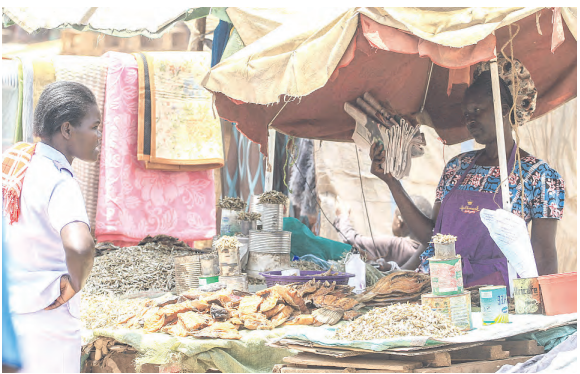
As treasury bosses speak of better lives and greater days ahead, Miriam Mukatsa, a vegetable vendor in Kangemi, Nairobi, wonders where the government derives its impressive data from.
“I only hear of better living on television. Life is becoming unbearable every day. I cannot recall the last time my family had three meals in a day. Food, transport, fuel, clothes, rent, school fees, among other basics, will soon be luxury for the elite few,’’ she said.
Tom Onyango, a Nairobi-based fashion designer, says while Kenyans do not expect freebies from the government, they expect it to come up with sound and effective tax and economic policies to strike a balance between production and consumption.