The recent nomination of President William Ruto as the runner-up in the OCCRP’s “Person of the Year” ranking for corruption demands scrutiny beyond populist social media condemnation.
The decision to rank him alongside leaders widely recognised for corruption is perplexing, especially given the significant strides his administration has made in reforming governance structures.
This approach by OCCRP seems to align more with online sentiments than a fair analysis of Kenya’s progress under Ruto’s leadership.
Since taking office, the President has shown a clear commitment to fighting corruption.
His administration has introduced substantial reforms that address some of the most persistent governance challenges.
Notably, Ruto has strengthened the Judiciary, ensuring its independence and capacity to handle corruption cases effectively.
By increasing funding and independence for this institution, the head of state has paved the way for a more transparent system.
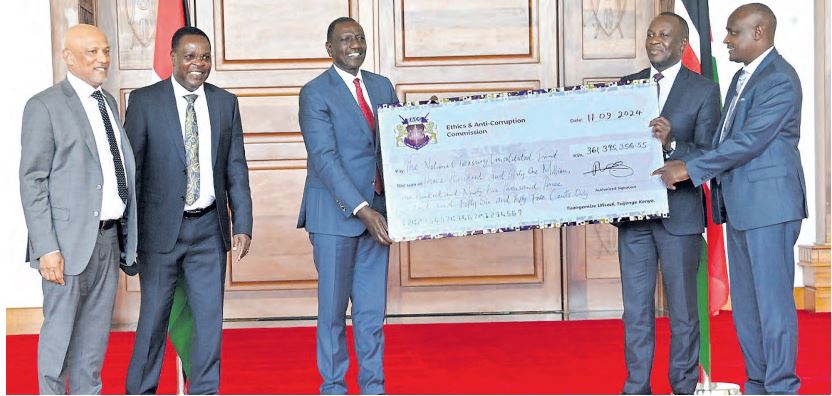
Additionally, his administration has empowered key oversight agencies like the Ethics and Anti-Corruption Commission and the Auditor General’s office to scrutinise government actions more effectively, holding officials accountable.
Efforts to reduce inefficiencies in public spending and the digitisation of government services further promote transparency and accountability.
Ruto’s government has also enhanced public financial management, introducing tighter controls on public expenditure and greater access to government operations through digital platforms.
These actions represent significant progress in the fight against corruption.
However, OCCRP’s decision to nominate Ruto seems to overlook these tangible steps, instead amplifying critics with limited factual evidence.
The nomination also appears to be a reaction to increasing criticisms on Kenya’s social media platforms, where misinformation often spreads unchecked.
Critics, many of whom remain anonymous, continue to circulate unsubstantiated claims of corruption.
These allegations are frequently fuelled by political agendas rather than verified facts and amplified by individuals more concerned with partisanship than national interests.
This phenomenon of “keyboard assassins” has become a significant problem, where misinformation can quickly spiral out of control.
Unfortunately, OCCRP seems to have been influenced by this digital noise, which relies on unproven accusations rather than concrete evidence.
This reliance on social media-driven accusations has led to knee-jerk reactions from organisations like OCCRP, which should prioritise thorough investigative journalism.
The ranking, which is supposed to be based on careful analysis, seems swayed by the intensity of online outrage rather than an objective evaluation of Ruto’s record in office.
The use of social media as the primary source of evidence undermines the credibility of OCCRP’s rankings and raises questions about their commitment to fact-based reporting.
Furthermore, the larger issue must be addressed: why should respected international agencies like OCCRP allow themselves to be influenced by the volatile dynamics of social media?
The sheer volume of online criticism, much of it based on unverified claims, should not suffice to sway investigative agencies.
A failure to differentiate between fact-based reporting and sensationalism undermines OCCRP’s mission and credibility in the global anti-corruption movement.
Allowing social media narratives to dominate the conversation on corruption presents significant dangers. When online smear campaigns take precedence over objective investigation, the result is a distorted view of reality that undermines genuine anti-corruption efforts.
President Ruto’s administration has made tangible progress towards transparency and accountability, yet these efforts are often ignored by those perpetuating baseless oline claims.
This reflects a broader issue within global anti-corruption eff orts: when international organisations fail to distinguish between unverified online narratives and verified facts, they risk misdirecting focus and undermining real progress.
Kenya has long demanded greater accountability from its leaders, and under President Ruto, tangible reforms have taken place.
From judicial reforms to enhanced audits and digitalisation, Kenya is making strides toward a more transparent government.
However, it is crucial to recognize both the positive changes and the areas where accountability is still needed.
As I pointed out in my earlier commentary on “keyboard assassins,” the media and international organisations must remain impartial, regardless of the noise in digital spaces.
OCCRP’s ranking of Ruto, seemingly influenced by the loudest online voices, risks damaging its credibility and undermining the efforts of those committed to fighting corruption in Kenya.
Focusing on reactionary judgments rather than thorough investigative reporting contributes to a cycle of misinformation that distracts from the real issues.
While Ruto’s administration is not without flaws, the ongoing attempts to tarnish his reputation with little evidence detract from the progress being made.
International organisations like OCCRP should take a step back, assess the achievements in Kenya, and avoid reacting to unfounded online narratives.
By Caleb Mwamisi, Political commentator