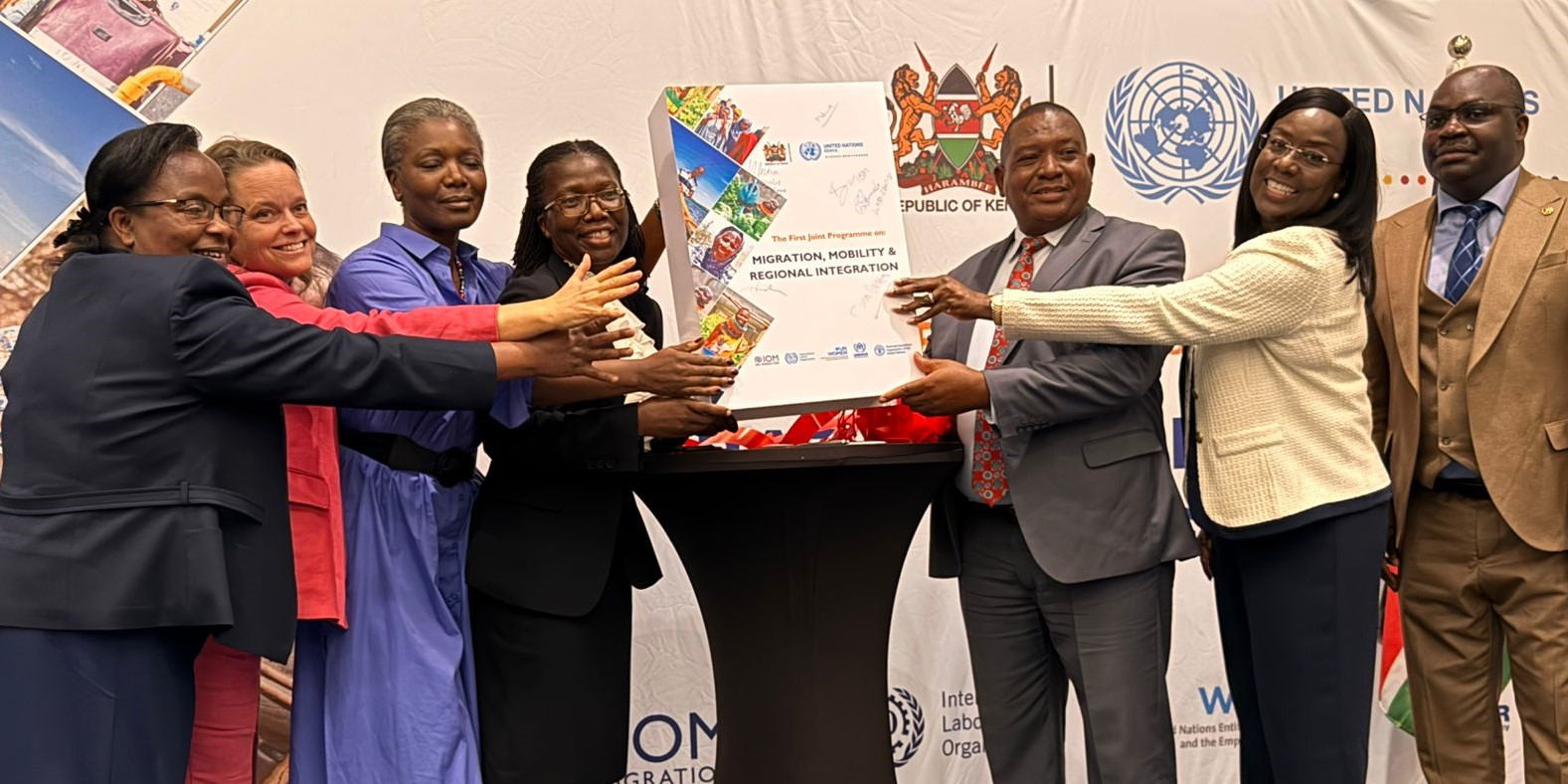
The United Nations in Kenya together with the government and several partners launched a 25 million USD joint program on Migration, Mobility and Regional Integration
This launch took place on December 10.
The Joint Programme on Migration, Mobility and Regional Integration will run for the period December 2024 to June 2026.
The intervention is aimed at supporting the fast-tracking of Vision 2030 and most importantly the Sustainable Development Goals in Kenya, in terms of capacity building, policy advocacy, and community participation, to strengthen social cohesion and regional integration.
The programme aims to create an inclusive and enabling environment for all Kenyans, especially marginalized populations; women, girls, children, youth, migrants, trafficked persons, and other persons with disabilities and other vulnerable.
According to the report the programme is destined to run for two and a half years and has a total estimated budget of 28.5 million dollars with 12.6 million dollars supported and a deficit of 15.9 million dollars.
The amount that is allocated by the board of the programme budget adds up to only $12.6 million, whereas $15.9 million of the original total remains unallocated.
As per the agencies, sources of funds include IOM ($ 7 million), UN Women ($170,000), FAO, UNHCR ($3.66 million), and ILO ($ 1.88 million).
Major objectives and pillars of this programme include improving migration management and supporting the formulation as well as execution of all-inclusive, rights-based policies in the governance pillar.
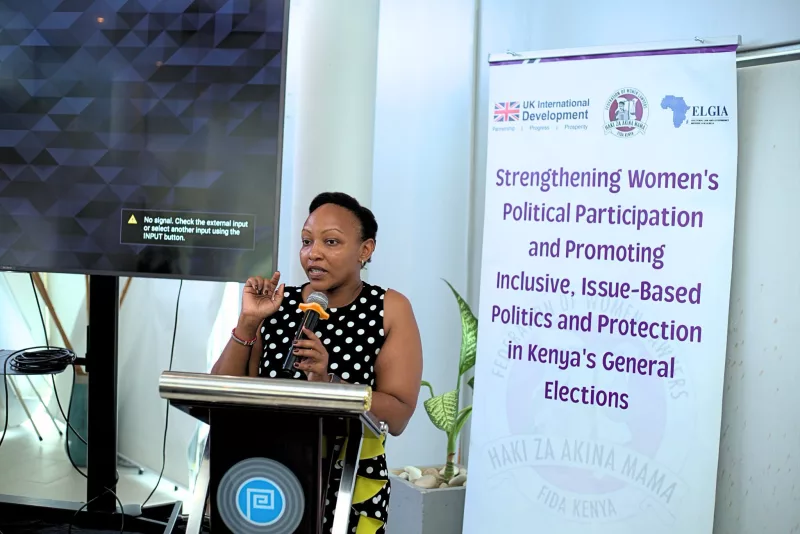
Ulrika Ferenius, Head of the Office of the UN Resident Coordinator Kenya, addresses stakeholders during the launch of the new joint program.
In representing Steven Jackson, the UN Resident Coordinator of Kenya, Ferenius expressed her happiness and pride for the event.
"Today, we mark a milestone that goes beyond the UN and government partnership it represents a whole-of-society approach to migration, mobility, and integration," Ferenius said.
Emphasizing the collaborative nature of the initiative she stated that the joint program, co-created by diverse stakeholders, is rooted in the Sustainable Development Goals and aligns with the UN Kenya Cooperation Framework, underscoring the commitment to protecting migrants' human rights and dignity.
"Migration and mobility have historically played transformative roles in poverty alleviation and economic growth," she stated
Ferenius continued by citing the fact that remittances contribute an impressive 3.6 per cent to Kenya’s GDP.
Also at the launch, UNHCR Representative Caroline van Buren, expressed her honour to be part of the event.
She highlighted the strategic importance of the program, noting, that Kenya is a major Migration Hub in the region. It's a country of origin, a country of transit, and a destination country for hundreds of thousands of migrants.
With over 800,000 refugees and asylum seekers, Van Buren noted that Kenya ranks as the fourth largest refugee-hosting country in Africa.
"The government and people of Kenya have shown immense generosity and hospitality toward refugees, many of whom have been here for more than three decades, " Van Buren emphasized
"It is highly commendable that Kenya is taking such pioneering steps forward on inclusion and integration of refugees in the country with the Sharika plan, and we look forward to seeing this developed in 2025."
According to the summary launch, it is currently ranked 17th most-at-risk country in the world by the INFORM Risk Index for 20234.
The report continued to state that Kenya is vulnerable to both human-induced and climate-related hazards including recurrent drought and floods, pandemics and epidemics, and inter-ethnic conflict
The said pandemics and epidemics which have driven populations to migrate in search of better livelihoods and to escape the impacts of the crises including prolonged droughts and climate are said to have induced displacements.
International Organization for Migration Representative (IOM) Sharon Dimanche, also delivered an address, emphasizing the importance of collaboration and shared commitment in tackling the challenges posed by migration.
"This launch is a testament to our collective commitment to addressing migration in ways that support the Government of Kenya’s Vision 2030 and align with the 2030 Agenda for Sustainable Development," Dimanche said.
Dimanche underscored the urgency of the issue, noting,
"At the heart of this work lies a moral truth — a truth that as fellow humans, we cannot turn our backs on the hundreds of thousands of people who are displaced, left homeless, or who tragically lose their lives due to drought, floods, or exploitation by smugglers and traffickers," she said.
She stressed that innovative, workable solutions are needed to address these challenges, calling on all stakeholders—whether from Kenya, the UN, or the private sector—to reflect on their contributions and the legacy they hope to leave.
"We cannot work in isolation. We need the private sector, civil society organizations, and governments to collaborate," she noted.
She continued to state that only through joint efforts can we ensure that migration contributes to sustainable development and stability.
"We cannot work in isolation. We need the private sector, civil society organizations, and governments to collaborate," Dimanche said.
The stakeholders reaffirmed their commitment to the challenges and opportunities of migration in a renewed commitment to the common sustainable solutions for Kenya and the other regions.