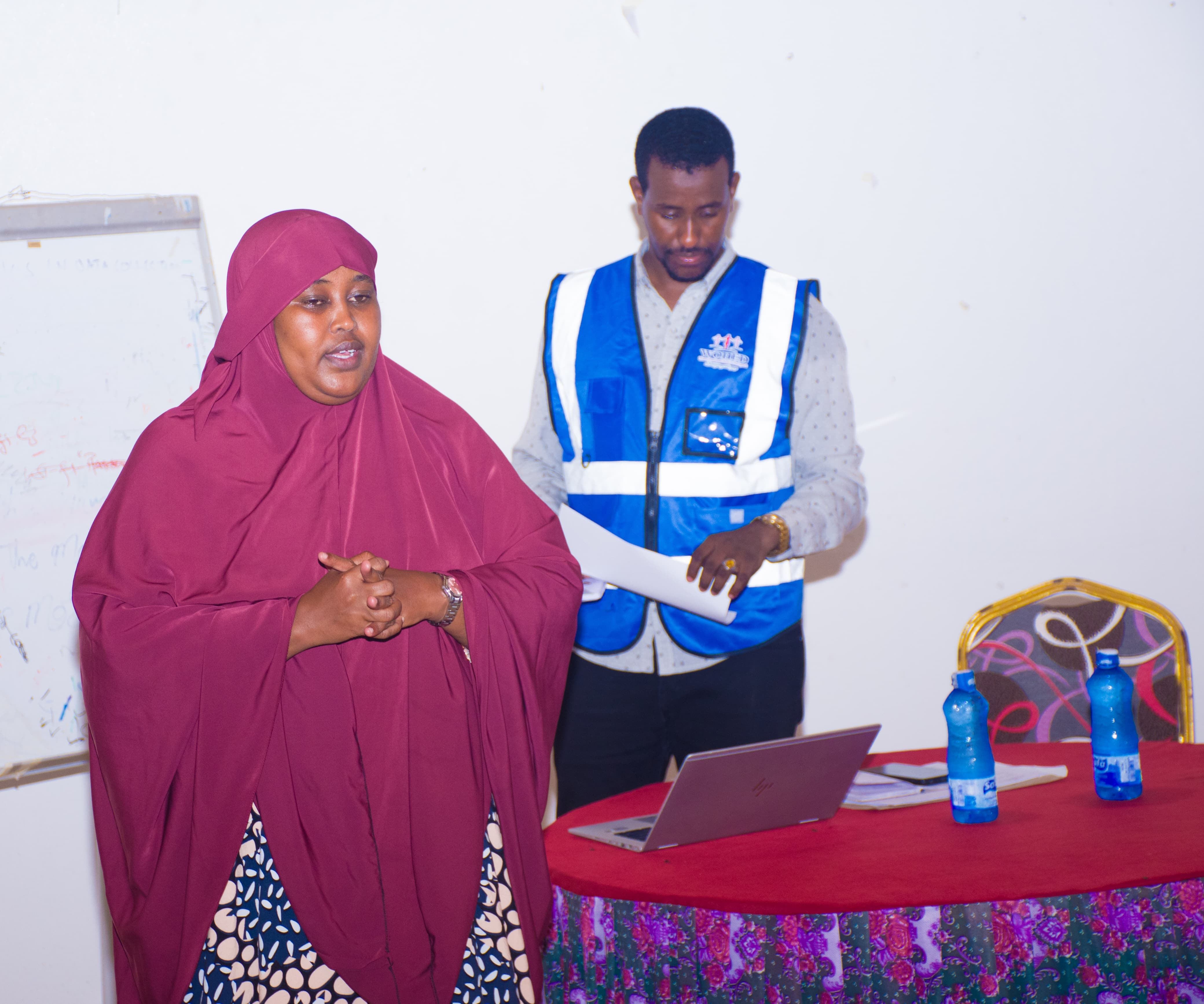
Health workers from Garissa and community leaders have been trained to fight the spread of the infectious tuberculosis in the Dadaab refugee camps.
TB is a serious illness that mainly affects the lungs. It is caused by the bacterium Mycobacterium tuberculosis.
It can spread when a person with the illness coughs, sneezes or sings. This can put tiny droplets with the germs into the air.
Women for Education Health Development's (WOHED)'s director, Fatuma Dekow, who spoke on the sidelines of training, said the team has undergone training and is equipped with the necessary skill set to connect affected persons and the health facilities across the refugee camps.
“We have done stigma assessment to understand the stigma level; that is where the health workers, religious leaders, and local leadership come in so as to help in reducing the same through community sensitisation,” she said.
The team called TB Warriors consists of health workers and community leaders.
"The porous border contributes to the influx of patients from neighboring country Somalia to Kenya, and our TB warriors provide that linkage since they are the backbone of the society," Fatuma said.
WOHED runs these projects that were funded by STOP TB, UNOPS, and Global at refugee camps consisting of IFO, Dagahley, and Hagardeer by doing advocacy in collaboration with the county and national governments.
The programe entails the teams going to affected persons where they talk to them on the importance of maintaining a good diet, accessing health facilities, offering them physiosocial support, and generally helping them with how to overcome the challenges.
The STOP TB-funded project also furnished patients with ONE IMPACT APP, where the affected persons log in to access information like knowing the nearest facility and also give feedback on challenges they are facing.
"The One Impact App is a brilliant tool at our disposal with the downside of the refugees lacking mobile phones, internet access, and language barriers since the app is in English and registered SIM cards to access the app," added Fatuma.
Siyadha Ali Aden, a community worker at the Ifo refugee camp, said WOHED has equipped her with the skill set to give better counseling to the patients and urged Stop TB to do more trainings for them.
“These numbers should worry all of us considering that this disease is infectious and that we can all contract it, we all have a role to play in not only ensuring that the cases of TB are reduced,” he said.