At 5am on a humid Monday, Mombasa awakens to the call to prayer
from nearby mosques.
In Kisauni village, Naomi
Achieng stirs, preparing for her day.
She works as a room steward in a luxury hotel on the outskirts of town. Before she can head to work, Achieng must complete a crucial task—dropping off her two-year old daughter at a nearby homebased childcare provider.
Achieng is one of many parents in Mombasa who depend on these caregivers, known locally as Mama Mlezi, to watch over their children while they work or manage daily commitments.
Despite playing a pivotal role in early childhood development, these caregivers often work in the shadows, unrecognised and unsupported.
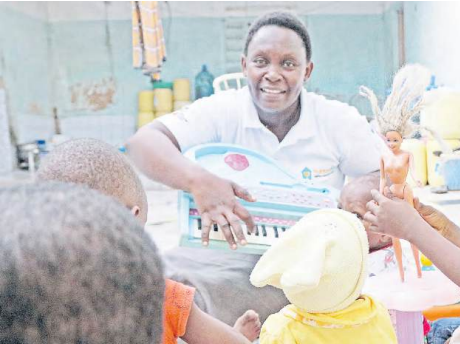
Dina Mutinda, a 42-year-old mother of five from Mtopanga, embodies the challenges and resilience of these unsung heroes.
In her modest two-room house, she cares for 18 children under three years, in addition to her own, in exchange for meagre wages or sometimes no compensation at all.
“Life is becoming unbearable,” Mutinda says, referring to the rising cost of living. In the workforce, which is predominantly made up of women, caregivers often receive less – in terms of pay – or basic amenities such as diapers and food, from some parents while they drop their children.
“I’ve had to dip into my savings just to provide basic necessities for the children,” she adds. Economic pressures forced her to reduce the number of families she serves from 26 to 18.
Home-based childcare providers work in unpredictable circumstances, Mutinda says, recounting instances where some parents would leave their children in her care for days – without giving any notification.
A former Early Childhood Development Education teacher, Mutinda’s journey into caregiving began dramatically. She adopted two abandoned infants—one found in a nearby thicket, the other left in a box near a graveyard in Kongowea-Makaburini, where Mutinda lived at the time.
The second baby was barely a day old, she adds. Similarly, Mama Zainab Bakari, a 58-year-old traditional midwife from Kongowea, is no stranger to the challenges of childminding.
Being a traditional midwife spontaneously made her develop a passion to love and care for children. But it was when she had to assume the responsibility of bringing up three of her grandchildren after the demise of their mothers, that her passion was stirred.
Bakari has also faced the heart-wrenching reality of parents abandoning their children, some leaving without a trace to seek work abroad.
She would later learn from rumours within the community that a parent sneaked out of the country to seek greener pastures, mostly in the Gulf nations.
Home-based childcare providers are often in informal settlements, lacking basic amenities. They typically charge between Sh50 and Sh200 per child for an entire day, making it difficult for many parents, who work casual jobs, to pay regularly.
In contrast to formal childcare centres, most home-based providers lack essential training in first aid and communication, leaving them vulnerable and underprepared.
The unpredictability of the work—ranging from irregular payments to cases of child abandonment—adds to their burden. Despite their struggles, Mombasa’s 2,284 home-based childcare providers offer more than just care; they provide stability and a familial bond.
“Recognition and support are what we urgently need,” Mutinda asserts. Organisations like NurtureFirst, incubated by the Global Development Incubator, are stepping in to amplify their voices.
Through stakeholder engagement and advocacy, NurtureFirst is working to institutionalise reforms that support both caregivers and the children they nurture.
Mutinda, a member of the newly formed Home-Based Childcare Collaborative Working Group, is optimistic. “We now see a future where a safe and just environment for children is no longer a dream but a reality.”
They are optimistic about building a better future, reflecting on how support programmes have strengthened her resilience.
The County Government of Mombasa, in collaboration with NurtureFirst and others, such as Sauti ya Wanawake Pwani, TEMA and Kidogo, is developing policies to formalise and support homebased childcare.
They aim to establish standards, create linkages for government support and ensure caregivers are registered and recognised.