Partner states within the East African community have been challenged to harmonise legislation governing inland waterways to reap maximum benefits.
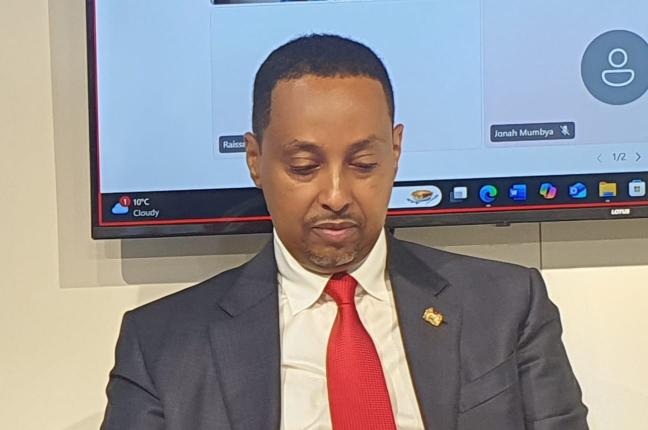
This was the rallying call by State Department of EAC Affairs PS Abdi Dubat on Monday.
The PS took part in one of the panel discussions ‘Promoting Sustainable Development of Inland Waterways Transport in East Africa.’
“Individual partner states have regional frameworks and legal frameworks, so to speak, that do not speak to each other,” Dubat said.
The PS is blessed with significant assets such as Lake Victoria, Lake Tanganyika, Lake Kivu, Lake Albert, Lake Edward and Lake Turkana.
Dubat said the region is also blessed with River Nile, Congo River and Kagera River.
All these assets can be used as a means for transport, seamless movement of goods and social and economic integration of our people, he said.
The PS said there are benefits associated with inland waters.
These include cost effectiveness, job creation, reduction in road accidents, and enhanced integration among others.
“If you can carry an oil tanker from Kisumu to Jinja, for instance, you can save 30, 40, even 50 trucks carrying the same fuel. And you can imagine the effect that has on our road maintenance, on our road safety, on pollution, on emissions.”
Dubat said a lot of work needs to be done to harmonise the legislations so that there is a regional legislation that will be able to govern how the utilisation of inland waterways and blue economies can be approached.
The PS said the legislations should also address search and rescue, and the rules of the game with respect to transportation within the inland waterways.
During the side events, Deputy Secretary General Infrastructure, Productive, Social and Political sectors, East African Community Andrea Aguer and Deputy Executive Secretary Lake Victoria Basin Commission Coletha Ruhamya were present.
Dubat said the EAC will be asked to write a white paper on inland waterways as an alternative transport mechanism and explore what can be done to drive that space.
The PS said some funding has been secured from the African Development Bank that has been extended to the Victoria Basin Commission, which is an institution of the EAC that is based in Kisumu and that looks at the Lake Basin.
“There's $9 million, and I think there's some $15 million, and a few others. And I think even some of the money that we've used in Kisumu might have come from development partners, including the development of the Kisumu oil jetty, the development of the Kisumu port.”
The PS said huge amounts have already been invested, but that is not enough. He said much more needs to be invested.
“So, we need to find out sustainable solutions and investments in that green space so that our blue economies and inland waterways can thrive.”
Dubat said it is important for the region and governments to look at the potential benefits and invest in that space.
“While we do that and create an enabling environment for these investments, the private sector will drive the largest component. So we need to create bankable investment options and proposals to our private sector so they can be able to invest.”