STORY BY KENYA NEWS AGENCY
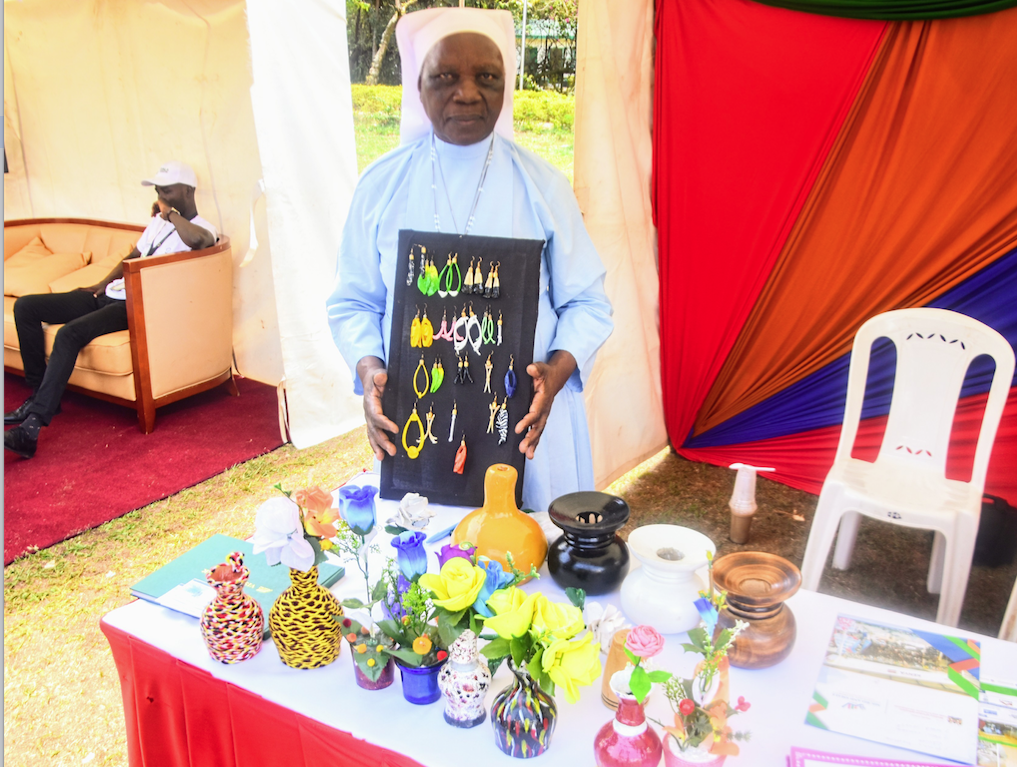
To help reduce fish waste generated from converting fish into chilled fillets for export in Lake Victoria, a 72-year-old granny has ventured into making ear rings and flowers from fish waste and bones earning admiration from environmentalists who have over the years championed the conservation of Lake Victoria.
Motivated by the desire to play an active role in conserving the lake, Norah Agwata, the Founder and Director of Norez Gifts and Flowers has teamed up with a group of 15 youths to expand the venture which is quickly gaining traction.
According to Norah, the idea was actualised during the Covid 19 lockdown which took a hit on businesses and pushed others to think outside the box.
"This idea came during the COVID-19 pandemic when a majority of the people were at home because of the restrictions imposed on movement. We had to keep our minds busy and survive simultaneously. I decided to venture into this sector," she said.
Based in Kisumu's Manyatta area, Norah's four-year-old venture has helped to empower and teach youth on how to clean and conserve the environment.
In an area where consumption of fish is on a record high, Norah immediately found a gap.
"We began cleaning our immediate environment and separated the bones from the rest of the waste. All these beautiful products you are seeing are made from fish waste," she said.
Norah's business has gained her both local and international customers with the majority of them using the flowers and vessels to decorate their compounds.
Recently, she travelled and sold some of the products in Kampala (Uganda) and Bujumbura (Burundi), a feat she describes as a milestone in her business.
Norah said in 2024, her team will be travelling to South Sudan for the same purpose of showcasing the skills and selling the products.
" When I visited these countries, I realised just how lucky we were as a nation. We have innovative and creative people with so much to offer and showcase even on the global stage," she said.
Selling for Sh200, the amount of money generated from the fishbone-earrings supplement the Sh2,000 monthly payments she receives from the Inua Jamii Cash Transfer Programme.
"I decided not to rely so much on the money from the government, instead have something like a side hustle to put food on the table," she said.
Her love for youths has made her engage and teach them ways of conserving the environment and in the process, help them earn instead of idling and engaging in activities that would otherwise land them in trouble.
"Whenever someone is idle, a lot of negative things cross their minds. That is why I put them together in a group and teach them financial literacy and independence," she said.
Her dream, she said, was to diversify into other ventures and train the youths on making milk and yoghurt out of soya beans and other beverages.
Lake Victoria, which is the second largest freshwater lake in the world, is home to different fish varieties which are processed for consumption and distribution to other parts of the world on a daily basis.
The process of converting the fish into chilled fillets for export generates substantial amounts of solid and liquid waste, estimated to be as high as 50-80 per cent of the original raw material, thereby posing significant environmental concerns.
Proliferation of medium-sized fish processing facilities along the lake shores has exacerbated the situation, with the Kenya Marine and Fisheries Research Institute (KMFRI) reporting that 150,000 tons of fish waste are generated each year, of which 80 per cent is dumped.
With a substantial portion of the fish waste being swept into the lake daily, experts are warning of the imminent danger to aquatic life since the decomposing waste depletes oxygen in the water.