Two-time Olympic marathon champion Eliud Kipchoge has challenged Kenya to raise its ambitions and work towards hosting Africa’s second Abbott World Marathon Major, after South Africa’s successful entry into the prestigious global series.
Kipchoge believes Kenya has the talent, marathon heritage and international reputation to stage an elite circuit event, which currently has seven established races and will welcome the Sanlam Cape Town Marathon as its eighth member in 2027.
Cape Town was officially confirmed as Africa’s first World Marathon Major on June 10, 2026, marking a significant milestone for the continent’s road-running industry.
Kipchoge was among the leading attractions at this year’s Cape Town Marathon, where he finished 16th in 2:13:29 on May 24. The race was his second stop in an ambitious three-year project to run a marathon on every continent.
Speaking at the launch of the inaugural, high-paying Sisibo Marathon, Kipchoge urged Kenya to go beyond its traditional dominance in competitive distance running and pursue a place among the world’s leading mass-participation races.
“Let us dream big; the Marathon Majors are growing. Today the Cape Town Marathon has pulled it off for Africa and joined the Marathon Majors,” he said.
“For many years, Africa has sent its runners to Marathon Majors outside the continent, but now we have our own Major Marathon.”
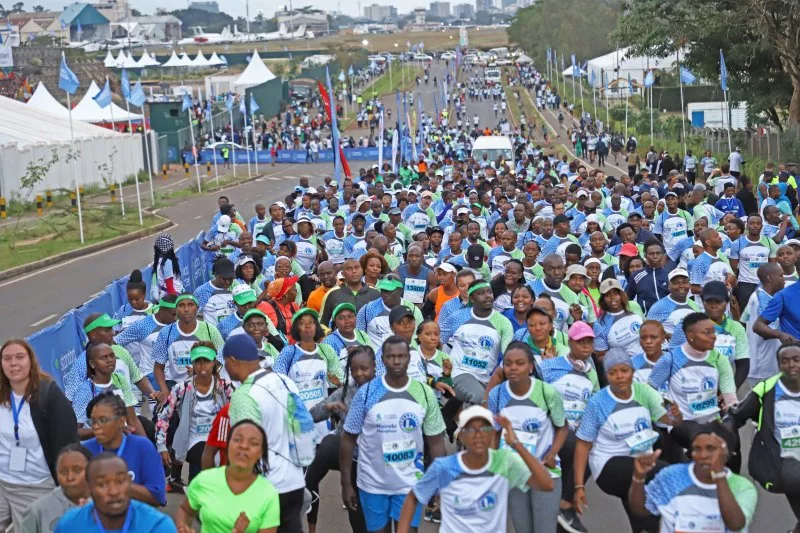
Kenya already has an established road-running calendar featuring the Standard Chartered Nairobi Marathon, Nairobi City Marathon, Lewa Safari Marathon and the newly launched Sisibo Marathon, scheduled for December 19.
However, the country still has considerable ground to cover in attracting mass participation, with only the Standard Chartered Nairobi Marathon having surpassed 30,000 participants.
Kipchoge believes the country’s vast pool of distance-running talent and established position as a global athletics powerhouse provide a strong foundation for such an ambition. “The best marathon runners live and train here in Kenya,” he said.
He added that securing Major status would transform Kenya into a major destination for international marathon tourism, attracting runners and spectators from across the world. “What if we have a Major Marathon in Kenya? Imagine runners from Tokyo, London and Europe coming to Kenya and the whole world watching us,” he said. “For me, that will be real success.”
However, the Kenyan legend cautioned that ambition alone would not be enough, pointing to the sustained investment and organisational improvements required to meet the demanding standards of the Abbott World Marathon Majors. “However, a dream needs work. Over many years, the Cape Town Marathon did the work to earn the status of a Marathon Major,” he said.
Cape Town’s admission followed a rigorous, multi-year evaluation process that assessed its organisational capacity, operational standards, financial stability and ability to deliver a world-class event. The race maintained AIMS Gold Label standards, developed a fast course, grew participation to approximately 27,000 runners and demonstrated strong safety and medical protocols.
It also secured long-term financial backing through title sponsor Sanlam and commercial partner Infront, while introducing a lottery entry system to manage demand. Kipchoge said Kenya would need to address similar requirements, particularly inclusivity, course quality, safety, medical services and financial credibility.
“We must make a race for everyone, for the young, old, Kenyan runners as well as visitors,” he said. “There must also be a good course, safety and medical care and prize money which is paid on time.”