
Trans Nzoia county
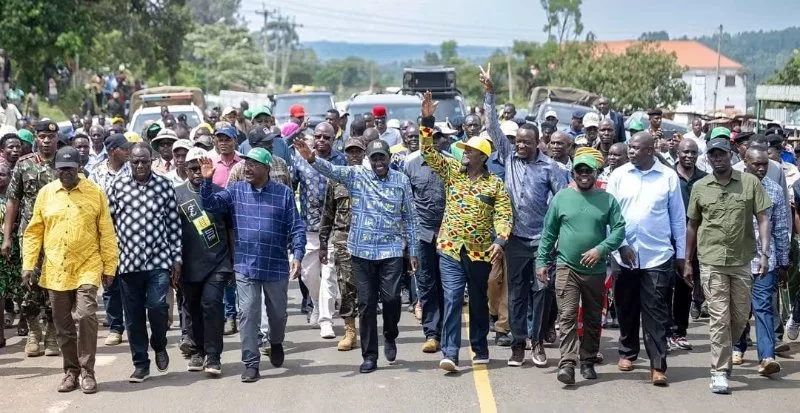
President William Ruto's promise of equitable development across Kenya is facing scrutiny over the apparent omission of Trans Nzoia from the flagship projects outlined for his Western Kenya tour against the backdrop of his strained political relationship with Governor George Natembeya.
Although Trans Nzoia is listed among five counties in a regional development report prepared by the Office of the Prime Cabinet Secretary, the document does not identify a specific flagship project in the county, unlike its detailed breakdown of investments in Kakamega, Bungoma, Busia and Vihiga.
The omission raises questions about whether the county's absence reflects the government's development priorities, an administrative oversight or the frosty relationship between the national government and the county leadership.
It also presents an awkward contrast with Ruto's repeated emphasis on Usawa ni Sawa (equality is fair), a slogan he has used to advance his administration's commitment to inclusion and equitable distribution of development opportunities.
In his State of the Nation Address on November 18, the President said every Kenyan deserved equal consideration, equal chance and a fair opportunity to advance.
"This is the practical meaning of Equity - Usawa ni Sawa: Not that every part of Kenya has identical needs, but that every Kenyan deserves equal consideration, equal chance and a fair opportunity to advance," he said.
He further argued that the country's development ambitions would remain incomplete if some communities continued to lack basic infrastructure enjoyed elsewhere.
"And yet, some have lived their entire lives without a single tarmacked road reaching their communities. Their entire lives. What many of us take for granted has remained a distant hope for other citizens. That is the inequality we are correcting. That is the Usawa they deserve," Ruto said.
The President's remarks provide the benchmark against which the regional development programme can be assessed.
The tour, which began on November 19, was initially scheduled to run in two phases, with the first leg ending on November 24 before the second leg from November 28 to December 1.
However, Ruto interrupted the engagements and travelled to the Democratic Republic of Congo on November 21 for a quadripartite diplomatic meeting, leaving uncertainty over the projects and counties that will feature in the remaining programme.
The development report presented by Prime Cabinet Secretary Musalia Mudavadi outlines investments across several sectors, including roads, affordable housing, healthcare, water, agriculture, education and industrialisation.
Kakamega County
In Kakamega, the government has listed the 43-kilometre Kakamega-Navakholo-Musikoma Road, valued at Sh2.84 billion, and the 36-kilometre Turbo-Shikhendu Road, estimated at Sh3.67 billion.
Other road projects include the 22-kilometre Malava-Samitsi-Navakholo Road, costing Sh1.63 billion, and the Kakamega Airstrip-Chepsonoi-Shinyalu Road.
The government is also upgrading the Shamakhokho-Kaimosi-Mpaka-Museno road network connecting communities in Kakamega and Vihiga.
Kakamega is further benefiting from a housing programme estimated at Sh14 billion, the Sh270 million Malaha Modern Market, the Sinoko irrigation project covering approximately 1,000 acres and the Sinoko County Aggregation and Industrial Park.
The irrigation project is reported to be 80 per cent complete and is expected to benefit about 2,000 farmers.
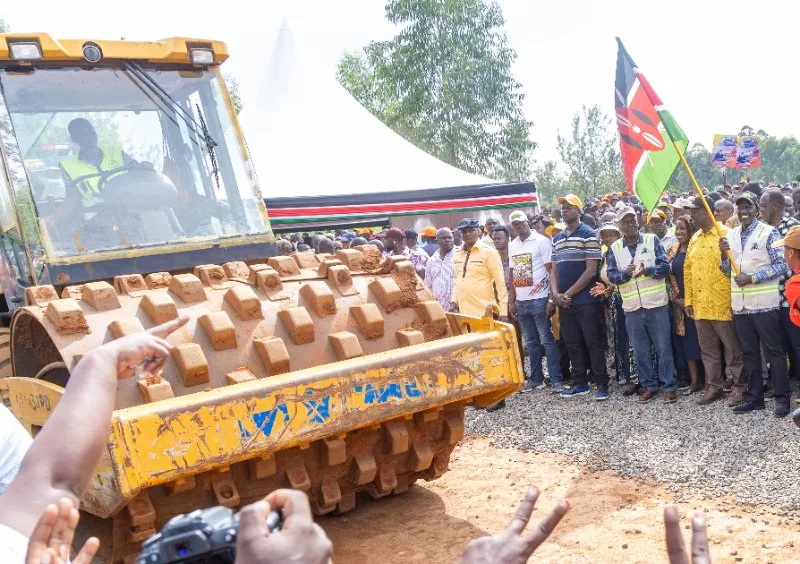
Other investments include the Kakamega County Teaching and Referral Hospital Level Six project, which is 85 per cent complete, the Bukhungu Stadium development, three water projects under the Malava programme valued at Sh712 million, Sh693 million and Sh554 million respectively, and the Sh212 million Shitoli Water Project in Ikolomani, expected to serve more than 45,000 residents.
The county is also earmarked for Sh2.6 billion in rural electricity connectivity targeting approximately 34,000 households, alongside the development of the Kakamega airstrip and an engineering and TVET complex at Masinde Muliro University of Science and Technology.
Bungoma county
In Bungoma, the report identifies the 41.1-kilometre Musikoma-Buyofu-Mungatsi-Myanga-Mateka Road, valued at approximately Sh1.96 billion and reported to be 75 per cent complete.
The 40.5-kilometre Bukembe-Nzoia Market-Mutomolo Road is also ongoing, alongside the Kimilili-Bokoli-Sikata road project and other connectivity works.
The county's other investments include the Kanduyi affordable housing project targeting 373 units, the Sang'alo County Aggregation and Industrial Park, a proposed Level Six hospital and the rehabilitation of Namuninge Dam at an estimated Sh289 million. Masinde Muliro Stadium is among the sports infrastructure projects listed.
Busia county
Busia's development portfolio includes the Sh860 million Nangina-Sio Port-Okados-Mundere Road and the Sh545 million Matayos-Namwitsula Bridge-Nasewa-CAIP-Shibale road.
The county is also implementing the Nasewa Affordable Housing Project, targeting 2,000 units at an estimated cost of Sh5.5 billion, and the Funyula housing project, which is expected to deliver 955 units.
Other projects include the Sh130 million Budalang'i Modern Market, the Sh500 million Nasewa County Aggregation and Industrial Park and the Sh469 million Alupe Dam.
The government has also allocated Sh1.17 billion towards student accommodation at Alupe University, while Busia Referral Hospital has received a new male ward commissioned by the President.
Vihiga county
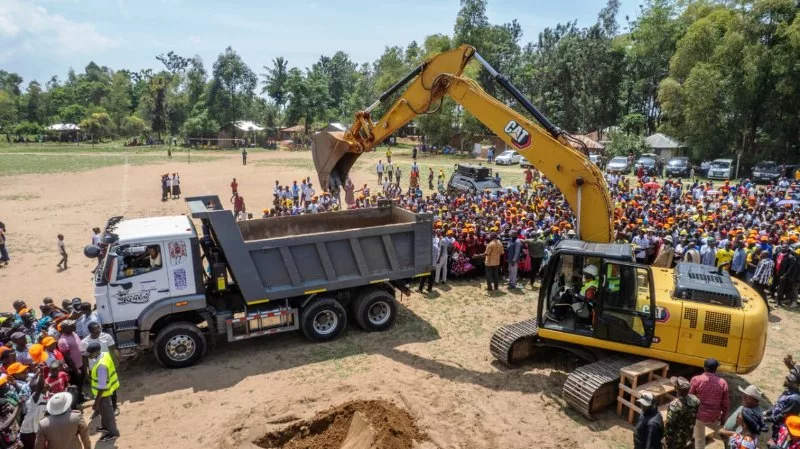
In Vihiga, the government has listed the 20.8-kilometre Mago-Mululu-Wangulu-Lusui-Vokoli road and the Mbale-Mbihi-Magada-Wemilabi-Luanda road.
The county has 220 affordable housing units at Vihiga Estate already commissioned, while modern markets are being implemented in Mbale, Majengo, Banja, Luanda, Esibuye and Esirulo.
Other investments include a 340-bed hostel at Sabatia Technical and Vocational College, the Kenya School of Government campus estimated at Sh1.2 billion, Kidundu Stadium and the equipping of the county referral hospital plaza.
The government has also listed the construction of additional healthcare facilities as part of the Nasewa housing development, alongside other regional infrastructure investments.
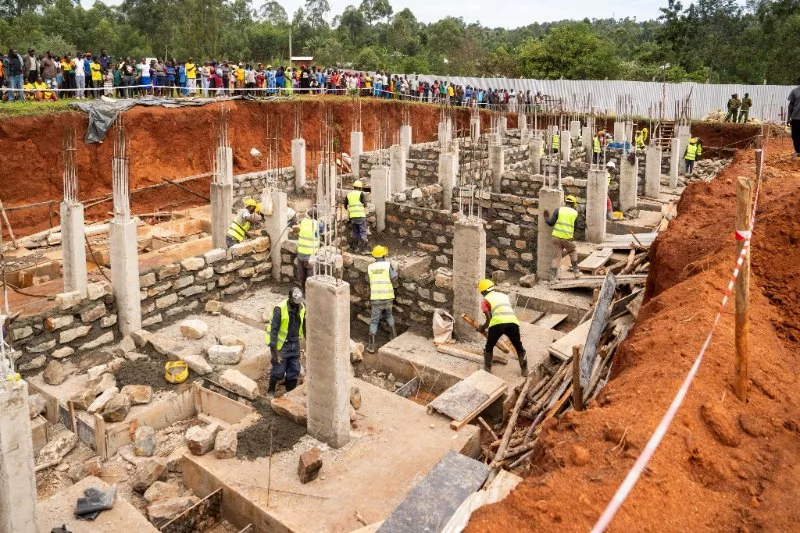
Despite the breadth of the investments outlined for the four counties, Trans Nzoia has no corresponding flagship project identified in the report's county-by-county breakdown.
The discrepancy is particularly notable because Mudavadi's office expressly included the county among the five beneficiaries in the report's introductory section.
The office has not explained why Trans Nzoia is named in the regional development overview but has no specific project listed under its own county profile.
The supplied breakdown does not clarify whether the omission was deliberate or whether projects in the county were simply left out of the document.
The presidential programme circulated for Saturday, November 21, also listed engagements in Bungoma, Kakamega and Vihiga, without any activity in Trans Nzoia.
In Bungoma, Ruto was scheduled to launch the Bukhembe-Masaek-Cheptais Road, issue title deeds for Chebyuk Phase Three at Kipsigon and flag off Last Mile Connectivity.
He was also expected to lay the foundation stone for Sirisia ESP Market and launch the Mayanja-Bisuni-Sirisia Road.
In Kakamega, the programme included laying the foundation stone for Matungu KMTC hostels and launching the Matungu-River Sio Road.
In Vihiga, the President was scheduled to inspect ongoing works at the Kenya School of Government campus, lay the foundation stone for Mbale KMTC hostels, flag off Last Mile Connectivity and commission Vihiga Teaching and Referral Hospital.
Whether Trans Nzoia will feature in the President's development schedule during the second leg of the tour, originally planned for November 28 to December 1, remains unclear.
Ruto - Natembeya tiff
The apparent exclusion comes against the backdrop of an increasingly strained relationship between Ruto and Natembeya, whose political differences over development projects, control of county resources and the boundaries of devolution escalated in October.
The confrontation centred partly on the Kitale Modern Market, which Ruto was accused by the governor of taking credit for and launching despite being financed using county resources and World Bank support at a reported cost of more than Sh874 million.
Natembeya maintained that the project was a county government undertaking, accusing the President of undermining devolution by launching projects that had not been budgeted for by the national administration.
A planned tour by the governor subsequently triggered heightened security deployments and tensions in Kitale.
Ruto, in turn, accused Natembeya and his Tawe Movement of mismanaging the county and obstructing development projects.
Following the confrontation, local administration officials in Trans Nzoia directed administrators to withhold official courtesies from Natembeya over allegations of disrespect towards the presidency.
The political fallout provides an additional dimension to the questions surrounding the county's place in Ruto's latest development programme, although there is no proof that the omission was politically motivated.
Mudavadi, in outlining the administration's investment priorities, has defended the government's record in the region, particularly its commitment to infrastructure expansion.
"President Ruto agreed to our request when we were negotiating ahead of the 2022 elections that his administration will construct 1,000 kilometres of new tarmac roads across Western Kenya region and we are witnessing steady progress with some roads having been completed," he said.
The Prime Cabinet Secretary also argued that national investments in roads, education, security and cultural infrastructure should inform the region's political choices ahead of the next General Election.
"We must ensure as Western Kenya, we give him a second term to consolidate these gains," Mudavadi said in Kakamega.
However, the absence of an identifiable Trans Nzoia flagship project in Mudavadi's report raises questions about whether all counties are receiving comparable consideration of the regional investment priorities.
Ruto, in his November 18 address, sought to frame equity as a central measure of his administration's development agenda, arguing that the Bottom-Up Economic Transformation Agenda (BETA) must translate into opportunities accessible to all regions rather than a select few.
"That is the promise of Bottom-Up finding expression in Usawa ni Sawa: A Republic in which opportunity is not the privilege of a few regions, communities or families, but the rightful expectation of every Kenyan," he said.
He further called for continuity in the pursuit of what he described as the generational assignment of building a prosperous, equitable and united Kenya.
"This generational assignment, this most important work of building a prosperous, equitable and united Kenya, must go on uninterrupted. Usawa ni Sawa. Mbele Pamoja," he affirmed.
The President's declaration places the apparent Trans Nzoia omission in sharper focus, particularly given his assertion that equitable development must extend beyond political, geographical and community boundaries.
Nevertheless, the development report should not be taken as evidence that Trans Nzoia has received no national government investment.
It simply documents a selection of regional projects and does not provide a comprehensive inventory of all national government expenditure and ongoing programmes in the county.
What remains unanswered is why the county was included in the report's regional coverage but left without an identifiable flagship investment in its detailed breakdown.
For a President whose latest national address repeatedly invoked Usawa ni Sawa as a promise of equal consideration and opportunity, the question that remains now is whether Trans Nzoia will feature in the final leg of his Western Kenya tour.