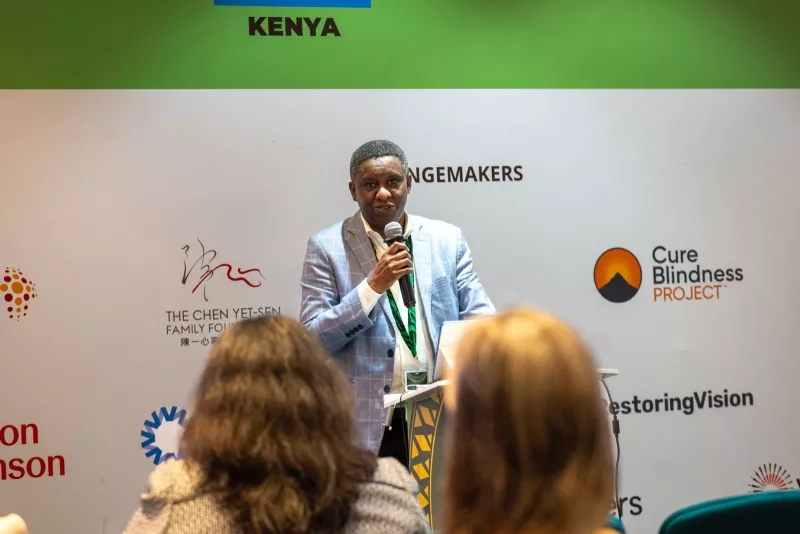
Kenya must accelerate investment in eye care and expand access to cataract surgery to eliminate cataract as a public health problem by 2045, Fred Hollows Foundation Kenya has said.
Country Director Peter Milo said the country cannot afford to wait until 2045 to address a condition that can be treated through a simple operation lasting about 20 minutes.
He regretted that millions of Kenyans continue to live with avoidable vision impairment despite the availability of effective treatment.
"The urgency is surgery and glasses now, not in 2045. Cataract is treatable, and a 20-minute operation can restore someone's sight, yet millions of Kenyans are still waiting," he said in an interview.
He said the scale of the problem required immediate intervention, particularly in rural communities where access to specialised eye care remains limited.
According to the Ministry of Health, approximately eight per cent of Kenyans aged 50 and above experience cataract-related vision impairment, while cataract accounts for nearly half of all blindness cases in the country.
Milo noted that an estimated 88 per cent of blindness in Kenya is avoidable, yet 74 per cent of the population lives in rural areas where access to eye care services remains weakest.
The Fred Hollows Foundation currently works in 22 counties, supporting approximately 15,000 cataract surgeries annually conducted by surgeons employed by the Kenyan Government.
While welcoming the government's roadmap, Milo said achieving the 2045 target would require a substantial increase in surgical capacity, investment in health workers and sustainable domestic financing.
Under the plan, Kenya aims to reduce cataract-related vision impairment among adults aged 50 and above from approximately eight per cent to 2.5 per cent.
The country also intends to increase its Cataract Surgical Rate from 750 operations per million people to 2,000 by 2030 and 8,600 by 2036.
Milo said the targets were achievable but would require the government to develop a costed national cataract plan in 2027, with clear county-level targets and workforce requirements.
He identified sustainable financing through the Social Health Authority (SHA), training additional surgeons and eye care workers, strengthening referral systems and establishing a national cataract quality outcome framework as key priorities.
The foundation, he said, intends to increase its contribution by supporting 30,000 quality cataract surgeries annually and training more than 200 additional eye care workers, including surgeons and ophthalmic nurses.
It will also support the health system to recognise and recruit more optometrists to strengthen access to eye care services.
Milo pointed to Turkana County as an example of how sustained investment and collaboration with county governments can improve eye health outcomes.
The foundation committed Sh11 million towards Turkana's eye health programme in the 2025/2026 financial year, supporting regular surgical camps, primary eye care training and the establishment of an optical workshop.
He said trachoma prevalence in the county had declined from 52 per cent in 2010 to below five per cent.
Recent interventions included 56 cataract operations at Namoruputh in April 2026 and more than 100 operations at Lokichar and Kalapata in June, with more than 400 people benefiting from various eye health interventions.
Milo said other counties could replicate the approach by strengthening partnerships, taking surgical services closer to communities and investing in local eye care capacity.
The Foundation co-authored the Value of Vision research, which found that investing in eye health delivers one of the highest returns in global health.
For every $1 invested in eye health in low- and middle-income countries, about $28 is returned in economic benefits.
The research shows that a $7.1 billion investment across six priority areas could generate $199 billion in productivity gains between 2026 and 2030.
The return comes from more people returning to work after their sight is restored, higher productivity, and better learning outcomes for schoolchildren.
For Kenya, the figures work out to about 10-to-1 over five years- a $25.5 million investment for $265 million in returns.