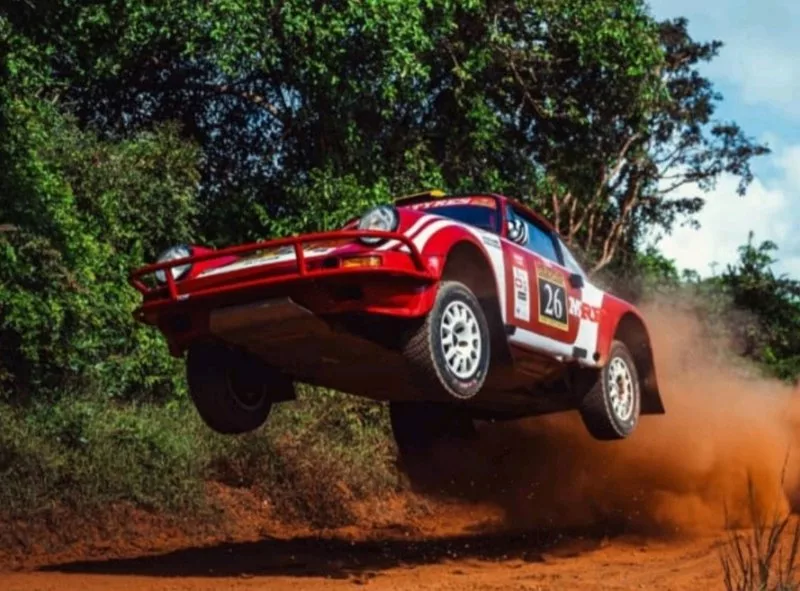
The East African Safari Classic Rally is set for a major facelift in 2027, with organisers lowering entry costs, expanding vehicle eligibility and moving the iconic endurance event to Northern Kenya for the first time.
Volkswagen Golfs and Opel Astras are among the new generation of cars eligible for the nine-day rally, following a decision to extend the vehicle eligibility cut-off by one year to December 31, 1986, from December 31, 1985, used in the 2025 edition.
Safari Classic chairman Joey Ghose said the changes are designed to make the world’s greatest historic rally more accessible by allowing competitors to build affordable but equally competitive machines.
The revised regulations open the door to cars with 16-valve engine options, particularly the VW Golf and Opel Astra, which Ghose believes can match the performance of the traditional Ford Escorts that have dominated the historic rally scene. “The first rule that has changed, which is very important, is that the vehicles eligible are up to December 31, 1986,” Ghose said.
“This has big significance because VW Golfs and Opel Astras are cheap cars available quite readily globally, and both have offered 16-valve engines across various generations and model years, so they are equally powerful as the Ford Escorts.”
The move is part of a broader cost-cutting strategy to attract more competitors and make the Safari Classic less of an exclusive playground for well-funded crews.
Ghose said competitors could now build competitive cars for approximately Sh6.5 million ($50,000), compared with previous budgets that could reach Sh38.9 million ($300,000).
“Why we did this: We want to see everybody enter. If you tell someone you need $300,000 to do a rally, they will say they would rather buy a house. Now you can do it at $50,000. You can buy an equally competitive car, and parts are equally available. At the end of the day, it is for fun,” he said.
Beyond the regulatory changes, the 2027 edition will see a major geographical shift, with the 4,000km endurance challenge heading to Northern Kenya for the first time since the event was established in 2003.
After years of starting in Mombasa, the rally will begin in the northern region and finish along the northern coast. The route is expected to cover areas around Eldoret, Nakuru, Isiolo, Nanyuki and Nyeri, offering international competitors spectacular views of Mount Kenya.
Organisers have also included a possible two-day excursion into Tanzania, although the final decision will depend on the prevailing political situation.
“We will probably be going to Tanzania, depending on how things go at the time in terms of the political situation, for two days,” Ghose said.
He explained that the decision to abandon the traditional Mombasa start was influenced by the desire to showcase more of Kenya’s diverse landscapes, as well as the punishing coastal heat.
“Change of start location to the north — it was getting a bit boring to start always in Mombasa, plus the heat. Our drivers, many of whom are over 60 years, and the heat takes a toll on them.
“We felt it was good to show our competitors the whole of Kenya. We want to show them places like Eldoret, Nakuru, Isiolo, Nanyuki and Nyeri. We decided we would start there because it is cooler; they can also acclimatise to the weather and see the beautiful Mount Kenya. We have so much to offer in Kenya; why not showcase all that?”
The northern route is expected to present a different kind of challenge, with technical and unforgiving terrain replacing some of the faster sections competitors have traditionally encountered.
Wildlife will provide an additional attraction, but Ghose warned that the demanding stages, estimated at between 80 and 90km, will require careful tyre management.
“From the northern region, there are lots of wild animals, but most importantly is the road. These are not flat-out roads; they are technical routes with very difficult terrain. “You have to watch your tyres. If you go too quickly, you will run out of tyres. The stages are 80- 90 km long and, if you are not careful, you will not have any tyres left,” he warned.
Safety will also be a major priority, with organisers planning to run 70 per cent of the competitive mileage on private land, leaving only 30 per cent on public roads.
The arrangement is expected to minimise interaction with ordinary road users and reduce risks associated with oncoming traffic and boda-bodas along competitive sections. “No oncoming traffic, no boda-bodas. Only 30 per cent on public land, and even that will be much more controlled,” Ghose said.
The medical and safety operation will also be expanded, with five helicopters deployed. Three will serve as air ambulances, while the other two will support observers and event monitoring.
Organisers will also increase the number of ground ambulances and doctors, and strengthen medical support at rally headquarters to ensure a coordinated emergency response.