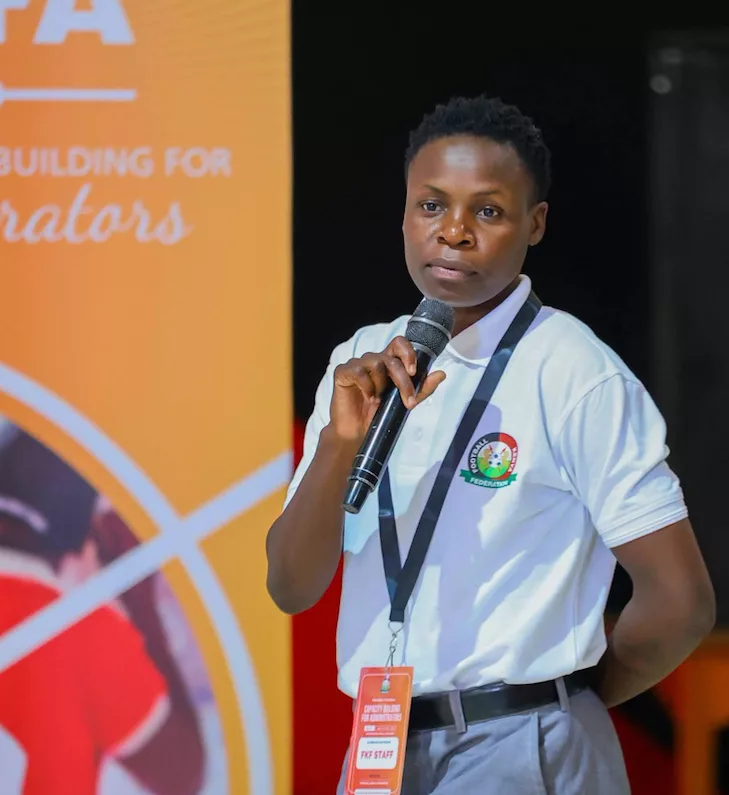
Neddy Atieno has challenged the Football Kenya Federation (FKF) to create a seamless development pathway for women’s football, warning that young players must no longer be left behind as they transition from school competitions to the senior national teams.
The newly appointed FKF women’s administrative manager made the remarks after unveiling the federation’s 2026–2029 Women’s Football Strategy, a four-year roadmap designed to address longstanding gaps in the women’s game while strengthening grassroots development, domestic competitions and commercial growth.
A former Harambee Starlets striker, Atieno identified the need to eliminate barriers in the progression of young players, particularly those transitioning from school football to competitive club football. “A girl in Lamu or Garissa deserves the same chance to play in a structured, safe football environment as a girl in Nairobi. We will no longer allow players to get lost between school games and the national team,” Atieno said.
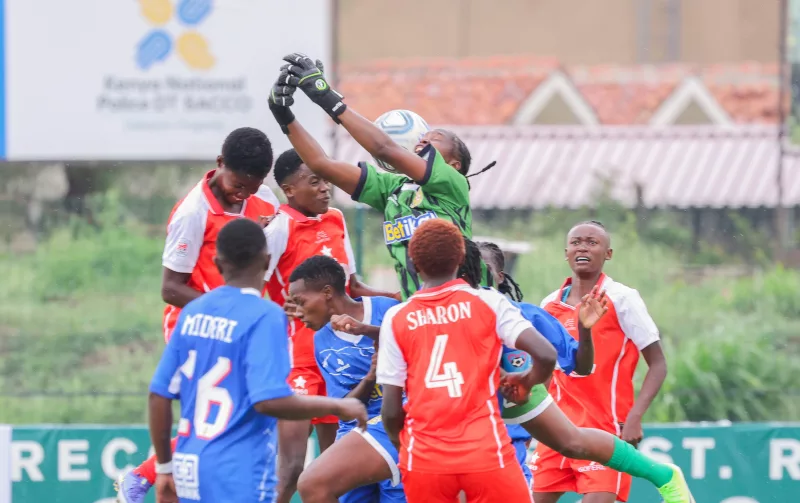
One of the strategy’s key interventions is the formation of a national Under-17 Women’s League, which is expected to provide a competitive platform for emerging players and strengthen their transition into senior football.
FKF also plans to roll out a FIFA Under-15 Women’s Football Campaign and Festival in 2027, extending talent identification programmes to all 47 counties. The federation has set a 2027 target for establishing two Centres of Excellence alongside a Women’s Talent Development Scheme to provide structured technical development for promising players.
Atieno said the challenge would be ensuring that these initiatives translate into opportunities beyond the established football centres.
The strategy also seeks to address the commercial sustainability of the domestic game, with FKF introducing a ‘Super Sundays’ concept for the Women’s Premier League. The initiative will bring selected fixtures together on centralised matchdays, supported by live broadcasts and increased media coverage, in a bid to attract sponsors and enhance the competition’s commercial appeal.
Player welfare is also receiving attention, with FKF already facilitating pitchside ambulance services during Women’s Premier League matches under its league development programme. On the administrative front, FKF president Hussein Mohammed announced plans to elevate the Women’s Football Desk into a fully fledged department, with additional resources and direct reporting to the Secretary General.
The federation is also banking on FIFA support, government partnerships and private-sector investment to finance its development ambitions.
The strategy follows Harambee Starlets' qualification for the 2026 Women’s Africa Cup of Nations and Junior Starlets reaching the Round of 16 at the FIFA Under-17 Women’s World Cup.
Atieno said the ultimate ambition was to build a stronger national football structure capable of sustaining these achievements and positioning Kenya for qualification for the 2031 FIFA Women’s World Cup. With the strategy now unveiled, the real test for Atieno’s department and FKF will be implementation, accountability and ensuring that girls across the country benefit from the promised opportunities.