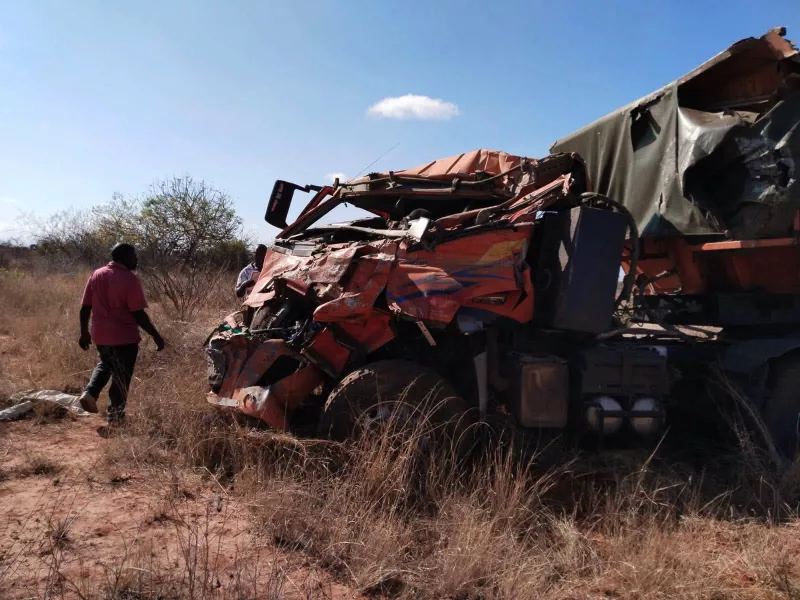
A nation’s priorities are revealed by the projects it funds, the problems it tolerates and the lives it protects. For decades, the Mombasa-Nairobi highway has carried the weight of Kenya’s economy. It connects our principal seaport to our capital, serves regional markets and sustains livelihoods far beyond the counties through which it passes. Yet much of this indispensable corridor remains a single carriageway, where buses, private vehicles and heavy commercial trucks travel in opposing directions with little separation.
The consequences are measured in lost lives.
Twenty-four people died on October 25 in a collision near Mtito Andei while returning to Mombasa from a funeral. Earlier this month, 17 lives were lost in another crash near Salama. These tragedies have left our communities mourning parents, relatives, religious leaders and friends. They have also renewed a question that Kenya must answer: how much longer will the comprehensive dualling of this highway remain an aspiration?
In visiting survivors and meeting bereaved families, I have witnessed suffering that no official statement can adequately capture. Behind every fatality is a household whose future has changed permanently. Children must grow up without parents. Families lose breadwinners. Survivors face treatment, rehabilitation and the psychological burden of what they endured. Our response must extend beyond condolences to sustained action that makes the next journey safer.
That requires an honest examination of our historical investment priorities.
Kenya has demonstrated its capacity to undertake ambitious infrastructure projects. The Nairobi-Thika superhighway, officially opened in 2012, showed what was possible when political commitment, financing and planning aligned. It responded to growing demand and helped reshape movement within an important economic zone. The lesson is clear: where government assigns sufficient priority, major road expansion can be delivered.
Why, then, has the road connecting our maritime gateway to the capital waited so long for comprehensive dualling? This question concerns successive administrations and the principles guiding national investment. A corridor’s contribution to the economy, its traffic demands and the safety of its users should carry decisive weight. The longstanding gap between this highway’s national importance and its capacity calls for a deliberate correction.
Mombasa’s place in this discussion is fundamental. Our port serves businesses, consumers and producers across Kenya and neighbouring countries. The Kenya Ports Authority reports that Mombasa handled 45.45 million tonnes of cargo in 2025, including 2.11 million 20-foot equivalent units of containers. Behind those figures are industrial inputs, household supplies, agricultural products and the commercial transactions that sustain employment. Efficient movement inland is essential to the value the port creates.
Every delay along the highway carries an economic cost. Trucks spend longer on the road, consuming fuel and working hours. Businesses struggle to predict delivery times. Manufacturers face uncertainty over supplies, while traders absorb additional transport expenses. Ultimately, these costs reach consumers through the prices of everyday goods. Improving this corridor therefore belongs at the heart of any serious effort to strengthen competitiveness and ease the cost of living.
The benefits extend beyond freight. Domestic tourism depends on families being able to travel to the Coast with confidence. Hotels, restaurants, tour operators and small enterprises depend on reliable connections. Farmers need dependable access to markets. Bus operators and their passengers need safer journeys. Transport workers deserve infrastructure that supports their livelihoods. Dualling would serve these interconnected interests and strengthen the economic relationship between the Coast and the rest of Kenya.
Investment in the standard gauge railway remains valuable. A growing economy requires roads, railways and ports that function together. Rail can carry substantial volumes efficiently, while roads serve destinations, passengers and deliveries that require flexibility. National planning must accommodate these complementary roles. The continued importance of road transport makes adequate highway capacity an essential component of a balanced logistics system.
Safety must shape the project from its earliest design. Separating opposing traffic can reduce exposure to head-on collisions. Safe junctions, pedestrian crossings, service roads and appropriate lighting must protect communities along the route. Drivers need proper rest facilities and emergency teams need effective access. Dualling must be accompanied by vehicle inspections, enforcement of traffic rules and responsible driving. Infrastructure should help prevent mistakes and reduce their consequences when they occur.
I am confident that the administration of President William Ruto, guided by the widely embraced mantra of “Usawa ni sawa”, will make the dualling of the Mombasa-Nairobi highway a national priority under the National Infrastructure Fund. The fund provides an avenue to mobilise long-term capital for strategic infrastructure, including highways. Few projects present a stronger combination of economic necessity, regional significance and the urgent duty to protect human life.
“Usawa ni sawa” must find practical expression in how we allocate national resources. For the communities along this corridor, fairness means safe journeys, dependable connections to markets and investment proportionate to their contribution to our shared prosperity. This administration has the opportunity to address a longstanding infrastructure gap and leave a legacy that benefits generations of Kenyans. I believe President Ruto will rise to that responsibility, translating this commitment to equity into a funded programme with clear construction milestones.
While that work advances, dangerous sections require immediate attention. Better markings, junction improvements, enforcement and stronger emergency response can save lives before comprehensive expansion is complete. County governments, national agencies, transport operators and communities must coordinate these measures. Preparations for a major project cannot become a reason to postpone practical improvements that are already necessary.
The Mombasa-Nairobi highway carries national prosperity, regional commerce and the daily hopes of ordinary people. Its condition should reflect that responsibility. We must bring the urgency of our investment decisions into line with the scale of its economic contribution and the human cost of delay. Kenya has the capacity to act. We now need the resolve to make this corridor safer, more efficient and worthy of the nation it serves.
The is the governor of Mombasa