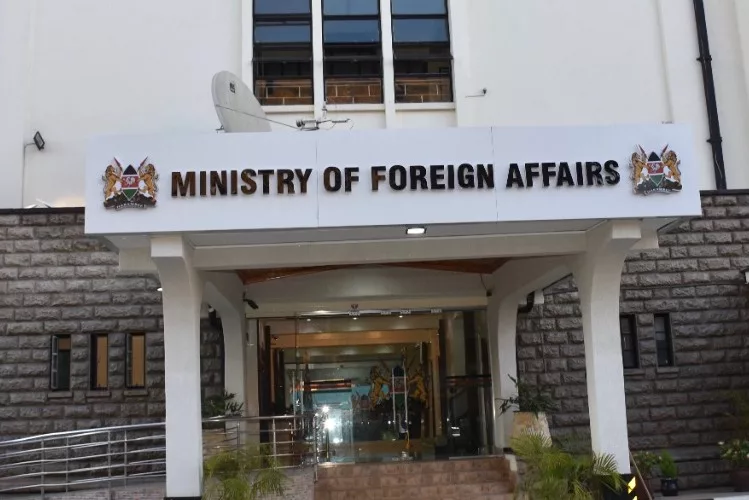
Kenya has protested Saudi Arabia’s decision to suspend travel to and arrivals from the country over the Ebola situation, describing the restrictions as disproportionate and unsupported by scientific evidence.
In a diplomatic note dated October 30, the Ministry of Foreign and Diaspora Affairs asked Riyadh to review and lift the measures, warning that they would hurt Kenyan pilgrims, workers, students, trade and tourism.
The protest came hours after Saudi Arabia announced the suspension on Friday, citing the need to prevent the spread of Ebola.
Kenya acknowledged Saudi Arabia’s right to introduce public health measures to protect its citizens but argued that the decision did not reflect the progress made in containing the disease.
“The measures against Kenya are disproportionate and not supported by scientific health evidence,” the ministry said.
The government maintained that all nine confirmed cases belonged to one cluster linked to an imported case, with no evidence of community transmission.
“Kenya has contained its imported outbreak. All 9 cases belong to one cluster linked to the imported case and every secondary case was already in quarantine when they fell ill. There is no community transmission,” the diplomatic note stated.
It said seven patients were still receiving treatment but were responding well to supportive care and were expected to be discharged on November 3.
The ministry also said 46 contacts were due to complete quarantine on the same date, provided they maintained negative status.
According to the communication, all 135 contacts had been traced and monitored daily since the outbreak was reported.
The first group completed the mandatory 21-day quarantine and was discharged on October 26, with the remaining contacts expected to leave quarantine on November 3.
Kenya further invoked the World Health Organisation’s position, saying the agency had assessed the country's response as professional, diligent and transparent and advised against travel and trade restrictions.
It said the WHO had rated the risk outside the Democratic Republic of Congo and its neighbouring countries as low.
The government described Saudi Arabia's decision to suspend visas and bar people who had been in Kenya within the previous 21 days as a blanket measure that went beyond what the public health situation justified.
“Suspending visas and barring anyone who has been in Kenya in the last 21 days is a blanket, punitive measure not supported by epidemiological evidence in the country,” the ministry said.
It warned that the restrictions would affect Kenyans travelling to the Kingdom for religious pilgrimages, employment, education and business, as well as damage trade and tourism ties.
Kenya wants Saudi Arabia's national focal point to provide the WHO with the scientific justification for the restrictions under Regulation 43 of the International Health Regulations (2005), which requires notification within 48 hours when measures significantly interfere with international traffic.
The ministry also called for the measures to be reviewed within three months.
It warned that Kenya would raise the matter with the Africa Centres for Disease Control and Prevention in conjunction with other affected African countries, describing the restrictions as a potentially hostile act against the continent if they were not backed by scientific evidence.
Kenya said it was ready to provide Saudi Arabia's Public Health Authority with a detailed technical briefing on the outbreak and its containment efforts.
The government is now seeking a reversal of the decision as it maintains that its surveillance, contact tracing and quarantine measures have contained the outbreak.