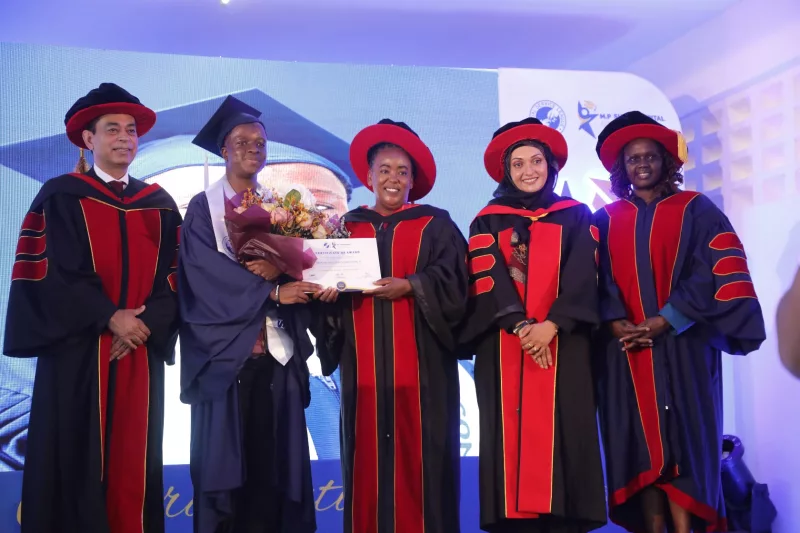
Kenyan youth have been advised to enrol in nursing and other medical-related courses to address the shortage of healthcare professionals and improve access to affordable, quality healthcare in the country.
Healthcare stakeholders said increasing investment in medical training was critical to building a skilled workforce capable of responding to emerging diseases and the growing demand for specialised care.
Speaking during the second graduation ceremony of 46 nurses at the MP Shah Hospital College of Health Sciences, the stakeholders called for continuous professional development to ensure healthcare workers remain equipped to handle evolving medical challenges.
MP Shah Hospital Chairman Calpesh Patel announced that the facility would employ half of the graduating nurses, in a move aimed at strengthening its workforce while creating employment opportunities for the newly qualified professionals.
“It is a very proud moment for the hospital. It also speaks to the commitment the hospital is making in investing in healthcare in the country,” Patel said.
He said the hospital would continue investing in nursing education to address the shortage of nurses, particularly in specialised areas such as critical care.
“I want to announce that half of the graduates will be absorbed by the hospital,” he said.
Patel noted that nursing remained a critical component of clinical care, adding that the establishment of the college was driven by the need to train and retain qualified professionals within the country.
“There is an acute shortage of nurses in the country, especially in critical care. Nursing is special in clinical care. There is a reason we set up this school of health sciences. We want to retain nursing care in the country, and we want them to get employment in the country because there is a need here,” he said.
He urged more young people to consider nursing as a career, noting that investing in local training institutions would help strengthen the country's healthcare system and reduce the gap between the demand for services and the availability of qualified personnel.
MP Shah Hospital Chief Executive Officer Dr Toseef Din said Kenya needed a steady supply of nurses to maintain service delivery standards and meet the growing needs of the population.
Din called for sustained investment in capacity building and professional training, saying the country must ensure that the nursing workforce is adequately prepared to respond to emerging healthcare challenges.
“There should be capacity building and a constant stream and steady supply of nurses in our country,” Din said.
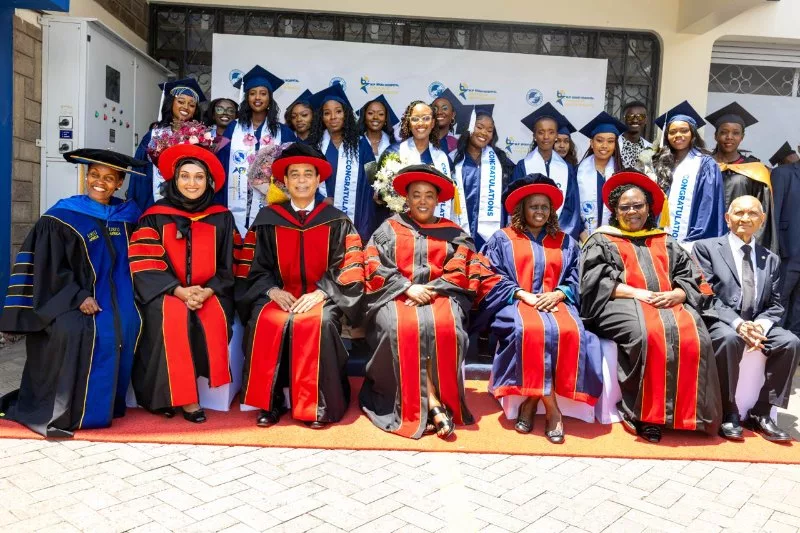
Din encouraged Kenyans to enrol in nursing programmes, describing the profession as a service to humanity.
“I encourage Kenyans to enrol for nursing programmes. This is a call to humanity,” Din said.
Nursing Council of Kenya Chief Executive Officer Lister Osongo said healthcare training should go beyond clinical skills to equip professionals with an understanding of the relationship between human health and the environment.
“It is important that healthcare training prepares professionals who understand the relationship between human health and the environment,” Osongo said.
She noted that incorporating environmental health principles into medical education would help develop a workforce capable of delivering quality services while contributing to environmental conservation.
“Integrating these principles in health education will help build a workforce capable of delivering quality healthcare while contributing to environmental conservation,” she said.
Osongo reaffirmed the council's commitment to promoting professional standards, competence, ethical practices and patient safety, noting that these principles were essential to strengthening public confidence in healthcare services.