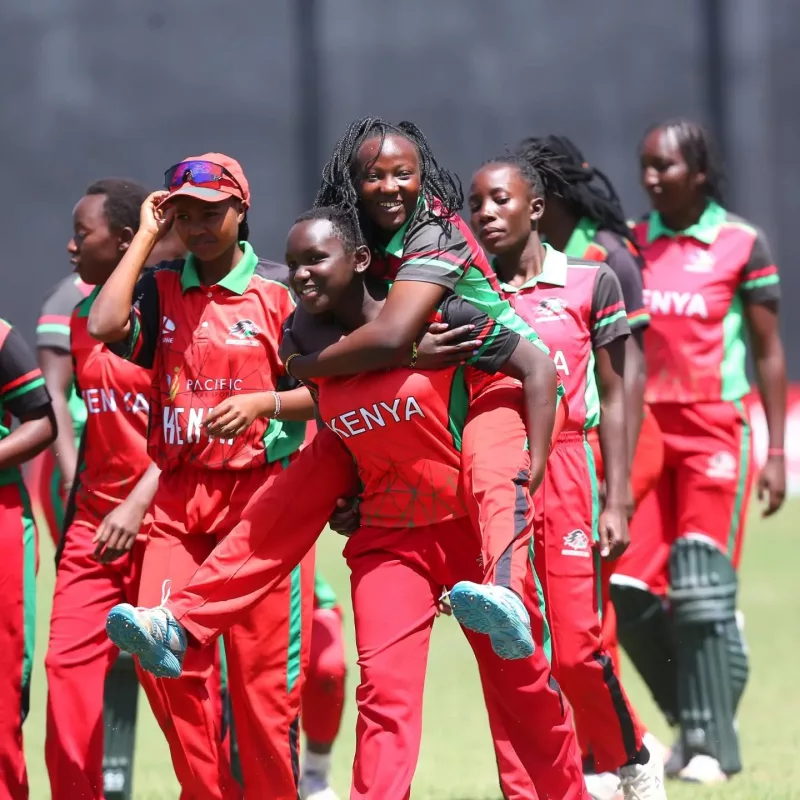
Cricket Kenya’s reform agenda is beginning to deliver tangible gains, with the Women’s National Team set to receive performance-based contracts.
This is the first time Kenya’s women cricketers will receive formal contractual recognition as the board moves to professionalise the game.
The decision, approved by the Cricket Kenya Board on October 23, 2026, marks a significant shift in the recognition and support of female cricketers.
It follows petitions submitted by both the women’s and men’s national teams.
The Board said the concerns and proposals raised informed its resolutions.
“The women’s national team shall be professionalised through performance-based contracts,” part of the Board’s resolutions stated.
While taking over office after his election in April, Cricket Kenya Chairman Bhavesh Gohil had pledged that making the game financially sustainable is among his key priorities.
Gohil had also promised to make the game accessible, competitive and inject transparency and accountability in management.
To actualise the new board decision, Acting Chief Executive Officer Tariq Iqbal has been tasked with working with the women’s team technical bench to develop the contractual framework.
He will consult the Chief Finance Officer to ensure the necessary budgetary provisions are made.
Cricket Kenya Vice Chair Pearlyne Omamo said the reforms send a strong message to girls aspiring to play the sport professionally.
“Cricket can be more than a passion; it can be a profession,” Omamo said. She added that the new framework would create a clearer pathway for talented female cricketers to compete at the highest level and earn recognition for their performance.
The contracts form part of a wider reform package targeting player welfare, selection transparency and grassroots development.
The Board also resolved to provide medical insurance for both national teams and their technical staff.
It also approved plans to establish independent selection panels for the Women’s National Team and the Under-19 Women’s Team, bringing their selection structures in line with those of the men’s national team.
In another measure aimed at expanding the sport’s reach, counties will be grouped into four regions.
Each region is expected to receive funding and cricket equipment to support development programmes.
Counties will also be required to identify promising players and strengthen the pipeline into age-group and national teams.
The Board further directed that savings from its restructuring be channelled into player welfare and grassroots cricket development.
Meanwhile, Cricket Kenya is in advanced discussions on securing more competitive international fixtures.
A proposed triangular series involving Kuwait and the United Arab Emirates is among the options under consideration.
The reforms are intended to strengthen Kenya’s competitiveness against regional opponents, including Uganda, Tanzania, Rwanda and Nigeria.
For women cricketers, the introduction of performance-based contracts represents a major step towards greater financial recognition and professional opportunities.
The regional development plan could also help widen the pool of talent available to national selectors.
The board congratulated the Women’s National Team on the milestone and said Cricket Kenya looked forward to supporting players as they inspire future generations and shape the next chapter of the sport.