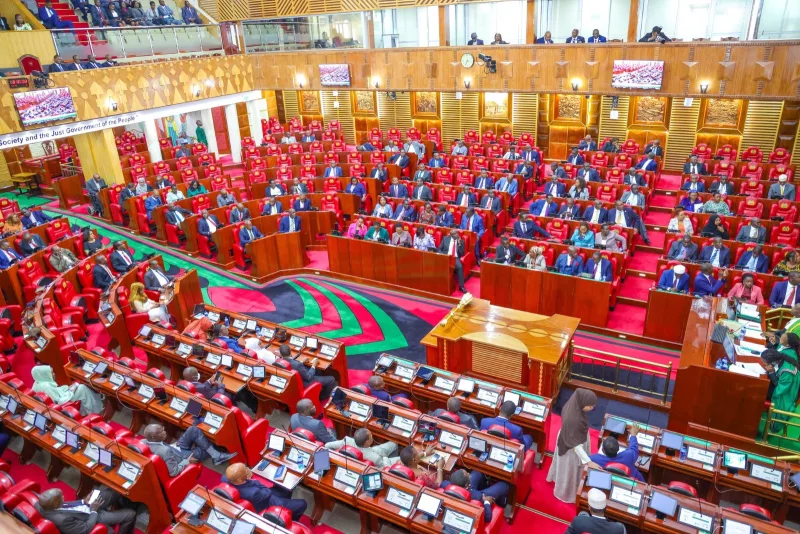
The National Assembly has passed legislation that removes the legal requirement for the Independent Electoral and Boundaries Commission (IEBC) to livestream election results, paving the way for changes to how results will be handled in the 2027 General Election.
MPs approved the Elections (Amendment) Bill on Thursday, October 22, 2026, after the Senate had already passed it.
Clause 22 of the Bill deletes Section 39 of the Elections Act, which governs the determination, transmission and declaration of election results.
Under the amended framework, the IEBC will still be required to determine, declare and publish results immediately after the close of polling.
Results declared at individual polling stations will also retain their status as final.
However, the commission will no longer be legally obligated to livestream results as they are announced. Media organisations and election observers will remain free to broadcast results independently.
The change reverses Parliament's position in 2022, when the National Assembly's Justice Committee rejected a similar proposal by the IEBC to remove the mandatory livestreaming requirement.
Deputy Speaker Gladys Boss dismissed concerns that removing the requirement would undermine electoral transparency, arguing that existing legal safeguards provide mechanisms for resolving disputes over declared results.
“If there is a query, the ballot box will be brought back,” she said.
Gladys cited previous election disputes in which ballot boxes were presented for scrutiny, including cases involving Tiaty and a Mombasa constituency, to illustrate how contested results can be verified.
She maintained that the availability of ballot boxes for recounts and verification meant the removal of mandatory livestreaming would not prevent electoral disputes from being addressed.
During the debate, MPs rejected a separate amendment proposed by Suba South MP Caroli Omondi seeking changes to the procedures for tallying, verifying and communicating presidential election results.
National Assembly Majority Leader Kimani Ichung’wah opposed Omondi's proposal, warning that substantial changes to electoral procedures could expose Parliament to criticism, particularly with the 2027 General Election approaching.
“If we start tinkering with electoral laws, substantive issues of touching on our electoral processes, and also in the transmission of results and all those other things, shenanigans around the electoral period, the elections, we stand accused,” he said.
The passage of the amendment comes amid previous assurances by the IEBC that proposed changes to election laws were intended to strengthen the transmission of results rather than weaken transparency.