Kenya’s retirees are increasingly seeking alternative income sources to meet their basic needs, exposing the inadequacy of pension benefits in a country.
This as rising living, medical expenses and family expenses continue to erode retirement savings.
The challenge is reflected in the 2026 Mercer CFA Institute Global Pension Index, which gave Kenya a D grade for retirement income adequacy.
The rating highlights the gap between the benefits retirees receive and what they need to sustain a decent standard of living after leaving formal employment.
The rating raises questions about whether Kenya’s pension system is adequately preparing workers for life after retirement, particularly as many households depend on a single pension to meet the needs of several family members.
The 2026 index is Kenya’s first assessment in the annual global ranking, which now covers 55 retirement income systems representing more than 66 per cent of the world’s population.
The Dominican Republic and Qatar are the other new entrants.
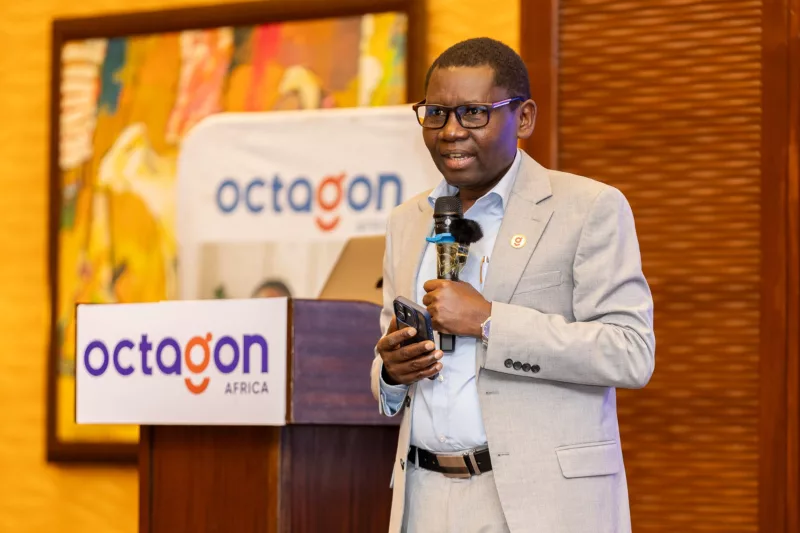
Octagon Africa’s Group CEO Fred Waswa, who contextualised the report lauded the inaugural assessment of Kenya into the index, adding that it was an important opportunity to take stock of our retirement systems.
“Kenya’s pension system continues to evolve, and the inclusion of the country into this index is an important benchmark to see where we stand and what needs to be done better."
The index measures pension systems across three dimensions: adequacy, sustainability and integrity.
Kenya scored 38.9 points for adequacy, earning a D grade, 53.0 for sustainability, equivalent to C, and 76.0 for integrity, which earned a B+.
The resulting overall score of 53.1 placed the country in the C category, exposing a striking gap between the strength of its pension governance and the ability of retirement benefits to support pensioners.
Globally, the Netherlands topped the 2026 ranking with 85.8 points, followed by Denmark at 84.1 and Iceland at 84.0.
In Africa, Kenya ranks third after Namibia which scored 57.5 and Botswana 57. South Africa comes fourth with a score of 50.4 points.
The findings suggest that having a regulated pension system is not enough if the benefits it delivers cannot sustain retirees through old age.
The problem is particularly pressing in Kenya, where many workers spend their productive years meeting household expenses, paying school fees, servicing loans and supporting relatives, leaving limited room to accumulate sufficient retirement savings.
Local research paints an equally troubling picture.
The Retirement Benefits Authority’s 2024 Pensioner Survey, published in February 2025, found that 83 per cent of the 427 retirees surveyed had at least one dependent relying on them for financial support.
The respondents had retired within the previous five years and belonged to registered retirement benefits schemes.
The study found that the burden frequently extended to adult children and grandchildren, with some retirees paying school fees, providing shelter and meeting daily household expenses for relatives who remained financially dependent on them.
According to the report, such obligations undermine the purpose of pension income, which is primarily intended to support the retiree after regular employment ends.
The survey also highlighted the limited scope of pension coverage.
According to RBA, coverage stood at about 26 per cent, reflecting the challenge of extending retirement savings to workers outside formal employment.
The informal sector accounts for a large share of Kenya’s workforce, yet many self-employed people and casual workers lack regular employer-backed pension contributions.
This leaves millions exposed to old-age financial insecurity, particularly those who cannot consistently save during their working years.
Medical expenses are another major threat to retirement security.
A 2026 SanlamAllianz Retirement Benchmark Report for Kenya found that treatment for serious illnesses, including cancer and stroke, could consume several years’ worth of retirement income, particularly in private hospitals.
The report estimated that treating stage-three cancer in a private facility could cost the equivalent of 45 months of retirement income, while a private hospital admission for stroke could absorb the equivalent of 99 months.
Its calculations used a monthly retirement income benchmark of Sh21,900.
The findings illustrate how a single serious illness can destabilise a retiree’s finances, forcing them to divert money from food, housing and other basic needs to medical care.
The RBA report identified health as a critical factor in retirees’ quality of life, with 32 per cent of respondents naming good health as the most important aspect of retirement.
Meanwhile, an ICEA Lion Retirement Preparedness Survey released in November 2025 found that 76 per cent of retirees said their retirement income met their expenses only to some extent.
When measured against actual living costs, retirees could cover only about 40 per cent of their basic needs.
The survey of 1,200 working and retired Kenyans also found that 46 per cent of retirees’ savings could sustain them for only part of their expected retirement years.
Healthcare, food and support for dependants were among the biggest drains on their incomes.
These findings reinforce concerns that retirement can bring a sharp decline in living standards rather than the financial security workers expect after decades of employment.
For some retirees, the pressure means opening small businesses, farming, consulting or taking up casual jobs to supplement their pensions.
Others depend on family members, even as they continue supporting younger relatives.