ODM bigwigs are moving to turn Rigathi Gachagua into a political bogeyman in a calculated strategy to block Edwin Sifuna and his allies from penetrating Raila Odinga's strongholds.
The leaders are exploiting the bitter rivalry between Raila and Gachagua to portray the former Deputy President, and anyone associating with him, as enemies of the ODM founder's political ideals.
The strategy targets Sifuna's Linda Mwananchi faction, which has been warming up to Gachagua and the united opposition ahead of the 2027 elections.
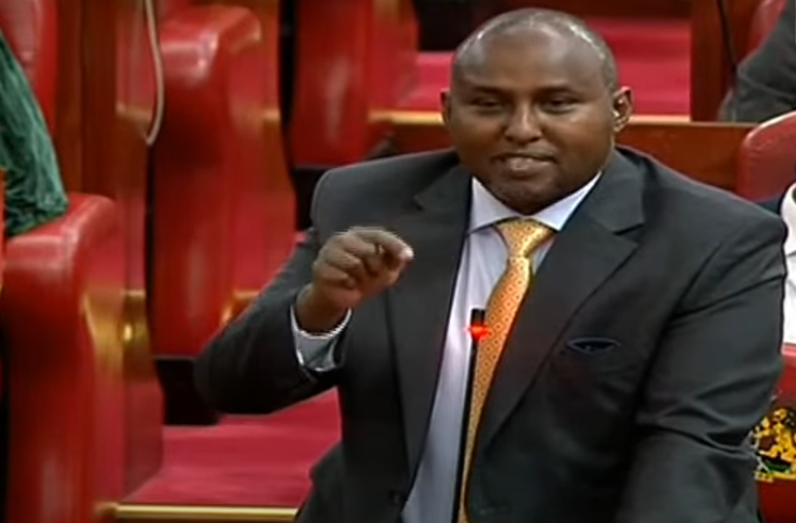
“Baba Raila had nothing in common with a tribalist like Gachagua. Our people cannot accept Gachagua and those associating with him,” Gem MP Elisha Odhiambo told the Star.
According to Odhiambo, Sifuna's association with Gachagua had effectively alienated the Linda Mwananchi faction from Raila's political bases.
Gachagua has not set foot in Luo Nyanza since he was impeached. He was impeached on October 17, 2024.
He also skipped Raila's burial last year.
At stake is the battle for Raila's political inheritance, particularly in Nyanza, Coast and Western, where his influence remains deeply entrenched.
Gachagua’s earlier remarks, widely viewed as tribal and divisive, that communities’ "share" of government depends on how they voted in the 2022 polls have since become a potent weapon in the political campaign.
Sifuna’s Linda Mwananchi has fashioned itself as the carrier of Raila’s political ideals and is aggressively plotting how to inherit Raila’s traditional support bases.
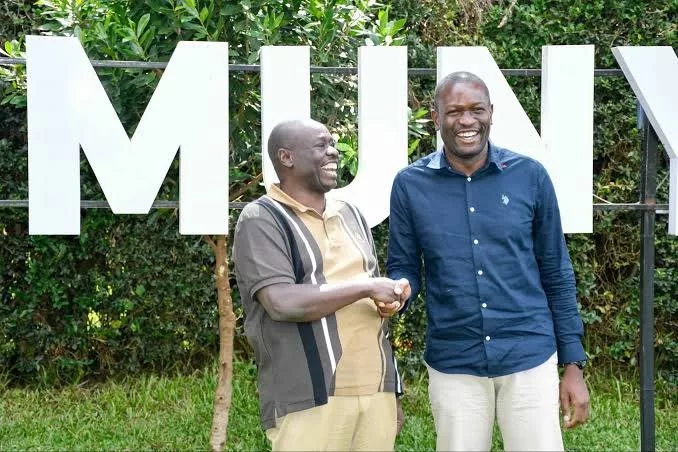
The latest offensive followed Gachagua's meeting with Sifuna and the Linda Mwananchi brigade at his Wamunyoro residence in Nyeri on Tuesday.
The meeting, widely linked to negotiations for a possible opposition alliance, handed ODM leaders fresh ammunition to attack the rebels.
ODM chairperson Gladys Wanga led the onslaught, accusing the faction of associating with politicians whose political philosophy sharply contradicted Raila's.
She said Sifuna and his team, who were claiming "Raila's spirit" is with them, are openly associating with people who had no ideological association with Raila.
Wanga said Raila was a national unifier while depicting Gachagua and his allies as champions of ethnic exclusivity.
“Baba was Kenya’s unifier, while those others are for dividing Kenya. Baba loved everyone from all corners; those [others] hate and advance tribalism,” she said and vowed that "Baba or ODM cannot stay in a place with tribal people."
The latest confrontation came a few days after a similar political storm erupted over Raila's widow, Ida Odinga’s invitation of Gachagua to Raila's first death anniversary.
ODM leaders had largely stayed away from the commemoration until Gachagua disclosed that Ida had invited him.
The disclosure triggered a wave of attacks against Ida, with some leaders questioning her decision to associate with a politician who had fiercely opposed her husband.
“I saw the list of those invited by Mama Ida Odinga and saw the name Gachagua. I said I cannot sit in the same place with Gachagua. Baba’s spirit also cannot sit with Gachagua,” National Assembly Minority leader Junet Mohamed said.
ODM communications director Philip Etale also invoked Raila's political differences with Gachagua to justify his no-show at the event.
“I will not betray him [Raila] by associating with someone he cautioned me against. I won't, will not and NEVER will I,” Etale said.
Treasury Cabinet Secretary John Mbadi warned that the region's loyalty to Raila should not be interpreted as automatic allegiance to his family or other political figures.
“Don't force us. Don't push us. After next year, you will see a different kind of politics in this region that you have never seen before,” he said.
Kileleshwa MCA Robert Alai went further, dismissing Ida as a “pretender”.
However, ODM rebels are challenging the interpretation of Raila’s political ideals.
Sifuna defended his political engagement with Gachagua and dismissed suggestions that tribal or regional considerations should dictate whom leaders associate with.
"Yesterday, some people saw us somewhere with someone and now they want to tell us that there is a region in this country where none of us is allowed to associate with," he said.
Speaking during the funeral service of Burudi Nabwera in Lang'ata on Wednesday, Sifuna said, "We will restore that feeling that was there in the beginning of our country in 1963 that we are all Kenyans and we belong to this country."
Funyula MP Wilberforce Oundo has dismissed the argument that Raila's former political adversaries should remain permanent enemies.
“Baba Raila Odinga taught us one thing: that there are no permanent enemies in life. Baba Raila taught us to build bridges where they are broken,” he said.
Oundo recalled Raila's reconciliation with former Presidents Daniel arap Moi, Mwai Kibaki and Uhuru Kenyatta despite their big political differences.
“Baba had even worse run-ins with William Ruto. Ruto called Raila the nastiest thing you can ever call an elder,” he said.
“Yet Baba found a space in his heart to forgive him and work with him as it is now the so-called broad-based government.”
He accused ODM leaders of selectively interpreting Raila's political philosophy to suit their current alliances.
“Anybody who is telling us otherwise is being hypocritical. This is hypocritical. Hypocrisy is what's killing the politics of this country,” Oundo said.
“We can never draw a barrier that you can only talk to this; you can't talk to this.”
During their political rivalry, Raila and Gachagua frequently exchanged bitter attacks, particularly over Gachagua's controversial remarks about government shareholding.
Raila accused the former Deputy President of promoting ethnic exclusion through claims that government opportunities belonged primarily to communities that supported the Kenya Kwanza administration.
“I want to tell Gachagua every Kenyan has shares in government. All Kenyans pay taxes,” Raila declared.
Their differences deepened when Gachagua claimed he had 'laid traps’ to prevent Raila from securing a handshake with Ruto.
“My boss and I had agreed we set up traps so that Raila does not join the government through the backdoor; I would check the traps every morning and evening,” Gachagua said.
Raila responded with equal hostility, dismissing the possibility of working with the former Deputy President.
“Take it to Mr Gachagua and tell him I don’t even want to shake his hand,” Raila said.
“The other man said he had set traps everywhere to prevent me from reaching State House for a handshake. So, do you want us to work with someone who set traps for me? I told him that is impossible.”
Gachagua had also repeatedly portrayed Raila as a threat to Mt Kenya's political interests.
“You had a handshake with our son Uhuru Kenyatta but changed him for the worse. That is why we fear any handshake with you,” Gachagua said.
The former DP accused Raila of destabilising successive administrations through political agreements with incumbent presidents.
The bitter exchanges are now being revived as ODM leaders seek to undermine Gachagua's growing association with politicians claiming Raila's political inheritance.
The strategy mirrors the political tactics previously deployed against Raila in Mt Kenya, where his opponents repeatedly portrayed him as a threat to the region.
Despite Uhuru's endorsement in the 2022 presidential election, Raila struggled to penetrate the region after years of sustained political hostility.
The development lifts the lid on how deeply political hostility towards Raila had been entrenched in the region.
Now, ODM leaders are seeking to deploy the same fear-driven political messaging against Gachagua in Raila's traditional strongholds.
The stakes are particularly high for Sifuna and his allies, who are seeking to build an alternative political platform outside the ODM establishment.
Their association with Gachagua presents an opportunity to expand opposition cooperation but also exposes them to attacks in constituencies where Raila's political legacy remains influential.