Members of Parliament on Thursday accused the Independent Electoral and Boundaries Commission (IEBC) of sidelining them in the development of regulations governing campaign financing ahead of the 2027 polls.
The lawmakers, sitting in the Delegated Legislation Committee of the National Assembly, questioned why the electoral agency did not directly engage Parliament despite the proposed regulations having a significant impact on politicians, particularly those seeking elective positions.
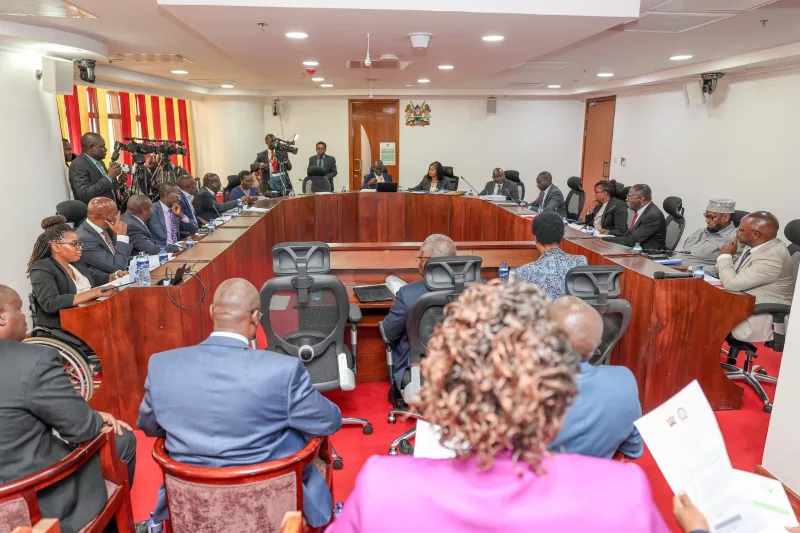
The concerns emerged during a meeting between the committee, chaired by Ainabkoi MP Samuel Chepkonga, and a team from the IEBC led by chairman Erastus Ethekon.
The meeting was meant to deliberate on the proposed campaign financing regulations.
Chepkonga said although the IEBC had undertaken public participation, lawmakers who would be among the most affected by the regulations were not consulted.
“You conducted public participation on the people we serve, but not us. We expected you to request a Kamkunji – just like what Social Health Authority (SHA) did,” Chepkonga told the IEBC team.
“We only saw the regulations when they were gazetted, yet they are going to affect us most.”
Chepkonga maintained that Parliament could not be treated like any other stakeholder when rules with far-reaching implications for elections and political campaigns were being developed.
He questioned why the commission had not specifically sought the views of MPs before finalising the regulations, amid concerns among legislators over the proposed controls on campaign expenditure and financing.
Citing Section 9 of the Campaign Financing Act, the Ainabkoi MP said any proposal with far-reaching constitutional consequences must get the approval of the House.
“Everything that has legal consequences must be brought to Parliament; coming up with regulations which may lead to blocking someone from elections if violated basically means you have made the law without involving us,” Chepkonga stated.
The IEBC team, led by Ethekon, said the commission had engaged various stakeholders, including political parties.
“We even engage political parties under the Political Parties Liaison Committee (PPLC),” Ethekon said.
The IEBC was expected to respond to the concerns as the committee deliberated on the regulations.
However, the anticipated engagement was halted after members were informed of a court order stopping Parliament from considering the regulations.
“I don’t think we can continue with this meeting in the light of this court order; it will be a zero-sum game. We were not aware of the court order,” Chepkonga directed.
The High Court issued the stay order on September 18, 2026, pending an inter-partes hearing.
The latest regulations are intended to provide a framework for regulating campaign spending and financing, including measures aimed at improving transparency and accountability during elections.
The dispute comes at a politically sensitive time, as parties and prospective candidates are already positioning themselves for the 2027 contest.
With the court order temporarily stopping consideration of the regulations, the IEBC may have to wait for the legal process to take its course before the proposed rules can return to Parliament.
The committee is expected to resume its scrutiny once the court restrictions are lifted.