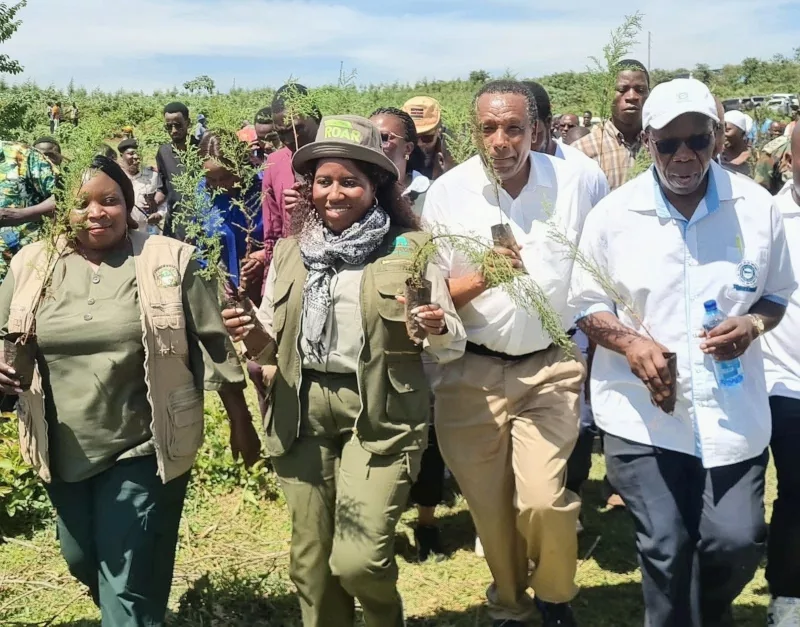
Wajir Governor Ahmed Abdullahi has pledged to complete ongoing projects before leaving office at the end of his second and final term, while defending his administration’s record in healthcare, education, water and road infrastructure.
Speaking during Mashujaa Day celebrations in Korondile, Wajir North sub-county, Abdullahi said his administration was focused on completing key institutional projects and ensuring public infrastructure continued to benefit residents beyond his tenure.
“As I approach the end of my second and final term, I remain focused on completing the institutional foundations of our county government,” he said.
He cited the Governor’s Residence and the residences of the Deputy Governor and Speaker of the County Assembly as projects nearing completion, adding that they were expected to be commissioned soon.
The governor said his administration had completed the County Assembly headquarters, providing a permanent base for the county legislature, and established a County Aggregation Centre intended to improve agricultural and livestock marketing and create opportunities for value addition.
He called for proper management and maintenance of public infrastructure, warning that projects must continue delivering value to residents after the current administration leaves office.
“Every project comes with a responsibility to maintain it, operate it effectively and ensure that it delivers value to the public. That responsibility must continue beyond the completion of any administration,” he said.
Abdullahi used the national celebrations to highlight achievements since he became Wajir’s pioneer governor, while acknowledging that some projects remained unfinished and communities continued to face development challenges.
On healthcare, he said the county had more than 65 medical doctors, over 22 specialists, more than 500 nurses and over 200 other health professionals across various cadres.
He said the administration had invested in expanding the medical workforce to improve access to care closer to residents’ homes and address staffing shortages.
In education, Abdullahi said the county had established more than 500 Early Childhood Development Education (ECDE) centres, enrolling approximately 28,000 learners.
He said the county had invested in classrooms, sanitation facilities and the recruitment of ECDE teachers, while supporting students through bursaries and expanding vocational training.
“We have invested in classrooms, sanitation facilities and the recruitment of ECDE teachers because a child’s future begins long before secondary school or university,” he said.
The governor said these investments were particularly important in a predominantly pastoralist county, where children in remote settlements and low-income households face challenges accessing education.
On water, Abdullahi said the number of functional boreholes had risen from about 80 when he took office to more than 400. His administration had also established about 200 earth pans and more than 50 mega dams to improve water access for households and livestock, particularly during prolonged dry spells.
“In an arid county such as Wajir, water is more than a development priority. It is a question of life, dignity and economic survival,” he said.
He said the investments were intended to reduce the distances residents travel in search of water, ease the financial burden on households, support livestock production and strengthen communities’ resilience to drought.
Abdullahi also cited the construction of approximately 50 kilometres of tarmac roads in Wajir Municipality, saying the network had improved mobility and access to businesses, health facilities and other essential services.
“A road is not just a stretch of tarmac. It connects a trader to customers. It connects a worker to employment. It connects a patient to a hospital. It connects a farmer or livestock owner to a market,” he said.
Beyond infrastructure, the governor said his administration had supported farmers and pastoralists, invested in renewable energy and climate resilience, and worked with the National Government and development partners to secure projects for the county.
He singled out the County Aggregation Centre as a key investment, saying it could improve the collection, handling, storage and marketing of agricultural and livestock products while creating opportunities for local enterprises.
“Our people should not only produce raw materials. We must create better opportunities for processing, storage, marketing and value addition. That way, more economic benefits will remain within our county,” he said.
The governor acknowledged that challenges remained, including gaps in service delivery, limited opportunities for young people and households’ continued vulnerability to drought and economic hardship.
“Challenges remain. Some communities still need better services. Many young people need more opportunities. Families remain vulnerable to drought and economic hardship. We must acknowledge these realities honestly. But we must also recognise how far we have travelled,” he said.
He urged elected leaders, public servants, elders, religious leaders, businesses and young people to work together to protect public resources, sustain development gains and promote peaceful coexistence.
Abdullahi said the success of devolution should be measured not only by buildings and roads constructed but also by the quality of services delivered and opportunities created for future generations.
“To me, the legacy of devolution is not simply the buildings we leave behind. It is the institutions that continue to function. It is the services that reach our people. It is the opportunities created for our children,” he said.
He thanked residents, public servants, development partners, elected leaders, elders, women and young people for their contributions to the county’s development, saying the gains made during his tenure belonged to the people of Wajir.
“Leadership is temporary. The responsibility to serve the people is permanent. The work of developing Wajir must continue beyond any individual, office or admi