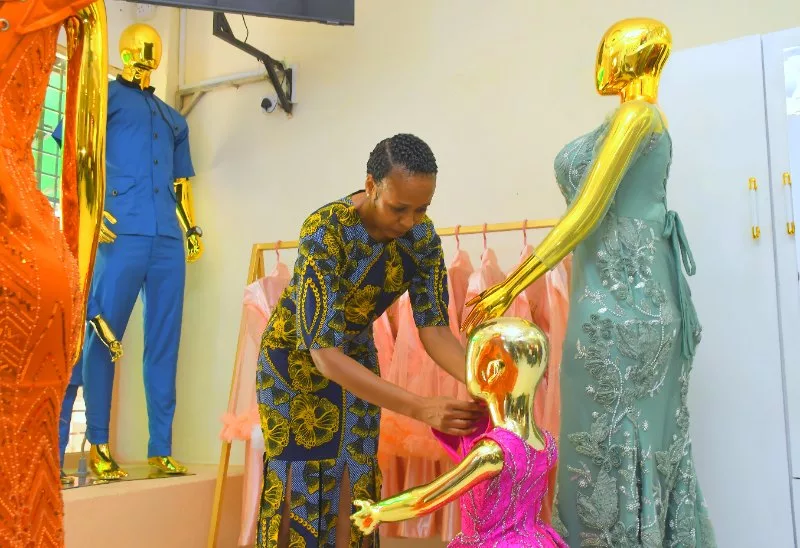
A fashion business started with one sewing machine in Mombasa has grown into a workshop employing six tailors, offering a glimpse of how small enterprises can create jobs and equip young people with practical skills.
The business, African Brides, also known as Label of Choice, is owned by Judith Makau, a trained journalist who turned her childhood passion for fashion into a source of income in 2020.
Operating from a modest workshop on the ground floor of Jiwaji Building in Mombasa, Makau began with limited capital, one sewing machine and a single tailor.
Her business has since expanded, with six tailors now working on bridal wear and other fashion designs.
Makau said the Covid-19 pandemic pushed many Kenyans to reconsider their sources of income, prompting her to turn her passion into a full-time business.
Within three years of starting the workshop, she had recruited two tailors from Tanzania, whom she also accommodated as the business continued to grow.
Makau also wants to change perceptions about tailoring, a profession she believes is often undervalued despite its potential to provide sustainable livelihoods.
“People see tailoring like a very low job,” she said, explaining her commitment to creating a professional working environment where employees and clients feel valued.
Her approach to training and mentorship is reflected in the experience of Ali Mrabu, who joined the workshop as a cleaner before developing an interest in sewing and becoming a skilled tailor.
“I came here as a cleaner; with time I became interested in sewing and became perfect at it. I urge the youth to work hard and not compare jobs. Any honest work that puts food on the table is worth doing,” Mrabu said.
Makau’s ambitions extend beyond the local market. She has travelled to China to research gown designs and fabrics as she seeks to improve the quality and variety of products offered by her workshop.
However, she says access to quality fabric remains a major challenge for Kenyan designers, partly because of the decline and collapse of local textile manufacturers.
She is urging the government to revive the textile industry to strengthen local production and make quality materials more accessible to fashion entrepreneurs.
Makau believes a stronger domestic textile sector would help designers reduce sourcing challenges while supporting the wider fashion industry.
Bishop Simon Muteti, a long-time customer of the workshop, praised its professionalism and urged young people to consider entrepreneurship and technical skills as alternatives to waiting for formal employment.
“Learn a skill, work hard, and support the country instead of remaining idle,” he said.
Other clients and entrepreneurs, including Catherine Kiluva and Adama Rismuaka of Fab’s Collection, also praised the consistency and quality of work produced by African Brides, crediting the standards established by Makau and her team.
End….
Instant analysis
Judith Makau’s journey demonstrates how small businesses can contribute to job creation and youth empowerment despite limited capital. Starting African Brides with one sewing machine in 2020, she has expanded the workshop to employ six tailors while offering opportunities for skills development. The transformation of Ali Mrabu from a cleaner into a skilled tailor highlights the importance of workplace training and mentorship.
Summary
Judith Makau has grown African Brides, a bridal and fashion workshop in Mombasa, from one sewing machine in 2020 to a business employing six tailors. The trained journalist turned her childhood passion into an enterprise that creates jobs and equips young people with practical skills. She is also calling for the revival of Kenya’s textile industry to improve access to quality fabrics and support local designers.