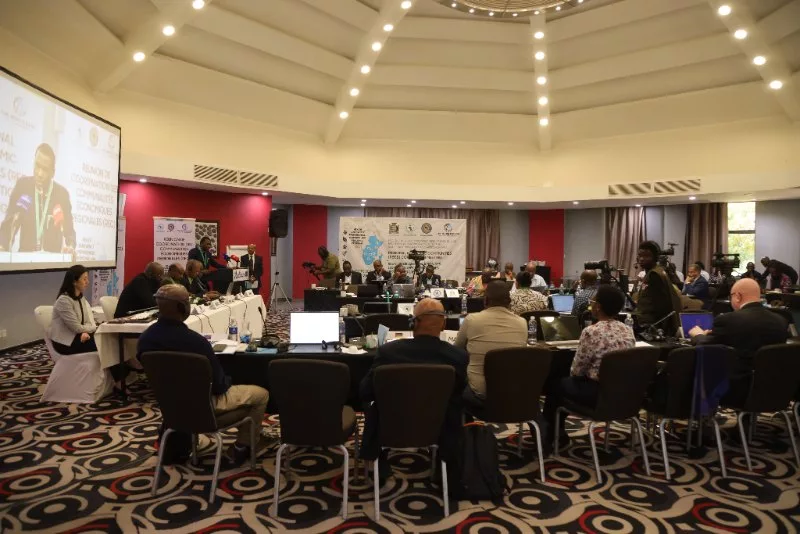
 IGAD and SADC conclude a three-day inter-Regional Economic Communities meeting in Lusaka, Zambia/IGAD SECRETARIAT COURTESY
The Intergovernmental Authority on Development (IGAD) and the Southern African Development Community (SADC) have agreed on a framework to strengthen regional coordination and improve preparedness for health emergencies across Eastern, Central and Southern Africa.
The framework emerged from a meeting of Regional Economic Communities (RECs) held in Lusaka, Zambia, from October 14 to 16, 2026.
The event brought together regional bodies, health institutions and international partners to address gaps in emergency preparedness and response.
It featured five regional blocs: SADC, the Common Market for Eastern and Southern Africa (COMESA), the East African Community (EAC), IGAD and the Economic Community of Central African States (ECCAS).
Other participants included the World Bank, World Health Organization (WHO), African Union Commission, Africa Centres for Disease Control and Prevention (Africa CDC), African Medicines Agency and the World Organisation for Animal Health.
Discussions focused on strengthening collaboration under the Health Emergency Preparedness, Response and Resilience Programme for Eastern and Southern Africa (HEPRR-MPA), which aims to improve health system resilience across 11 participating countries.
Among the key recommendations was the adoption of a joint action framework to guide cooperation between regional economic communities and partner institutions, with clearly defined responsibilities, timelines, resource commitments and performance indicators.
The meeting also called for stronger cross-border health security through coordinated investment in priority points of entry, formalised cross-border agreements and improved information sharing to facilitate early detection and response to disease outbreaks.
Regional bodies were urged to harmonise operational procedures, strengthen referral systems and undertake joint planning to improve coordination when emergencies occur.
The recommendations further called for expanded field epidemiology training programmes, simulation exercises and professional exchanges to develop a multidisciplinary workforce capable of responding to public health emergencies across borders.
Participants also identified the need to strengthen laboratory networks, improve diagnostic capacity and enhance collaboration between human and animal health surveillance systems under the One Health approach.
Financing was another key priority, with the meeting proposing a regional financing compact to sustain gains in emergency preparedness and response beyond the current project funding.
The United Nations Economic Commission for Africa and WHO were identified as potential supporting partners.
The regional bodies also called for greater cooperation in the local manufacture of medical products and technologies to improve access to essential supplies during emergencies.
The recommendations proposed a formal coordination platform to align manufacturing priorities, share technical expertise and avoid duplication of investments across countries and regional blocs.
Partnerships between regional economic communities, WHO and African Union agencies were also identified as necessary to align regulatory systems, support manufacturers and coordinate implementation of regional health security priorities.
The HEPRR-MPA is designed to strengthen preparedness, response and resilience across participating countries in Eastern, Central and Southern Africa.
The meeting's recommendations seek to improve cooperation between regional institutions while addressing gaps in financing, workforce capacity, surveillance and access to essential medical products.