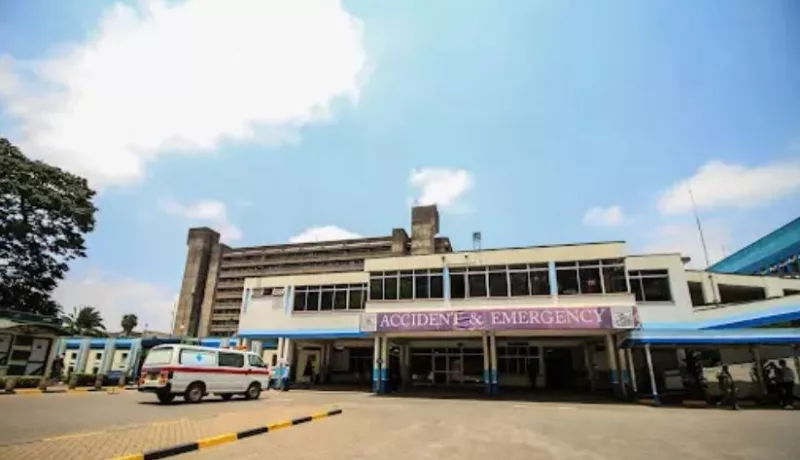
 Kenyatta National Hospital/FILE
Kenyatta National Hospital (KNH) has performed Africa’s first tubeless tracheal reconstruction, a specialised operation that repaired a patient’s windpipe without a conventional breathing tube obstructing the surgical field.
The five-hour procedure was conducted on September 24 at the hospital’s Prime Care Centre on Dennis Kaiser Omondi, 26, who had struggled with breathing difficulties for nearly two decades.
The operation was led by cardiothoracic and vascular surgeon Joseph Mutie, working alongside ear, nose and throat specialist Ruel Maina and consultant anaesthesiologist and intensivist Caroline Abuya.
Omondi was diagnosed with a benign adenoma, a non-cancerous growth in his windpipe, in 2008. Further investigations revealed narrowing of the trachea, restricting airflow, and an abnormal opening between the windpipe and the skin of his neck.
The conditions affected his breathing, voice and daily activities.
During the operation, the team used a tubeless technique that allowed the surgeon to access the affected area without a conventional breathing tube obstructing the surgical field.
A bronchoscope, a small camera inserted into the airway, helped identify the diseased section requiring removal.
The team removed the narrowed sections, closed the abnormal opening, known as a fistula, and reconnected the healthy ends of the windpipe to restore an open passage for breathing.
“The technique, the first in Africa, gives surgeons a clearer view of the affected windpipe, helping them work more precisely when treating complex airway conditions. It is an important step forward in the treatment of these conditions in Kenya,” Mutie said.
The approach required close coordination between the surgical and anaesthesia teams to maintain adequate oxygenation and ensure patient safety. KNH said the patient breathed naturally throughout the procedure.
The technique can help improve visibility and access during surgery, minimise injury to the delicate lining of the windpipe and support healing. However, it requires careful planning and specialised expertise to manage the patient’s airway throughout the operation.
Prime Care Centre Senior Director John Ngigi said the achievement reflected the centre’s commitment to specialised, patient-centred care, while Senior Director of Clinical Services Joel Lessan highlighted the role of modern technology and multidisciplinary teamwork in treating complex conditions.
KNH CEO Richard Lesiyampe said the milestone demonstrated the ability of Kenyan medical professionals to deliver advanced treatment locally, reducing the need for patients to seek specialised care abroad where services are available in the country.
Omondi said he had noticed significant improvements following the operation and had resumed his daily activities.
“I have noticed an improvement in my voice, and I have resumed my daily activities, including running my retail shop in Kisumu. I can now climb a flight of stairs with greater ease, which is a significant improvement after years of breathing difficulties,” he said.
He will continue attending follow-up appointments at the Prime Care Centre following his discharge.
The achievement highlights KNH’s role as a national referral and teaching hospital and Kenya’s growing capacity to provide advanced specialised surgical care.