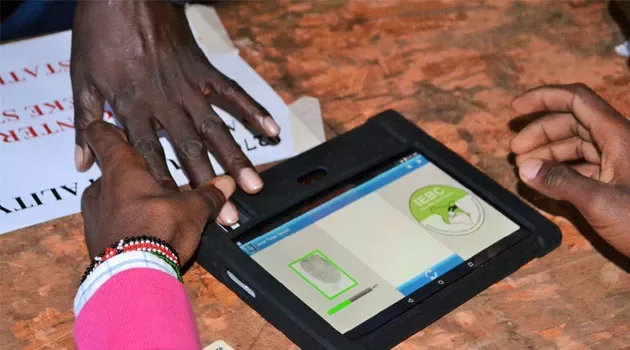
The Public Procurement Administrative Review Board dismissed a challenge by Leading Edge Limited, allowing the Independent Electoral and Boundaries Commission (IEBC) to proceed with the tender for the Integrated Elections Management System.
In its decision of October 14, the board also ordered the company to pay IEBC Sh2 million in costs, ruling the firm had not established sufficient grounds to invalidate the procurement requirements.
Westend Limited also lost its fight with the IEBC on the ballot papers tender, paving the way for the commission to proceed with procurement.
In the ballot paper case, the board ordered Westend to pay the IEBC Sh2 million in costs, saying the procurement was of significant public importance and should proceed without avoidable delay.
The two decisions, delivered on October 14, could offer some relief to the electoral agency, which faces a tight timetable to acquire the technology and materials required for the elections.
The rulings do not, however, establish that either tender has been awarded or identify the successful bidders.
In both cases, the companies sought intervention by the board over requirements they argued were restrictive, unclear or inconsistent with procurement law.
The board declined to grant the relief sought and directed the IEBC to take the tenders to their lawful conclusion.
In the ballot paper decision, the board said the procurement ‘relates directly to the conduct of elections’ and was therefore of significant public importance.
“While this consideration does not diminish a tenderer’s statutory right to seek administrative review, it underscores the importance of ensuring that the procurement process proceeds to its lawful conclusion without avoidable delay,” the board ruled.
The board also dismissed the Westend’s application and ordered the IEBC accounting officer to proceed with the tender for ballot papers and related materials.
The Sh2 million costs order followed the board’s finding that the commission had successfully defended the challenged procurement requirements.
The ballot paper tender has faced successive objections by tenderers since its publication, forcing the commission to amend its documents and issue clarifications.
The board had dismissed an application on September 3 but directed IEBC to reconcile conflicting provisions on acceptable tender security and extend the submission deadline by at least seven days.
The commission subsequently issued Addendum No 3 on September 17, extending the deadline to October 1 and amending several provisions. Further clarifications followed on September 25.
Westend then challenged the revised documents, arguing the amendments and clarifications left important aspects of the procurement unclear.
The tenderer questioned the set threshold for determining a supplier’s experience and production-capacity requirements.
The company also questioned the restrictions on joint ventures and subcontracting, the local-content formula, and security requirements.
It also challenged the set ballot-paper specifications and the time allowed for bidders to prepare samples.
IEBC defended the requirements, arguing they reflected the scale, security and time-sensitive nature of electoral printing.
The board considered the competing arguments and declined to grant Westend the orders it sought.
It is worth noting that a separate suit by Busia Senator Okiya Omtatah is still before the High Court, but the judge only gave orders on service to respondents.
For the technology tender, Leading Edge Limited questioned the exclusion of joint ventures and the treatment of bidders’ experience, financial capacity and local participation.
The company wanted the process suspended and tender conditions amended, arguing the requirements restricted competition and could prevent capable firms from participating.
The board rejected the application and directed the IEBC accounting officer to proceed with the technology tender to its lawful conclusion. It also ordered Leading Edge to pay Sh2 million in costs.
The two decisions came as the commission is in a race against time to prepares for elections, which are less than 300 days away.
IEBC needs both election-management technology and printed materials to conduct voting and declare results.
Article 227 of the Constitution requires public procurement to be conducted through a system that is ‘fair, equitable, transparent, competitive and cost-effective’.
The next test will be whether the IEBC can conclude the procurement processes lawfully and in time for the preparations required for the general election.
The technology tender involves the supply of 59,352 Kiems kits, including 55,393 for polling stations and 3,959 for training.
The commission plans to replace 45,353 kits acquired in 2017, while reusing about 14,000 devices bought in 2022.
The new system is expected to support voter registration, identification and verification, candidate registration and transmission of election results.