Political parties have committed to opening up their nomination processes to women, youth and other marginalised groups.
This is even as the Independent Electoral and Boundaries Commission (IEBC) declared that it’d strengthen rules on inclusion in the 2027 poll process.
In a declaration endorsed by political parties in Nairobi, the parties pledged to review nomination fees and procedures.
They also pledged to comply with constitutional gender requirements and ensure special interest groups are represented in party structures.
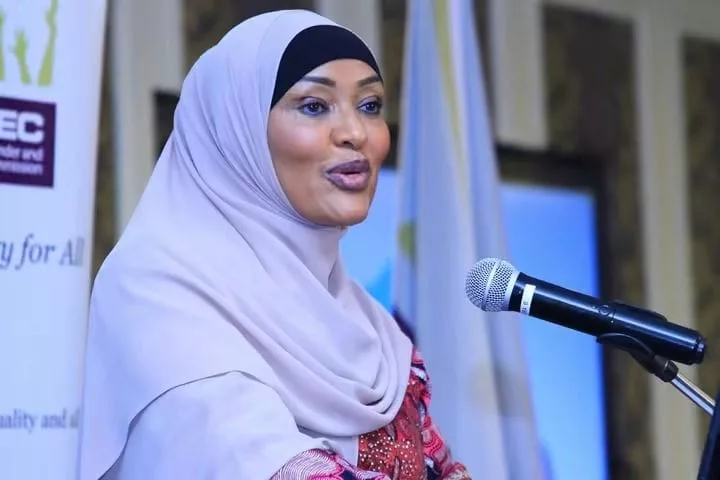
The declaration was adopted during an engagement convened by the National Gender and Equality Commission (NGEC) and the Office of the Registrar of Political Parties (ORPP).
It requires parties to submit nomination rules that provide for fair participation by special interest groups within the timelines set for the 2027 elections.
It also commits parties to act against violence, intimidation and harassment of candidates.
Parties have also agreed to undergo a joint audit by the NGEC and the ORPP, with a review of progress scheduled for February 2027, ahead of party nominations.
NGEC chairperson Rehema Jaldesa said political parties were the gateway to elective office and had a responsibility to ensure all groups had a fair opportunity to participate.
“The commission will monitor how parties deliver inclusion, so that women, youth, persons with disabilities, older persons, minorities and marginalised communities lead where decisions are made,” she said.
Jaldesa urged parties to allow the commission to audit their inclusion efforts throughout the electoral process rather than wait until election day to assess representation.
Office of the Registrar of Political Parties assistant registrar Agatha Wahome said parties could use existing legal provisions and their own structures to improve representation.
She said 15 per cent of political parties' funding from the Consolidated Fund was linked to the strength of special interest group members elected on their tickets.
Wahome said parties could also direct funding towards promoting these groups through reduced nomination fees, targeted civic education, mentorship programmes and leadership academies.
They could further support aspirants with logistics as they prepare for party primaries and campaigns.
She said about 30 per cent of the relevant funding was required to support the promotion of special interest groups in Parliament and county assemblies.
The declaration calls on women, youth, persons with disabilities, older persons and marginalised communities to register as party members and seek nominations.
But it remains to be seen if political parties will implement the commitments, with the IEBC acknowledging persistent challenges in enforcing the two-thirds gender principle.
The commission also lamented the tendency of parties to nominate men as their leading candidates.
IEBC vice chairperson Fahima Abdallah said the commission was pursuing reforms to make the electoral process more inclusive.
She cited proposals to implement the gender principle through political party nomination rules and amendments contained in the Election Laws (Amendment) Bill, 2026, before Parliament.
She said the commission had also introduced reduced nomination fees for special interest groups, including women, youth, persons with disabilities and minority communities, to encourage their participation in elective politics.
Under the Elections (General) Regulations, 2012, the fees payable by candidates from these groups are capped at half the standard rates for six elective positions.
Presidential candidates from special interest groups will pay Sh100,000, against the standard fee of Sh200,000.
For governors, the fee is Sh25,000 against Sh50,000, while special interest group candidates seeking Senate seats will pay Sh25,000 instead of Sh50,000.
Candidates for the National Assembly will pay Sh10,000 against the standard Sh20,000, while those seeking the women representative position will pay Sh10,000.
For county assembly seats, the fee has been reduced to Sh2,500 from Sh5,000.
Abdallah said the measures were part of efforts to remove financial barriers that could prevent qualified candidates from seeking elective office.
“We are able and we are going to do our best to ensure that the 2027 general election is going to be inclusive,” she said.
She said the commission had launched its strategic plan and electoral operations plan under the theme of inclusive participation in deepening democracy in Kenya.
Abdallah said the commission had previously required parties to align their constitutions and nomination rules with guidelines aimed at ensuring compliance with the gender principle.
However, she noted the commission continued to face challenges in the wake of the absence of explicit consequences for non-compliance.