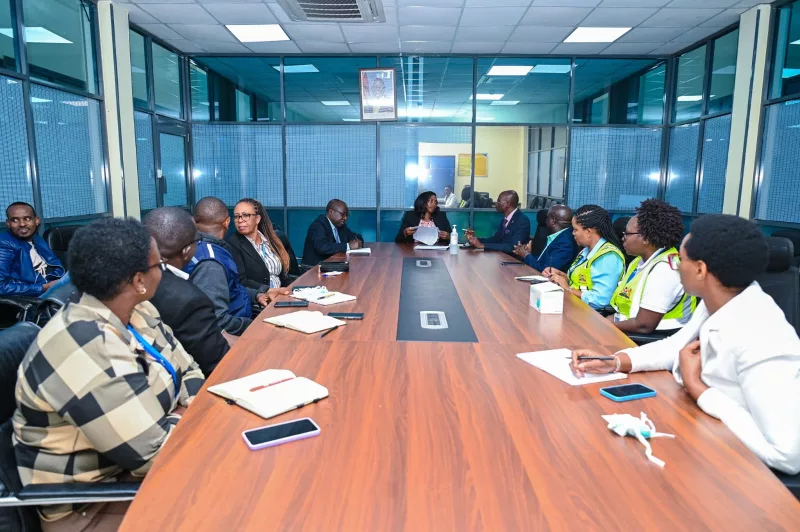
 Public Health Principal Secretary Mary Muthoni during a meeting with Health and JKIA officials on October 15, 2026/X
Jomo Kenyatta International Airport (JKIA) has intensified surveillance and screening measures as the government steps up efforts to prevent the spread of Ebola Virus Disease into the country.
The Ministry of Health and Kenya Airports Authority (KAA) staff held engagements Thursday at the airport to assess preparedness, identify surveillance gaps and strengthen screening and monitoring systems for travellers arriving from high-risk countries.
Public Health Principal Mary Muthoni, who led the ministry’s team, said all designated gates for travellers from high-risk countries are operational.
“All designated gates for travellers from high-risk countries are fully equipped and operational to support early detection and protect public health,” she said.
JKIA remains a critical entry point into Kenya and a key component of the country's preparedness and response measures against the Ebola threat.
The latest interventions are aimed at ensuring suspected cases are identified early, allowing health authorities to initiate appropriate response measures and minimise the risk of transmission.
The airport's role
is particularly important because of the movement of international
travellers through Kenya, making effective screening, surveillance
and coordination among relevant agencies essential in detecting
potential cases. Public Health Principal Secretary Mary Muthoni during a meeting with JKIA officials on October 15, 2026/X
Health officials are working with airport personnel to strengthen existing systems and ensure that screening and monitoring procedures remain operational as the country maintains vigilance against the disease.
Muthoni used the opportunity to urge Kenyans to avoid misinformation and continue adhering to health protocols, as such could cause unnecessary fear or confusion.
“We urge Kenyans to remain calm, avoid misinformation and continue following Ministry of Health guidelines as we strengthen our collective efforts to safeguard public health,” she said.
Ebola Virus Disease is a severe illness that can spread through direct contact with the blood or bodily fluids of an infected person or contaminated materials.
Early detection and prompt response are critical in limiting transmission.
Kenya's preparedness measures are intended to reduce the risk of an imported case triggering local transmission while ensuring that health and airport authorities can respond swiftly to any suspected infection.
The country has confirmed a second case of Ebola, 10 days after a businessman died of the virus after travelling from the Democratic Republic of Congo.
The new patient, a 39-year-old man, is a close relative of the first case and was already in quarantine when he fell ill on Tuesday, the ministry said Wednesday, October 14.
The incubation period for Ebola ranges from two to 21 days, meaning those exposed to the virus may not become ill for several weeks.
Detecting his illness early had improved his chances of recovery and limited the chance of him passing the virus on to others, the ministry said, as it urged the public to "stay calm but vigilant".
"Both cases are linked, and there is no evidence of spread in the wider community," the ministry said.
"Kenya remains open, with no restrictions on travel, trade or public gatherings", it added.
The 40-year-old man who died on 5 October was diagnosed with Ebola shortly after being admitted to a hospital in Nairobi.