Energy Cabinet Secretary Opiyo Wandayi has fired back at former Deputy President Rigathi Gachagua over claims that the government plans to increase petrol and diesel prices.
The exchange comes as Kenyans await the Energy and Petroleum Regulatory Authority's (EPRA) latest monthly review of pump prices for the October-November pricing cycle.
Gachagua claimed that the government had ordered an increase of Sh12 per litre for petrol and Sh9 for diesel, alleging that the proposed changes were intended to raise funds for political activities.
He also accused Wandayi of being instructed to hold a press conference to justify the anticipated increase by citing movements in international oil prices.
“That so-called expert, Mr. Opiyo Wandayi, has been instructed to call a press conference and justify the increase, citing global prices. It is all lies!” Gachagua said.
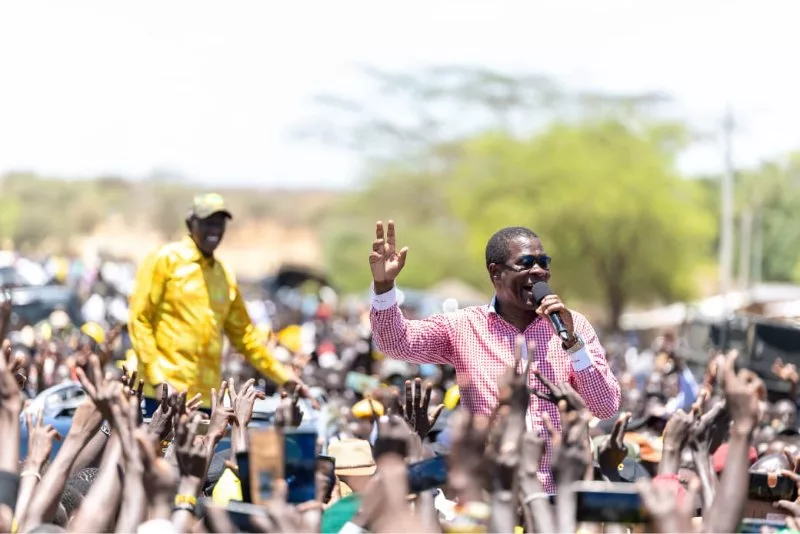
However, speaking during a rally in Elgeyo Marakwet County, Wandayi dismissed the claims and challenged Gachagua to understand the legal framework governing fuel pricing.
The CS maintained that the responsibility for setting maximum retail prices rests with EPRA under the law, rather than individual government officials.
“Kenya had never experienced a fuel shortage, even before the crisis in the Middle East," he stated.
He added that the authority to determine pump prices was legally vested in the regulator.
“You must understand that the responsibility for setting fuel prices lies with EPRA, in accordance with the law,” he said.
Wandayi also questioned Gachagua's understanding of fuel pricing.
The CS challenged the ex-DP to confront him directly over the fuel situation, warning that he would respond to the concerns.
“Mambo ya mafuta ukiwa na shida nayo, face me and I will handle you appropriately. Umetuzoea,” Wandayi said.
Wandayi also defended the prevailing fuel prices, arguing that they remained significantly lower than those in some regional markets and international markets amid disruptions linked to the crisis in the Middle East.
The CS has previously attributed the situation partly to the Government-to-Government (G-to-G) fuel procurement arrangement, which he has said had enabled international oil companies supplying Kenya to load cargoes from alternative ports and regions when usual Gulf loading points faced disruptions.
The exchange comes as motorists await EPRA's announcement of the maximum retail prices for super petrol, diesel and kerosene for the next pricing period.
Under the previous review, which covered September 15 to October 14, motorists in Nairobi paid Sh214.03 per litre for super petrol, Sh217.86 for diesel and Sh191.36 for kerosene.
The forthcoming review will determine whether the prices will rise, decline or remain unchanged for the next pricing cycle.