Mt Kenya region is playing its political cards “safe” ahead of the 2027 General Election, appearing keen to avoid putting its votes in one basket.
While the region has largely tilted towards the Opposition following the fallout between President William Ruto and his former deputy, Rigathi Gachagua, in late 2024, voters appear reluctant to repeat what some leaders regard as the mistake of overwhelmingly backing one presidential candidate, as they did for Ruto and his United Democratic Alliance (UDA) party in 2022.
The region is navigating a political landscape featuring former president Uhuru Kenyatta, Deputy President Kithure Kindiki and Gachagua as some of its most prominent figures, while also opening itself up to emerging political alliances.
So far, the region has appeared receptive to the Gachagua-Kalonzo Musyoka axis, the Fred Matiang’i-Ndindi Nyoro partnership and, more recently, the Edwin Sifuna axis.
This is happening even as President Ruto’s allies in the region continue efforts to rebuild UDA’s political fortunes, despite facing an uphill task.
Since his impeachment as Deputy President in October 2024, Gachagua and his Democracy for the Citizens Party (DCP) have increasingly aligned themselves with Kalonzo’s Wiper Patriotic Front (WPF).
Gachagua has repeatedly praised Kalonzo and his allies for the “solidarity” they accorded him during his impeachment.
Meanwhile, Nyoro, who hails from the region, has teamed up with Jubilee presidential candidate Matiang’i after finding himself in unfamiliar political territory.
The two have been crisscrossing the country, each presenting their political agendas as part of a wider contest for influence ahead of 2027.
Nyoro and Matiang’i attracted public attention when they met in Karen, Nairobi, on September 23, 2026. The meeting marked the beginning of what has since developed into a high-profile political partnership.
On Wednesday, Kirinyaga Woman Representative Njeri Maina and the county’s Senator, Kamau Murango, met Sifuna in Nairobi, raising fresh questions about the ongoing political realignments in Mt Kenya.
Although the reports have not been independently verified, claims emerged that Maina was being considered as Sifuna’s running mate.
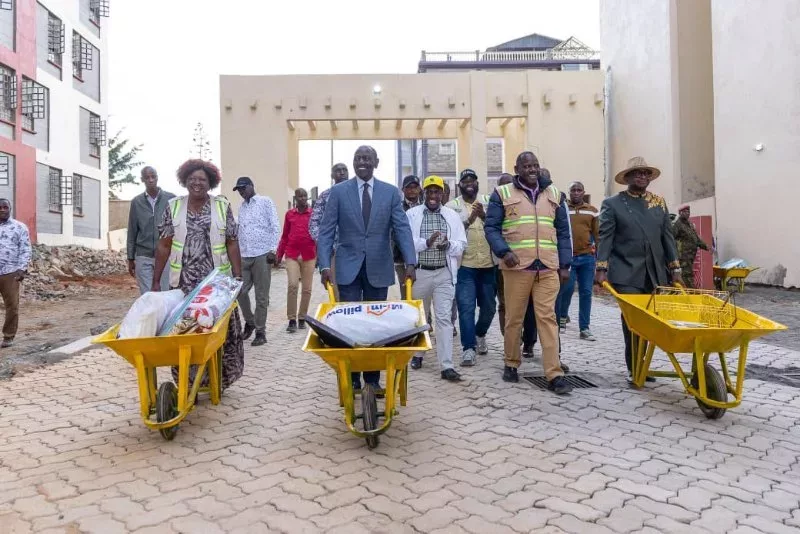
As these alignments take shape, Ruto’s allies in the region, led by Kindiki, have continued launching development projects and portraying the administration as focused on development.
Political analysts say that while the Opposition has maintained that it will field a single presidential candidate, Mt Kenya appears determined to keep its options open and avoid finding itself in a political “hole” after making an early commitment.
“Since the onset of multipartyism in 1992, Mt Kenya has always had a single influential political leader until 2022, when Uhuru retired as Kenya’s fourth president,” says political analyst Herman Manyora.
Manyora says that since 1963, Mt Kenya has largely existed as a political unit, rallying behind leaders such as the late Mzee Jomo Kenyatta, Mwai Kibaki and Uhuru Kenyatta.
“For half a century, Mt Kenya has never been politically orphaned. The region rallied behind Kenya’s three presidents – Mzee Kenyatta, the late Kibaki and Uhuru – all of whom hailed from the region,” he says.
He says that even when the region did not hold the presidency between 1978 and 2002, it still had influential leaders such as Kibaki and the late Kenneth Matiba, who unsuccessfully vied for the presidency in 1992 and 1997.
“The presence of Kibaki and Matiba between 1992 and 1997 and 1997 to 2002 shielded the region from external political ‘invasions’. They acted like the region’s political godfathers, thus ensuring no other influential player had access to it,” says Manyora.
However, political analyst Gichigo wa Mwangi believes the current leaders could be “playing smart”, with the region’s apparent divisions possibly masking a predetermined political direction for 2027.
He says the region could be avoiding putting its votes, estimated at more than three million, in one basket, as it did when it overwhelmingly voted for Ruto in the 2022 General Election.
“I tend to believe that since the impeachment of Gachagua and following the state of political wilderness the region has found itself in, this could be a strategy among the current leaders to present the region as politically divided, but with a common stand at the end,” says Mwangi.
“The Opposition has maintained that it will present a single presidential candidate in 2027. They have alleged plans by the State to politically divide the region through formation of many small political parties to politically weaken it,” says Mwangi.
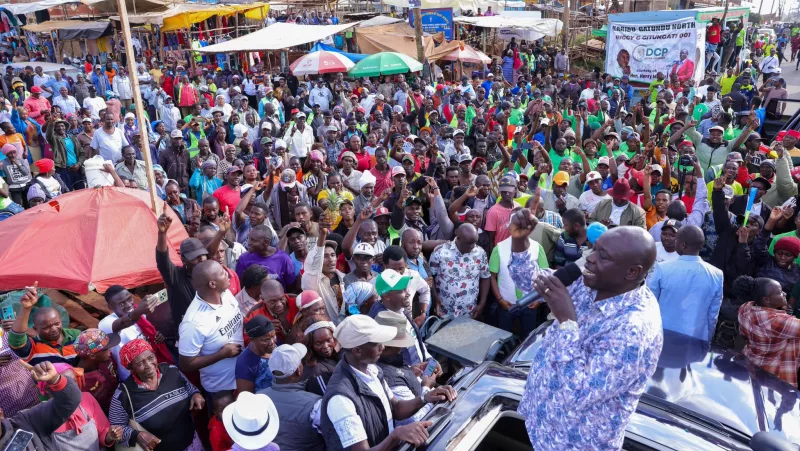
Gachagua, Nyoro and Peoples Liberation Party (PLP) leader Martha Karua, some of the main political figures associated with the region, have maintained that their priority is to prevent Ruto from securing significant support in Mt Kenya.
Speaking in Massachusetts, US, recently, Gachagua said reports suggesting the Opposition was headed for a split were premature, insisting that efforts to build a common front were underway.
“I’ll do whatever is within my power and ability; I’ll make whatever sacrifices necessary to make sure that we have one single presidential candidate, so that the liberation of our country can begin in earnest,” he said.
Ruto’s allies, led by National Assembly Majority Leader Kimani Ichung’wa, have meanwhile maintained that they will do whatever they can to ensure the President is resoundingly re-elected.
“Even if I lose my MP seat in 2027, I will stand with Ruto until the end—even if I'm the only one left in Mt Kenya. This is a political sacrifice I'm willing to make. But one thing I will never do is join Rigathi Gachagua. Never,” vowed Ichung’wa.