
 A Community Health Promoter (CHP) guides colleagues through a grounding exercise taught in the SHINE project’s mental health training.
Every day, Kenya’s community health promoters enter homes where families are struggling with illness, hunger and poverty. They listen, check on patients, identify health problems and help people seek treatment. But when they leave those homes, the worries they encounter do not always stay behind.
Some return home thinking about a child who needs medical care or a family that cannot afford food. Others struggle with heavy workloads, delayed payments and the cost of carrying out their duties. Many face these pressures while dealing with their own family responsibilities.
Now, research by LVCT Health and the African Population and Health Research Centre (APHRC), in partnership with the Liverpool School of Tropical Medicine and other health sector partners, is drawing attention to the mental health burden among these frontline workers.
The SHINE study, which examined the experiences of community health promoters in Nairobi and Kiambu counties, found that more than one in five participants had symptoms suggesting depression. Nearly one in three screened positive for anxiety, while about one in eight showed signs of stress.
The findings raise concern about whether Kenya is giving enough attention to the wellbeing of the workers expected to bring healthcare closer to millions of households.
Dr Stephen Mulupi, Head of Research at LVCT Health and Principal Investigator of the SHINE Project, says health systems have traditionally concentrated on what community health promoters deliver rather than how the work affects them.
“The system has always been asking what community health promoters can do for us. During monthly meetings, much of the time is spent asking how many households they visited, how many women they referred or how many mosquito nets they distributed. But this study is asking a different question: we know they are doing a lot, but do we also care about them?” he said.
The SHINE research surveyed 1,236 community health promoters in Nairobi’s informal settlements of Viwandani and Korogocho, as well as rural areas of Kiambu County, between 2023 and 2025. Researchers also interviewed 66 national and county decision-makers and used participatory methods to understand the workers’ experiences.
Across the two counties, 22.4 per cent of those surveyed had symptoms consistent with moderate or higher levels of depression. Anxiety symptoms were recorded among 30.6 per cent, while 12.7 per cent screened positive for stress.
The burden was greater in Nairobi. About 26.4 per cent of promoters there screened positive for depression, compared with 8.2 per cent in Kiambu. Anxiety symptoms affected 33.8 per cent in Nairobi and 18.9 per cent in Kiambu. For stress, the figures were 15.4 per cent and three per cent, respectively.
These results do not mean that everyone who screened positive has been diagnosed with a mental health condition. Rather, they show that many workers may need further assessment and appropriate support.
The study also points to difficult working conditions. Between 93 and 97 per cent of the promoters surveyed considered their stipends inadequate or unfair. Between 92 and 94 per cent said they regularly spent their own money on work-related costs, including transport, airtime and expenses linked to helping community members access care.
Workloads were another concern. Only eight per cent of promoters in Nairobi considered their workload manageable, compared with 24 per cent in Kiambu. Just 12 per cent in Nairobi said they completed their tasks on time.
For workers who are already struggling to meet their own household needs, the demands can become difficult to bear.
Veronica Muthengi, a community health promoter in Viwandani, says visiting families in distress can leave her carrying their pain long after she has completed her duties.
“Sometimes, I return home carrying the weight of what I have witnessed. I may have food in my house, but when I sit down to eat, I remember a client who has nothing. I lose my appetite and become sad because I have seen the suffering they are going through,” she said.
Before receiving training through the SHINE Project, Muthengi says she would sometimes consider giving struggling families food or money from her own pocket. The training helped her understand that she could care for people without taking personal responsibility for solving every problem they faced.
“I would like to call on both the national and county governments to make our work easier by providing lighter equipment bags and increasing our stipend. We carry many items during household visits, and better, more practical equipment would reduce the burden. Our current stipend is not enough to meet our basic needs. Increasing it would go a long way in supporting us as we continue serving our communities,” she said.
Her experience reflects the difficult balance facing workers who live among the people they serve. They may identify a medical problem and refer a patient, but they cannot always provide food, pay hospital bills or resolve the wider problems affecting a household.
The research also found that some promoters work beyond their expected hours, respond to calls late at night and struggle with electronic reporting systems. Technical problems with the electronic Community Health Information System can force them to repeat tasks, adding to their workload.
Female promoters reported another concern: harassment during household visits. Some said they did not know where to report frightening or inappropriate behaviour in confidence.
Judith Adhiambo, who works with Nairobi County’s Mental Health and Psychosocial Support Unit, says community health promoters are increasingly expected to deal with problems that go beyond their formal health duties.
“We agree with the President that CHPs are the backbone of healthcare in the country,” Adhiambo said.
However, she acknowledges the pressure this places on them.
“The work is really overwhelming to the CHP,” she said.
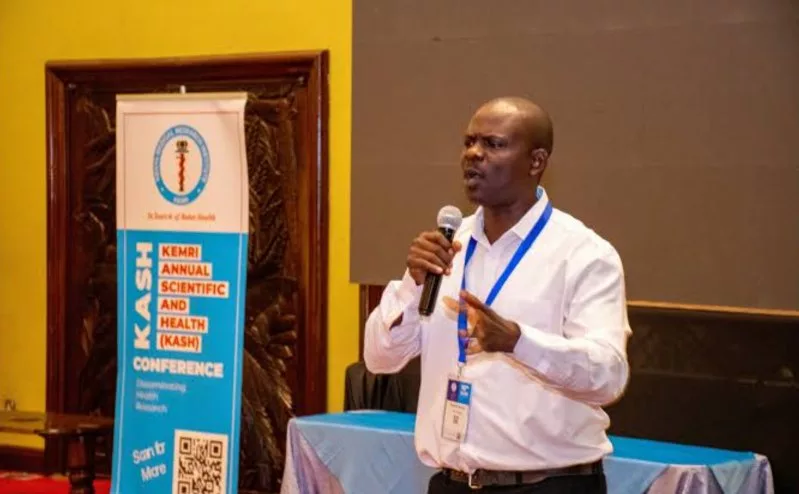 Dr Stephen Mulupi, Head of Research at LVCT Health and Principal Investigator of the SHINE Project.
As well as identifying health concerns and referring patients, promoters may be called upon to respond to violence, poor sanitation and other social problems. Families often turn to them because they are accessible and familiar, even when the problems require services or resources beyond their reach.
Adhiambo says their role has also changed over time.
“Now the role has moved from identifying to actually offering an intervention in the community,” she said.
The SHINE brief says this growing responsibility must be matched by clear limits, effective referral systems and support from supervisors and health professionals. Without these, promoters risk being left to manage difficult situations without the authority, training or resources to resolve them.
Led in Kenya by LVCT Health and APHRC, the SHINE Project has developed and is testing a package of measures to improve workers’ mental health and wellbeing. The initiative has reached 500 community health promoters and 50 community health assistants in Nairobi and Kiambu.
The package combines mental health education, a five-week peer-led self-care programme based on the World Health Organization’s Doing What Matters in Times of Stress guide, training for supervisors in supportive supervision, and text messages that encourage promoters and direct them to available mental health services.
Mulupi says the intervention is intended to help workers recognise distress, develop practical ways to manage stress and support one another, while ensuring that supervisors pay attention to their wellbeing as well as their performance.
“The intervention is aimed at helping community health promoters understand mental health, practise self-care and support one another, while supervisors learn how to provide more supportive supervision,” he said.
But the policy brief makes clear that training alone cannot solve the problems identified by the research.
It calls on the Ministry of Health to make the mental health and wellbeing of community health promoters and their supervisors a funded part of the Community Health Strategy. It also recommends including mental health indicators in the electronic reporting system and teaching workers basic skills in psychological first aid and psychosocial support.
County governments are urged to pay stipends on time and in full, review whether the amounts are adequate, and ensure that promoters are not assigned unrelated duties, such as cleaning health facilities. The brief also calls for appropriate supervisor-to-worker ratios and confidential systems for reporting harassment and gender-based violence.
It recommends bringing county mental health professionals into routine community health meetings, supervision and referral systems, so workers can access help when they need it.
The researchers further urge government, donors and implementing partners to support expansion of the four-part intervention beyond the pilot sites to Kenya’s wider workforce of about 107,000 community health promoters.
Mulupi says the project is examining whether the intervention improves mental health outcomes and whether it can be extended to other counties.
“The project is assessing changes in stress, depression and anxiety to understand the impact of the intervention. We hope county governments will budget for the programme and extend it to the other 45 counties that did not participate. The approach could also be adapted for refugee communities, where health workers face different pressures,” he said.
The results of that evaluation will be important in determining how the package can be implemented more widely. For now, the research makes one point clear: community health promoters need more than encouragement to keep serving their neighbours.
Reliable payments, reasonable workloads, safer working conditions and access to mental health support are also essential if Kenya is to protect the people who help deliver healthcare at the household level.