India is redefining the future of flight and space, from 3D-printed rockets to electric aircraft. By accelerating space access and transforming air travel, the country is pushing the boundaries of aerospace innovation.
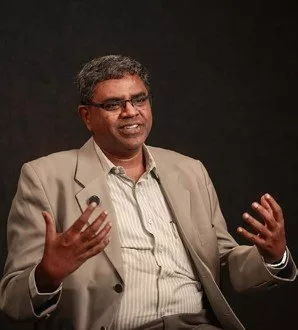
At the forefront is Prof. Satyanarayanan Chakravarthy of the Indian Institute of Technology Madras (IIT Madras), who is helping shape India’s ambitions in aerospace and aviation.
From 3D-printed rockets to electric planes and vertical take-off and landing (VTOL) aircraft, Chakravarthy combines technical expertise, practical ingenuity and forward-looking ideas as India strengthens its position as a spacefaring nation.
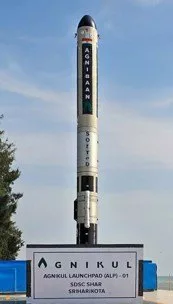
On May 30, 2024, India marked a milestone in its space journey with the launch of a rocket featuring a fully 3D-printed engine. The achievement drew attention to the potential of additive manufacturing in aerospace.
India has steadily expanded its presence in the global space sector, from the Indian Space Research Organisation’s (ISRO) satellite launches to the Gaganyaan human spaceflight programme.
The launch highlighted how advanced manufacturing techniques and indigenous propulsion systems could simplify rocket construction by reducing the number of components while maintaining the precision required for spaceflight.
At the centre of this work is Chakravarthy, sometimes described as India’s new “Space Man”. His expertise and drive have helped turn emerging aerospace technologies into practical applications.
“I think pride comes first, the fact that this achievement is happening entirely in India. But its significance goes beyond national boundaries; it’s a global milestone,” he says.
He adds: “Successfully launching fully 3D-printed rockets shows the world that we’re capable of pushing the frontiers of aerospace technology. Everyone is watching, and we’re contributing to advancing the global state of the art.”
Early Days
Chakravarthy’s interest in aerospace began in his youth, influenced by his academic choices and fascination with physics.
“My initial interest in aerospace came from the fact that my JEE rank allowed me to choose it as a branch,” he recalls. “At that time, aerospace really stood out to me. The other options seemed more about memorising, whereas aerospace felt more physics-oriented, which I had always enjoyed in high school.”
His curiosity deepened after he joined the programme. He actively participated in class discussions and connected with classmates who shared his interest in flight, exploring the principles and challenges of aerospace engineering.
This early fascination laid the foundation for a career combining academic research with practical innovation. After specialised training at the Georgia Institute of Technology, Chakravarthy returned to India to work on aerospace challenges.
His decade-long work in combustion, including contributions to acoustic suppression for the GSLV Mark III rocket, strengthened his technical expertise and helped lay the groundwork for indigenous rocket technologies at IIT Madras.
Prime Minister Narendra Modi
“India continues to soar higher in the world of space! Powered by India’s youth, our space programme is getting more advanced and impactful.”
At IIT Madras
IIT Madras has played an important role in Chakravarthy’s research and India’s broader aerospace ambitions.
Through the National Centre for Combustion Research and Development, his work has contributed to research on spray diagnostics, combustion instabilities and acoustic suppression. The centre has also supported the training of numerous PhD students.
“Academia allows us to combine insights from different industries to create novel solutions,” he says.
He points to concepts such as mobile launchers and rapid deployment systems, which have applications beyond traditional aerospace operations and have previously been associated with defence technologies.
3D Innovation
Advances in 3D printing have opened new possibilities for rocket design and manufacturing, particularly by reducing the number of components and the time required for assembly.
“It drastically reduces part counts. For example, in one of our rockets, nearly a thousand parts and about 3,000 welds were eliminated in a single step.
What normally takes over a month to assemble with high precision can now be completed in just a few days, often with equal or better accuracy,” Chakravarthy says.
By owning and operating their own 3D printers, his team is expanding its production capabilities to support launch-on-demand requirements.
This could improve the flexibility of satellite deployment and strengthen national defence capabilities.
“Launch-on-demand allows strategic deployment when necessary, positioning satellites precisely where they’re needed,” he explains. “It also enables building satellite constellations, upgrading or replacing satellites, and optimising resources. All of this becomes feasible with 3D-printed rockets.”
Electric Planes
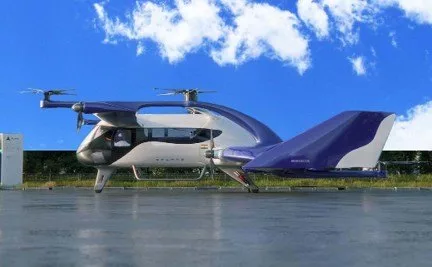
Beyond rockets, Chakravarthy is exploring electric aviation through The ePlane Company, which is developing electric aircraft and VTOL solutions for India’s changing transport needs.
He envisions what he calls “ubiquitous flying” — a future in which people consider flying as an alternative to driving for daily commutes, intercity journeys and direct trips between destinations.
In the near term, electric aircraft and VTOLs could serve routes within cities, while hybrid aircraft operating from conventional runways could make short-haul intercity travel more practical. Such services could improve connections between urban centres and offer alternatives to road transport.
Realising this vision will depend on technological progress, infrastructure development, regulatory approvals and the commercial viability of electric aviation.
Next Frontier
Looking ahead, Chakravarthy sees opportunities in emerging technologies such as digital twins, artificial intelligence, sustainable fuels, reusable rockets and sea-based launches.
These innovations could improve aerospace design, reduce environmental impacts and expand access to space.
Reusable launch systems, for instance, could help lower costs, while digital twins and AI could support modelling, testing and operational efficiency.
India’s space programme also has ambitions beyond Earth orbit, including human spaceflight and future lunar exploration.
Chakravarthy believes these milestones could open the door to even more ambitious missions.
“ISRO has set ambitious milestones. Once we’ve reached space with Indian astronauts, we can aim for the Moon and perhaps even Mars.”