 President William Ruto with KTDA chairman Enos Njeru during the Agriculture and Food Summit on October 9, 2026/PCS
The Kenya Tea Development Agency (KTDA) has released September monthly payments and annual bonuses to smallholder tea farmers, with growers set to access the money from Monday, October 12.
KTDA chairman Enos Njeru announced the release on Friday, October 9, saying the payments had been deposited into farmers’ bank accounts.
“KTDA has today, 9th October, released the September monthly payment together with the second payment (Bonus) to farmers’ bank accounts,” Njeru said.
“Farmers will be able to access their money from Monday, during normal banking hours, as most banks will be closed tomorrow for Mazingira Day, a public holiday.”
The announcement comes as farmers contend with lower bonus payments for the 2025/2026 financial year, with rates varying significantly across KTDA-managed factories.
During the Agriculture and Food Summit on Friday, President William Ruto highlighted disparities in bonus payments, noting that while farmers receive an average of Sh30 per kilogramme of green leaf each month, the second payment differs widely depending on factory performance.
Ruto cited bonus rates ranging from Sh12 per kilogramme at the lowest-paying factory to Sh50 at the highest for the 2025/2026 financial year.
He attributed the variations partly to management challenges at individual factories and urged farmers to elect leaders with integrity and sound management skills to improve performance and returns.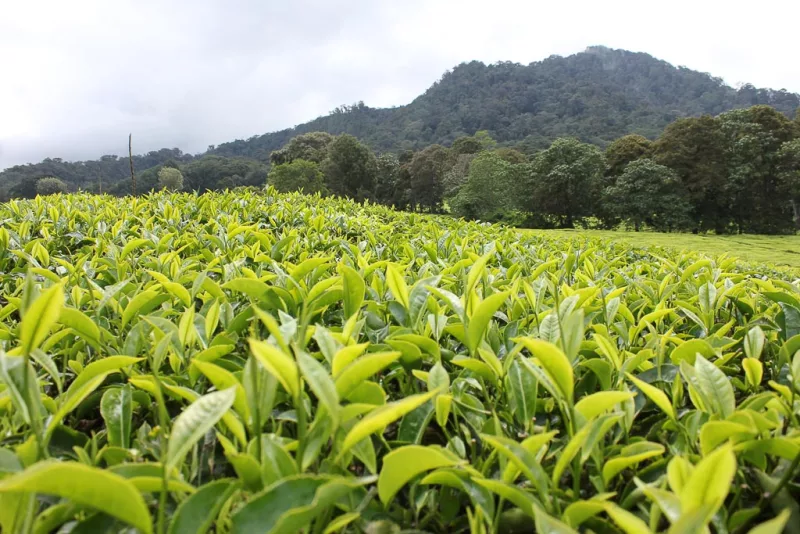 A tea farm in Mt Kenya/COURTESY
To address the challenges, the government, he stated, has allocated Sh850 million to support 17 KTDA-managed factories in improving operational efficiency to increase farmers’ earnings.
The lower payouts come after farmers supplied 1.0947 billion kilogrammes of green leaf during the first 11 months of the 2025/2026 financial year, down from 1.1444 billion kilogrammes over the corresponding period in 2024/2025.
Factory directors considered tea sales revenue, electricity bills, management fees, petroleum costs and employee salaries before declaring bonus rates.
The industry also faced higher operating costs linked to disruptions along shipping routes following the closure of the Strait of Hormuz, as well as the introduction of a 0.8 per cent export levy, which industry players cited as additional pressure on earnings.
Several factories in the Mount Kenya region announced lower bonus rates compared with the previous year.
As farmers prepare to access the payments, Njeru urged growers to continue protecting the environment to support sustainable tea production and better returns.
“As we celebrate, let us continue protecting our environment for sustainable tea production and better returns,” he said.