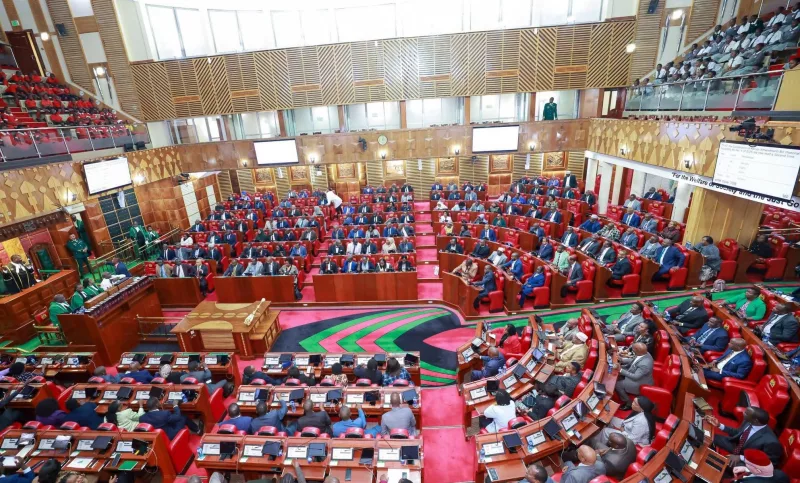
 The National Assembly Departmental Committee on Regional Development has scheduled public participation forums beginning Friday, October 9.
The government is seeking to abolish six regional development authorities and transfer their assets and liabilities to the National Treasury in a move it says will improve service delivery and eliminate overlapping functions between the national and county governments.
The National Assembly Departmental Committee on Regional Development has scheduled the first phase of public participation beginning Friday, October 9, in Elgeyo Marakwet, Isiolo and Narok counties, with engagements expected to be held in other counties.
The six authorities will be dissolved through the proposed Regional Development Authorities Laws (Repeal) Bill, 2026, which seeks to repeal the laws that established them and provide for the transfer of their assets, debts and obligations to the National Treasury.
Under the Bill, the staff of the authorities will be transferred to the Public Service Commission, while existing contracts and legal proceedings will remain in force.
The entities targeted for abolition are the Kerio Valley Development Authority, Lake Basin Development Authority, Tana and Athi Rivers Development Authority, Ewaso Ng'iro South River Basin Development Authority, Ewaso Ng'iro North River Basin Development Authority and Coast Development Authority.
The Kerio Valley Development Authority, established under the Kerio Valley Development Authority Act, Cap 441, oversees the management of the Kerio and Turkwell rivers and their tributaries.
The Lake Basin Development Authority, established under Cap 442, manages the Lake Victoria catchment area and the Kenyan part of the Lake Kyoga catchment area.
The Tana and Athi Rivers Development Authority, established under Cap 443, manages the areas drained by the Tana and Athi rivers and their tributaries.
The other three authorities were established under Caps 447, 448 and 449 respectively.
The committee said the proposed abolition was informed by the view that the authorities had fulfilled the mandates for which they were established.
"The Bill provides that the authorities have carried out the mandate they were created for. It also states that abolishing them will align the roles of the national and county governments to the Fourth Schedule of the Constitution and reduce pressure for budgetary allocation and improve efficiency, accountability and service delivery," the committee said.
The Bill sponsored by Leader of the Majority Kimani Ichung'wah, was gazetted on June 5 and read for the first time in the National Assembly on July 1.
If enacted, the National Treasury will take over the assets, debts and contracts of each authority. Existing loans, credit facilities and securities will remain valid despite the repeal of the laws establishing the authorities.
All contracts and agreements, as well as legal proceedings involving the authorities, will also continue, with the State Department for the National Treasury taking over the administrative mandate.
The Bill further provides for the transfer of employees to the Public Service Commission.
"All employees of the authorities shall on the transition date become employees of the Public Service Commission on terms and conditions that are not less favourable than they had before," the committee said.
Within 30 days of the Act coming into force, the National Treasury Cabinet Secretary will be required to issue directives on how the assets, rights and obligations of each authority will be transferred.
The committee said the process would be undertaken in accordance with the law.
"The directives shall cover the transfer of records, documents and databases, the winding up of the affairs of the authorities and any other matter needed to carry out the Act," the committee explained.
Orders and notices issued under the repealed laws would remain in force unless amended or revoked by the Cabinet Secretary.
The CS would also have powers to issue new policy directives and guidelines necessary to implement the proposed law.
However, the proposed dissolution has faced opposition from civil society organisations, regional councils and other stakeholders, who have raised concerns over the impact of transferring the authorities to the National Treasury.
The resistance has focused on protecting regional development institutions from being absorbed into the national government structure, with stakeholders calling for safeguards for community projects and the interests of employees.
The Kenya Muslim National Advisory Council (Kemnac) is among the organisations that have opposed the proposal, urging MPs to reject the Bill, warning that abolishing the authorities could undermine efforts to revive local economies.