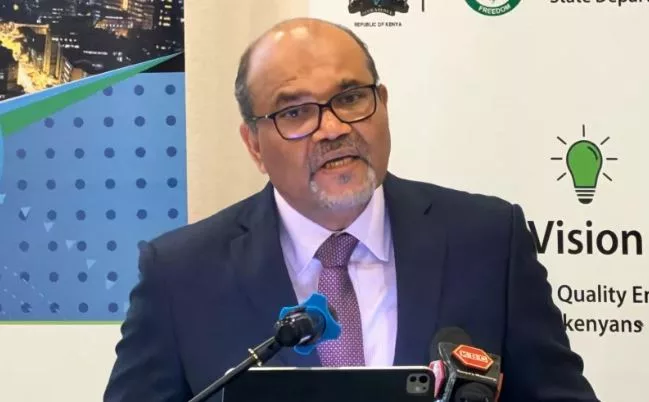
 The Kenya Pharmaceutical Association (KPA) Secretary General Eric Gichane.
The Ministry of Health has dropped disputed rules that would have stopped diploma-trained pharmacy workers from running pharmacies in health centres.
The ministry also agreed to lift a ban on diploma holders handling strong medicines used to treat some mental illnesses and other conditions.
The decision follows protests by the Kenya Pharmaceutical Association (KPA), which represents pharmaceutical technologists, many of whom are diploma holders.
The ministry, Pharmacy and Poisons Board (PPB) and KPA reached the agreement on Tuesday after a meeting chaired by Health CS Aden Duale at Afya House in Nairobi.
Under the agreement, licensed pharmaceutical technologists will continue to run pharmacy services in level 3B facilities.
But level 3A facilities, level 4 hospitals and bigger hospitals will require a degree pharmacist to be in charge.
Level 3A facilities are comprehensive health centres with surgical and maternity theatre capacity, whereas level 3B facilities offer general medical and dental services with limited inpatient care but no operating theatre.
“The Good Pharmacy Practice Standards do not prevent qualified and licensed pharmaceutical technologists from practising. They will continue to provide pharmaceutical services within the scope permitted by law,” Duale said.
“Licensed pharmaceutical technologists may superintend Level 3B facilities. Level 3A facilities, level 4 hospitals and facilities above this level will continue to require pharmacist-led superintendence, in line with applicable laws and regulations.”
The dispute started after the new Good Pharmacy Practice (GPP) Guidelines 2026, now in their 11th draft, were published last month.
The rules banned diploma holders from managing drug stores in health centres, leaving them to manage only dispensaries.
They also banned the technologists from handling narcotic and psychotropic drugs. These are strong medicines used to control severe pain, such as in cancer patients, and to treat mental health conditions.
The technologists held a demonstration in Nairobi on September 10 over the rules.
KPA secretary general Eric Gichane said the new deal now protects the role of pharmaceutical technologists in smaller health facilities.
“It was agreed that pharmaceutical technologists will continue to superintend level 3 facilities. The status quo on community pharmacy practice will also be maintained,” he said.
Gichane said the issue of narcotic and psychotropic medicines would be handled through the normal government process for deciding which medicines should be controlled and who can handle them.
“The matter will be addressed through the ongoing process of scheduling and rescheduling of medicines, rather than through blanket restrictions under the GPP Guidelines. Professional associations will be involved in the process,” he said.
The government also said existing health facilities will not have to close or change their status within three months because of the new standards.
Instead, facilities will be expected to meet the rules based on their level, the risks involved and the type of professional required to run their pharmacy services.
The agreement is a change from the position that had caused concern among pharmaceutical technologists.
The Pharmaceutical Society of Kenya (PSK), which represents degree pharmacists, had supported the new standards.
PSK said the rules would improve the safety of patients and make it clearer who should be responsible for pharmacy services.
The latest agreement does not remove all the new pharmacy standards.
The ministry and KPA also agreed on a new type of facility called a Pharmaceutical Care Centre.
The centres will provide services for patients who need high-risk medicines. They will not replace existing community pharmacies.
The changes will now have to be put into formal documents.
Duale is expected to give KPA a concession document for review before it is signed. The Pharmacy and Poisons Board chief executive Dr Ahmed Mohamed was also directed to meet KPA leaders to agree on how the changes will be implemented.
The ministry said continued talks with other professional groups would help ensure that the new standards improve the safety and quality of pharmacy services without disrupting access to medicines.
Kenya has about 2,931 licensed [degree] pharmacists compared to about 10,000 licensed pharmaceutical technologists.
The country has about 2,559 Level 3 facilities (health centres), 971 Level 4 facilities, 34 Level 5 facilities and five Level 6 facilities, according to the Ministry of Health's 2023 health facility census. The country also has more than 1,050 faith-based organisation facilities.