Women leaders and government officials have renewed the push to enforce the two-thirds gender rule, with a new Bill proposing special seats to correct the gender imbalance in Parliament after every general election.
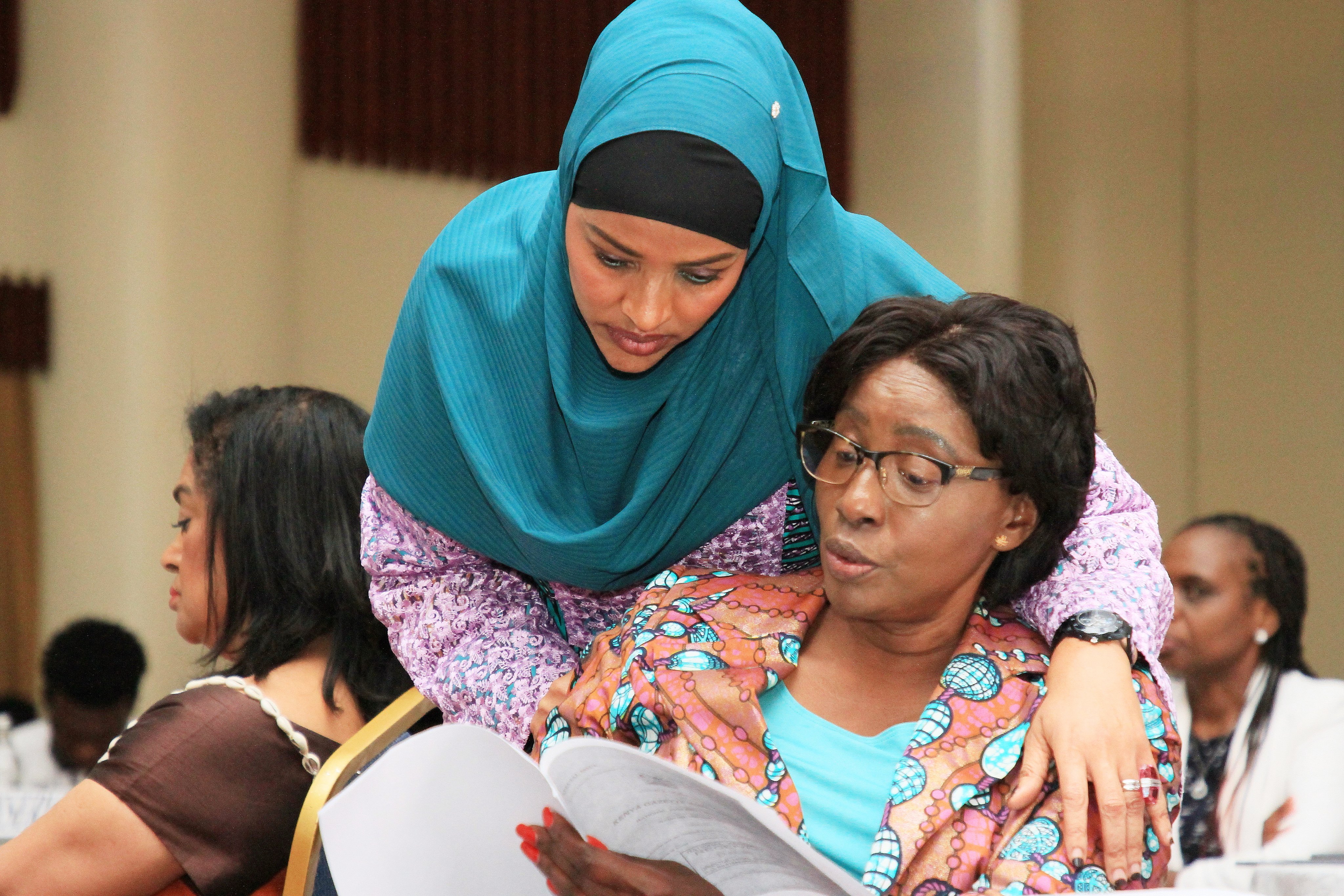
The proposal was discussed on Friday during a high-level forum organised by the National Gender and Equality Commission (NGEC), UN Women and other agencies to find a lasting solution to the constitutional requirement.
The Constitution of Kenya (Amendment) Bill, 2025, sponsored by Deputy Speaker Gladys Boss, Beatrice Elachi and Jane Kagiri, proposes amendments to Articles 90, 97 and 98 of the Constitution.
Unlike previous proposals that have failed to secure parliamentary approval, the Bill provides a mechanism for determining the number of additional seats after election results have been declared.
The number of special seats would depend on the gender composition of MPs elected in the 290 single-member constituencies.
The Bill does not set a fixed number of women to be added to the National Assembly.
Instead, it provides for the number of special seats necessary to ensure that no more than two-thirds of constituency-elected MPs are of the same gender.
The additional seats would be allocated to political parties in proportion to the number of seats they win at the general election.
The proposal also applies a similar mechanism to the Senate, where special seats would be determined according to the gender composition of the 47 elected senators.
The Bill proposes that the mechanism should remain in place for 20 years from the first general election after it comes into force.
Parliament could extend the period once for a further fixed period of not more than 10 years.
The proposal was welcomed by NGEC chief executive Purity Ngina, who said the responsibility for meeting the constitutional threshold should not be placed on voters.
“Every Kenyan, including myself, made a conscious decision to vote for either a woman or a man. Each voter is exercising an individual constitutional right,” Ngina said.
She said the gender composition of Parliament could only be known after votes had been counted and winners declared.
“The question should not be whether a Kenyan should be denied the right to vote according to their conscience. That right must remain protected,” she said.
“The question is, once Kenyans have exercised that right and the composition of the National Assembly and the Senate is known, what mechanism does the state put in place to give effect to Article 27(8)?”
Ngina said the Bill offered an opportunity to resolve the long-running dispute over how to implement the constitutional promise.
“It is not about women against men. It is about asking ourselves how, as a country, we give meaning to a constitutional promise that we made to ourselves in 2010,” she said.
The Constitution requires the state to take legislative and other measures to ensure that no more than two-thirds of members of elective or appointed bodies are of the same gender.
Sixteen years after the Constitution came into being, Parliament has failed to meet the requirement in its elected membership. More than six attempts have been unsuccessful.
NGEC chairperson Rehema Jaldesa said the country had moved beyond debating the principle and should now focus on a practical mechanism.
“The question before the country has moved from principle to procedure,” Jaldesa said.
She noted that in the 2022 election, women won only 29 of the 290 constituency seats, while seven women were elected governors.
“Sixteen years after this Constitution, the elective side of the obligation remains unmet,” she said.
Jaldesa said several Bills had been introduced since 2011 but none had been enacted.
“Every failed attempt carries a cost, and the cost falls on women who qualify to hold office and are held back by structural barriers, and on a Constitution that loses measures of its authority whenever one of its provisions is treated as an option,” she said.
She said NGEC was not taking sides between the two Bills currently before Parliament, but wanted lawmakers to agree on a workable mechanism and enact it before the 2027 election.
“Any mechanism adopted must be enforced, and its rule known to political parties and the electoral commission before the nominations for the next general election begin,” Jaldesa said.
Independent Electoral and Boundaries Commission commissioner Anne Nderitu said the country should also address the role of political parties in increasing the number of women elected directly.
She questioned why the Constitution provides a top-up mechanism for county assemblies but does not have a similar arrangement for the National Assembly and Senate.
Nderitu urged political parties to deliberately nominate women in constituencies where they have a realistic chance of winning.
“Political parties hold the stake to nominate candidates. We need to have serious negotiations with political parties so that they nominate women for areas that they are likely to have persons elected because political parties have their strongholds,” she said.
She also proposed that parties should submit candidate lists meeting minimum gender requirements.
Nderitu said election statistics demonstrated the importance of increasing the number of women on the ballot.
In 2013, 913 women contested all elective positions countrywide, with 16 women elected to single-member constituency seats.
In 2017, the total number of female candidates across all posts rose to 1,376 aspirants, with 23 women elected to single-member constituency seats.
In 2022, nearly 2,000 women contested with 29 women elected to single-member constituency seats and 153 women elected overall.
“You cannot elect people who are not on the ballot paper,” Nderitu said, urging women who had previously lost elections to try again.
Gender Cabinet Secretary Hannah Cheptumo said the government was committed to implementing the gender principle through legislation and administrative measures.
She said the government had submitted proposals to Parliament in February 2024 recommending a gender top-up mechanism for the National Assembly and Senate, drawing from the system already used in county assemblies.
“The purpose is to provide a clear constitutional mechanism for addressing any gender deficit after the declaration of election results,” Cheptumo said.
“I therefore call upon each one of us to hold no efforts back in ensuring that these proposals are not only approved but implemented,” she said.
Women legislators at Friday’s forum urged male MPs to support the proposals, saying the two-thirds rule was not a contest between men and women.
Senator Beatrice Ogola, a beneficiary of affirmative action, said the debate should also focus on giving women the opportunity to demonstrate their ability in elective politics.
“The discussion we are having this morning is not just about the numbers. It is about whether we now have the courage as women to go for those positions,” Ogola said.
The new proposal comes as political parties and the electoral commission begin preparations for the 2027 election, putting pressure on Parliament to settle the matter before party nominations.