Technical and vocational education institutions have been ask to maximise the use of equipment installed by the government to support production, innovation and job creation.
The government has invested Sh14 billion to equip 70 technical and vocational colleges with modern machinery, but some institutions are yet to fully utilise the equipment.
Technical Education PS Esther Mworia urged principals to ensure the machinery is put to productive use, saying government projects could provide a ready market for goods manufactured by the institutions.
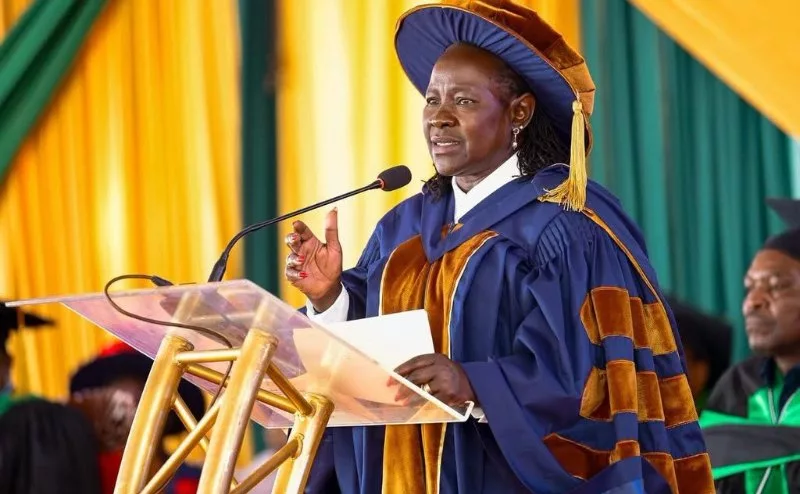
Speaking during the inaugural graduation ceremony at Gichugu Technical and Vocational College in Kirinyaga, where 418 students graduated, Mworia said the affordable housing programme presented an opportunity for technical institutions to produce construction materials and generate additional income.
She said the Ministry of Housing had asked technical colleges to supply assorted materials, including hinges and locks, for the affordable housing programme, but only a few institutions had submitted samples.
“We have machinery in our institutions and we need to use it. The affordable housing programme provides a ready opportunity for our institutions to produce materials, create jobs and generate revenue,” Mworia said.
She challenged principals to move beyond training students and turn their institutions into centres of production, innovation and enterprise.
Mworia said technical skills were increasingly opening opportunities both locally and internationally, with major projects such as the Lamu refinery requiring skilled technical personnel.
She said the government had signed a memorandum of understanding with Consolidated Bank to support Kenyans seeking employment opportunities abroad, allowing them to access loans on favourable terms.
Gichugu Technical and Vocational College principal Joseph Kimemia urged industries to create more opportunities for graduates, saying technical training should be closely linked to the labour market.
He called for programmes to equip graduates with tools so they can establish their own businesses instead of relying solely on formal employment.
The government’s investment in modern equipment is expected to strengthen practical training while giving institutions an opportunity to produce goods and services that can generate income and create employment.
The graduation came at a time when stakeholders were also raising concerns over the proposed Tertiary Education, Placement and Funding Bill, 2026.
The Bill, which is before the National Assembly, seeks to establish a new framework for tertiary education placement and funding. Parliament is currently undertaking public participation on the proposed legislation.
A section of youth leaders in Kirinyaga opposed the proposed loan repayment provisions, particularly the requirement under Clause 49(1) for student loanees to begin repayment together with applicable interests and charges within one year of completing their studies.
Njuguna Mundati argued that the proposed period would place pressure on graduates who may take longer to secure employment.
“The proposed one-year repayment period is too strict because many graduates take more than a year to find jobs. The government should allow them to start repayment once they secure employment,” Mundati said.
The youth also raised concerns over the proposed interest on loans and the balance between scholarships and loans, calling for a funding system that takes into account the challenges graduates face when transitioning from college to the job market.
The concerns mirror those raised by other education stakeholders during ongoing public participation, with many calling for changes to the proposed repayment period.