
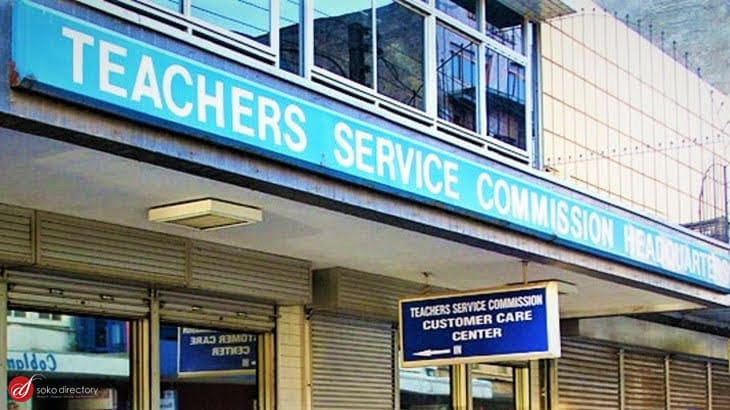
Teachers who demand sex from learners in exchange for marks, school fees, pocket money or protection from punishment could be struck off the register.
A new bill proposing changes to the law governing the profession also targets tutors engaged in other gainful employment while working for the Teachers Service Commission (TSC).
The Teachers Service Commission (Amendment) Bill, 2026, that is before the National Assembly could see teachers who pursue businesses or other income-generating activities outside their jobs punished.
The Bill, sponsored by National Assembly Majority Leader Kimani Ichung’wah, lists engaging in other gainful employment among the disciplinary offences in the teaching service.
This could affect the many teachers who run shops, farms, boda boda and other transport businesses, as well as those who offer consultancy services.
The proposal comes at a time when many teachers rely on additional sources of income to supplement salaries, including through farming, retail businesses and consultancy.
The proposed law expressly prohibits other gainful employment while they remain in TSC employment.
In what could come as a headache for heads of institutions, the bill lists mismanagement, misappropriation and embezzlement of funds as a disciplinary matter.
Violation of procurement rules, which has been cited in a number of school audits currently under review by MPs, could see a teacher deregistered if the bill is enacted.
The bill lists sexual exploitation as among the grounds on which a teacher can be removed from service.
It defines sexual exploitation to include exchange of sex or sexual acts for academic grades, pocket money and school fees.
Learning materials, protection from school punishment, illicit drugs, gifts, food, shelter or other basic needs are also listed.
Teachers could also face disciplinary action for involving learners in creating, accessing or distributing pornographic and sexually explicit material.
Lesbianism is among conducts listed as immoral behaviour involving a learner, alongside sexual intercourse, sodomy, sexual harassment, sexual exploitation and flirtation.
Teachers would also be in trouble for cyberbullying, drunkenness, fighting, and use of vulgar or abusive language, as well as forgery and theft of institutional property.
The proposed changes come as the country debates the causes of rampant indiscipline and unrest in schools.
Former Government Spokesperson Isaac Mwaura once attributed the flare-ups to concerns about discipline and morality.
“We have to speak about issues of morality. You know we have to speak about issues of homosexuality and lesbianism in schools,” Mwaura said.
This was after a series of school disruptions and fires, including incidents that affected several secondary schools.
A special investigation team led by Claire Omollo investigated school unrest in 2016 after a wave of strikes and fires.
The team visited 97 schools and interviewed students, teachers and other stakeholders.
Its findings included reports of homosexuality and lesbianism among students, alongside a range of other issues.
The report recommended further studies into the extent to which homosexuality and lesbianism contributed to the disruptions.
It also raised concerns including radicalisation, criminal gangs and what the investigation described as “devil worship”.
However, the proposed TSC amendments are largely aimed at teachers and their professional responsibilities.
As such, a teacher who uses academic authority to obtain sexual favours from a learner could face the most severe professional sanction.
Already, the TSC Code of Conduct and Ethics prohibits a teacher from engaging in sexual activity with a learner.
It also prohibits a teacher from requesting or exerting pressure on a learner for sexual activity or favour, or flirting with a learner.
The code also speaks to inducing, coercing, threatening or intimidating a learner in relation to academic performance in exchange for sexual relations.
The commission has previously taken action against teachers accused of sexual misconduct involving learners. The lack of a substantive statutory provision has impeded progress.
TSC says 1,228 teachers were dismissed between 2012 and 2019 for having sexual relations with students.
In 2023, six teachers in Kisii were suspended after a video emerged allegedly showing them forcing children to participate in mock sexual acts.
The proposed law would also retain several other forms of misconduct as grounds for action by the commission, including deregistration.
These include obtaining teacher registration through fraudulent means, conviction for a sexual offence or another offence against a learner or minor.
Teachers would also be struck off the roll if convicted of a criminal offence that renders them unfit to teach.
Forgery and impersonation would also attract disciplinary action.
Professional misconduct would include negligence, chronic absenteeism, desertion, incitement and insubordination.
Teachers could also face action for exposing learners to illicit drugs or supplying psychotropic substances.
The changes further target teachers who assist unregistered persons to obtain employment as teachers.
On the side hustles, the bill does not provide a detailed list of the businesses or activities that would constitute other gainful employment.
Questions are abounding on how the provision would apply to teachers involved in farming, running shops, professional services or other commercial activities.
The bill also retains lesbianism among the forms of immoral behaviour involving learners, a matter that has previously featured in national debates over school discipline and student behaviour.
A 2016 school unrest inquiry found that some students reported same-sex relationships in their schools and identified a number of factors associated with such behaviour.
The proposed changes seek to regulate both what teachers do to learners and how they conduct themselves as employees of the commission.
The Bill has been introduced into Parliament and remains subject to the legislative process.